Group · Drinks
Apple juice
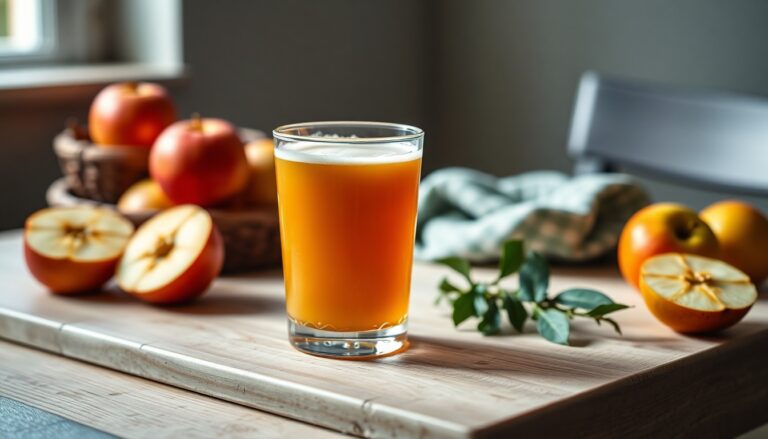
Apple juice is one of the most popular fruit drinks, enjoyed by children and adults alike. Made by pressing and filtering apples, it comes in several versions: cloudy apple juice (unfiltered, with more pulp), clear juice, pure juice, juice from concentrate or craft cold-pressed apple juice. Mild and thirst-quenching, it mainly provides natural sugars (fructose) and a few vitamins. At around 48.5 kcal per 100 g, its nutrition facts remain moderate, but its carbohydrate density calls for restraint. In a balanced diet, it is best enjoyed as an occasional treat drink, choosing pure juice over sweetened nectar.
Macronutrient breakdown
Nutrition table per 100 ml
| Calories | 49 kcal |
| Kilojoules | 206 kJ |
| Protein | 0,3 g |
| Carbohydrate | 11,3 g |
| Fat | 0,1 g |
| Fibre | 0,3 g |
Micronutrients per 100 ml
All measured nutrients, ranked by share of the daily reference intake.
- Vitamin C13,2 mg17 %
- Potassium128 mg6 %
- Vitamin B60,04 mg3 %
- Vitamin B94,95 µg2 %
- Magnesium7,07 mg2 %
- Manganese0,03 mg1 %
- Vitamin B10,01 mg1 %
- Vitamin B20,02 mg1 %
See the other 12 nutrients
- Copper0,01 mg1 %
- Vitamin B50,06 mg1 %
- Phosphorus7,11 mg1 %
- Vitamin B30,16 mg1 %
- Calcium6,45 mg1 %
- Iron0,09 mg1 %
- Iodine0,7 µg0 %
- Omega-3 ALA0,01 g0 %
- Omega-6 LA0,04 g0 %
- Zinc0,01 mg0 %
- Vitamin E0,01 mg0 %
- Vitamin A0,35 µg0 %
Anses Ciqual 2025. Source: Anses, 2025, Ciqual food composition table
Tips
Apple juice is appealing for its sweetness, but a few good habits help it stay an ally of your balance. A sensible serving is a small glass (about 150 ml), not large quantities throughout the day. Always choose the label pure juice or cold-pressed rather than juice from concentrate or a nectar with added sugar.
- Calories and carbohydrates: with 46 kcal and 11.3 g of carbohydrate per 100 g, apple juice is made up almost entirely of natural sugars. Its glycaemic index is higher than that of a whole apple, because most of the fibre is removed during pressing (only 0.2 g).
- Protein and fat: almost non-existent (0.24 g of protein, 0.1 g of fat), so it is above all a mild energy drink.
- Benefits: it provides water, a little potassium and the natural antioxidants found in apples, especially in cloudy, unfiltered versions.
As for uses, apple juice is drunk chilled at breakfast or as an afternoon snack, but it also has a place in the kitchen: deglazing white meats, marinades, sweet and savoury sauces, or as a base for homemade smoothies. To limit your sugar intake, you can dilute it with still or sparkling water, like an alcohol-free spritz. Keep it in the fridge once opened and drink it quickly.
For active people, apple juice is a source of quickly absorbed carbohydrate, useful before a short effort or during endurance activity to keep your energy up. For recovery, you can combine it with a source of protein, for example in an orange juice or a shaker, alongside the advice on the post-training shaker. Its sugar content nonetheless makes it a drink to measure out according to your goals.
Weight control: in liquid form, sugars are absorbed quickly and are not very filling, which can push up your calorie intake without you realising. If you are watching your waistline, bite into a whole apple instead, which is richer in fibre and more filling. You can compare its figures with other drinks using the calorie table, explore the other drinks in the family, or find out how to avoid empty calories. Apple juice remains a real pleasure, to be enjoyed in moderation and with common sense.