Group · Condiments & sauces
Brown mustard
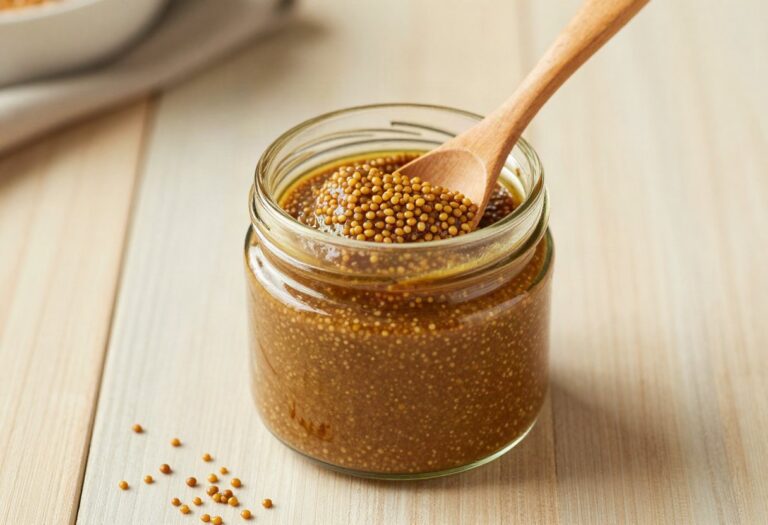
Brown mustard, sometimes called strong Dijon mustard or brown seed mustard, is a condiment renowned for its sharp character and its long finish. It is made from brown mustard seeds (Brassica juncea), ground and then mixed with vinegar, water and sometimes wine or spices. Spicier than classic yellow mustard, it comes in smooth, wholegrain (with whole seeds) or flavoured versions. With around 142 kcal per 100 g, it is a seasoning that is low in calories in use, as it is eaten in small amounts. It provides protein, fibre and plenty of flavour, making it a practical ally of a tasty, balanced diet.
Macronutrient breakdown
Nutrition table per 100 g
| Calories | 142 kcal |
| Kilojoules | 591 kJ |
| Protein | 6,6 g |
| Carbohydrate | 2,2 g |
| Fat | 9,9 g |
| Fibre | 4,5 g |
Micronutrients per 100 g
All measured nutrients, ranked by share of the daily reference intake.
- Selenium70 µg127 %
- Omega-3 ALA1,25 g63 %
- Phosphorus210 mg30 %
- Manganese0,57 mg29 %
- Magnesium95 mg25 %
- Omega-6 LA2,03 g20 %
- Vitamin B10,22 mg20 %
- Copper0,16 mg16 %
See the other 12 nutrients
- Calcium110 mg14 %
- Iron1,7 mg12 %
- Zinc1,1 mg11 %
- Potassium200 mg10 %
- Vitamin E1,18 mg10 %
- Vitamin B918 µg9 %
- Vitamin B30,94 mg6 %
- Vitamin K12,63 µg4 %
- Vitamin B50,21 mg4 %
- Vitamin B20,04 mg3 %
- Vitamin A12,9 µg2 %
- Vitamin B60,02 mg1 %
Anses Ciqual 2025. Source: Anses, 2025, Ciqual food composition table
Tips
Brown mustard is used in small touches: a teaspoon is often enough to lift a dish. Since its energy density is moderate (142 kcal per 100 g), a realistic portion of 5 to 10 g provides only a few calories, which makes it interesting for weight loss, where a fatty sauce quickly adds up. In terms of nutrition facts, it provides around 6.6 g of protein, 2.2 g of carbohydrate, 9.9 g of fat and 4.5 g of fibre per 100 g.
- In the kitchen: work it into a homemade vinaigrette to emulsify the oil and vinegar, or use it to coat white meat before cooking.
- Pairings: it goes wonderfully with meat, rabbit, fish and steamed vegetables. It also lifts a mushroom sauce or a marinade.
- Storage: keep the jar in the fridge once opened, tightly closed, to preserve its kick and aroma.
Brown mustard seed contains sulphur compounds (glucosinolates) responsible for its characteristic heat. Its main value remains its taste: it lets you cut down on fats and salt without sacrificing flavour. Beware of shop-bought versions enriched with sugar or salt, though: compare it with yellow mustard and favour recipes with short ingredient lists. To limit sodium day to day, it is also worth watching the table salt added elsewhere in your dishes.
For active people: brown mustard is not a significant source of energy or protein at the scale of a portion, but it makes dishes more appetising, which helps you vary meals without adding empty calories. It goes well with sources of lean protein (poultry, fish, pulses) on a balanced diet plan. To structure your plate around exercise, have a look at the principles of fitness nutrition.
If you like spicy condiments, also explore the condiments and sauces family to find the seasoning that will bring character to your recipes while staying sensible on intake. The golden rule: a little brown mustard for lots of flavour, and you stay in control of your calories.