Group · Condiments & sauces
Mushroom sauce
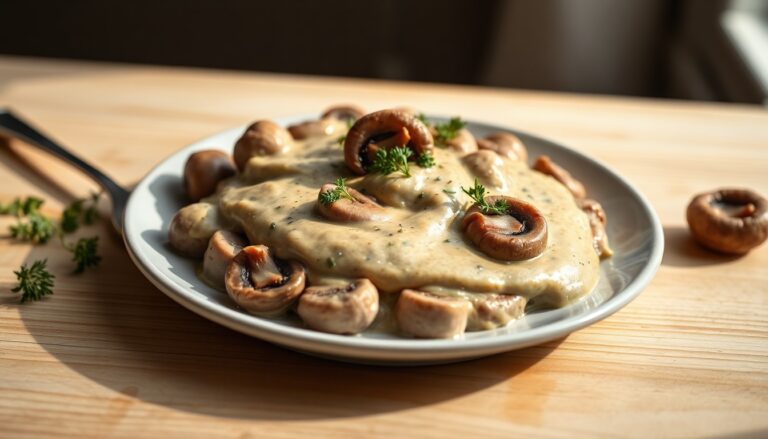
Mushroom sauce is a creamy preparation that goes as well with meat as with pasta, rice or poultry. Made from button mushrooms, ceps or oyster mushrooms sautéed with cream, a sauce base or a little stock, it comes in richer or lighter versions depending on the recipe. With around 68.3 kcal per 100 g, it is relatively light for a sauce, as long as you watch the amount of cream or added fat. In terms of nutrition facts, it provides a little protein (1.79 g), carbohydrate (7.78 g) and fat (2.68 g). Versatile and tasty, it fits easily into a balanced diet.
Macronutrient breakdown
Nutrition table per 100 g
| Calories | 68 kcal |
| Kilojoules | 286 kJ |
| Protein | 1,8 g |
| Carbohydrate | 7,8 g |
| Fat | 2,7 g |
| Fibre | 2,4 g |
Micronutrients per 100 g
All measured nutrients, ranked by share of the daily reference intake.
- Vitamin D0,94 µg19 %
- Vitamin E2,07 mg17 %
- Vitamin B934,5 µg17 %
- Vitamin B32,22 mg14 %
- Vitamin C8,54 mg11 %
- Omega-6 LA0,86 g9 %
- Potassium150 mg8 %
- Manganese0,15 mg8 %
See the other 12 nutrients
- Copper0,07 mg7 %
- Phosphorus32 mg5 %
- Vitamin B60,06 mg4 %
- Magnesium14 mg4 %
- Iron0,44 mg3 %
- Vitamin B120,07 µg3 %
- Vitamin B10,03 mg3 %
- Vitamin B50,16 mg3 %
- Zinc0,18 mg2 %
- Calcium12 mg2 %
- Vitamin B20,02 mg1 %
- Total omega-30,03 g1 %
Anses Ciqual 2025. Source: Anses, 2025, Ciqual food composition table
Tips
To enjoy mushroom sauce without weighing down your plate, stick to sensible portions of around 50 to 80 g per person. Poured over a chicken escalope, a fish fillet or wholewheat pasta, it livens up a dish while staying moderate in calories. For a lighter version, replace part of the cream with semi-skimmed milk, fromage blanc or a little chicken stock, which reduces the energy density while keeping it creamy.
Varieties and flavours. The mushrooms you use make all the difference: button mushrooms for mildness, ceps and chanterelles in autumn for woody notes, shiitake for an umami touch. You can boost your sauce with garlic, shallot, thyme, parsley or a splash of white wine. A dash of soy sauce nicely boosts the umami taste without adding any fat.
Key nutrients. Mushrooms provide fibre (in small amounts here, 0.4 g), B vitamins and minerals such as potassium and selenium. The protein content is modest, and the glycaemic index of the sauce is generally low, especially in a low-sugar version. The main point to watch is fat and salt, which climb quickly with cream and shop-bought sauce bases.
Practical tips.
- Favour gentle cooking to preserve the aroma of the mushrooms and limit the amount of added fat.
- Keep the sauce for 2 to 3 days in the fridge in an airtight container, and reheat it over a low heat.
- For a light evening meal, pair it with steamed vegetables rather than dishes that are already rich.
- Compare its content with other options from the condiments and sauces family to make the best choice.
For active people. Mushroom sauce can go with a source of lean protein (chicken, turkey, white fish) in a recovery meal, alongside starchy foods to replenish glycogen stores. It remains a seasoning for pleasure: for serious protein intake after training, it is better to count on the main food and, if needed, a post-workout shaker. When watching your weight, keep an eye on homemade versus shop-bought, and limit very creamy sauces to preserve the overall balance of your plate.