Group · Herbs & spices
Mustard seeds
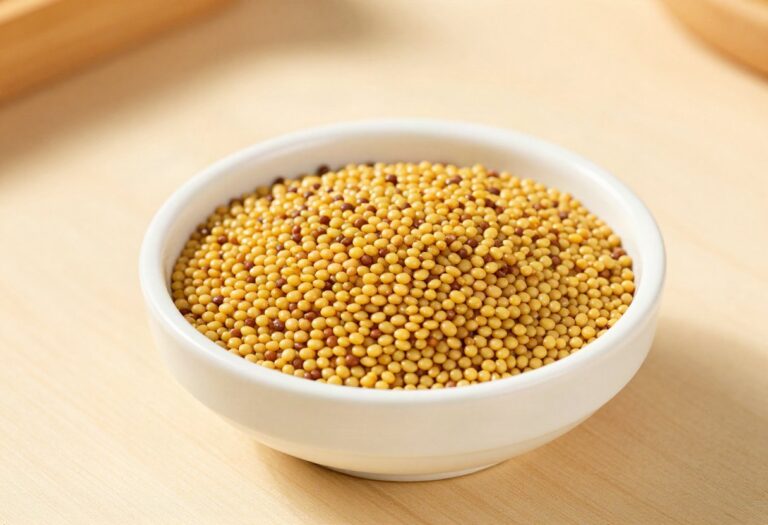
Small but powerfully fragrant, mustard seeds are a staple of world cuisines, from Indian curry to marinades from south-west France. Coming from plants of the Brassicaceae family, they come in three main varieties: white (or yellow), brown and black, each offering a more or less pronounced heat. Served whole, ground or turned into a condiment, they lift dishes with finesse. Nutritionally, they concentrate plant protein, fibre, good-quality fats and many minerals. Rich in flavour, they are used in very small amounts, which makes them easy to include in a balanced diet. A smart spice to give your recipes a twist without adding to the calorie bill of the plate.
Macronutrient breakdown
Nutrition table per 100 g
| Calories | 508 kcal |
| Kilojoules | 2126 kJ |
| Protein | 26,1 g |
| Carbohydrate | 28,1 g |
| Fat | 36,3 g |
| Fibre | 12,2 g |
Micronutrients per 100 g
All measured nutrients, ranked by share of the daily reference intake.
- Selenium208,1 µg378 %
- Manganese2,45 mg122 %
- Phosphorus828 mg118 %
- Magnesium370 mg99 %
- Vitamin B10,81 mg73 %
- Iron9,21 mg66 %
- Copper0,65 mg65 %
- Zinc6,08 mg61 %
See the other 10 nutrients
- Vitamin E5,07 mg42 %
- Potassium738 mg37 %
- Calcium266 mg33 %
- Vitamin B34,73 mg30 %
- Vitamin B60,4 mg28 %
- Vitamin B20,26 mg19 %
- Vitamin B50,81 mg14 %
- Vitamin C7,1 mg9 %
- Vitamin K15,4 µg7 %
- Vitamin A2 µg0 %
USDA FoodData Central (SR Legacy)
Tips
Mustard seeds are always used in small pinches, which means their high nutrition facts (508 kcal per 100 g) have little effect on your daily total. One teaspoon is more than enough to flavour a dish for several people. To release their aroma, fry them for a few seconds in hot fat until they pop: this is the tempering technique, widely used in Indian cooking.
- Varieties: yellow seeds are mild, perfect for pickles and homemade mustard; brown and black seeds are hotter, ideal for curries and tarka.
- Cooking and uses: marinades, sauerkraut, steamed vegetables, vinaigrettes, court-bouillon, vinegar preserves. They also go well with turmeric powder and cumin in spice blends.
- Storage: in an airtight jar, away from light and damp. Whole, they keep their aroma for several months; once ground, they oxidise faster.
As for nutrients, mustard seeds provide plant protein (26.08 g/100 g), fibre (12.2 g/100 g) and mostly unsaturated fats. They also supply magnesium, phosphorus, selenium and the sulphur compounds responsible for their characteristic heat. Their nutrient density is interesting, even if, given the amounts used, their real contribution remains modest. They are still an excellent way to lift bland dishes without resorting to salt or fatty sauces.
For active people, the appeal is mainly in the taste: they let you season protein dishes and steamed vegetables in healthy batch cooking without adding empty calories. A homemade mustard vinaigrette dresses a chicken or lentil salad perfectly during recovery. Do remember to go easy on the heat if you have a sensitive stomach before exercise.
For weight control, their great strength is intense flavour from a tiny portion: you boost the taste of a slimming dish while limiting the use of fat and sugar. Prefer homemade whole-seed preparations to shop-bought mustards, which are often enriched with sugar and salt. To vary your seasonings, also explore black pepper and the other herbs and spices in our guide. And to place this food among others, consult the food calorie table.