Group · Fish
Carp
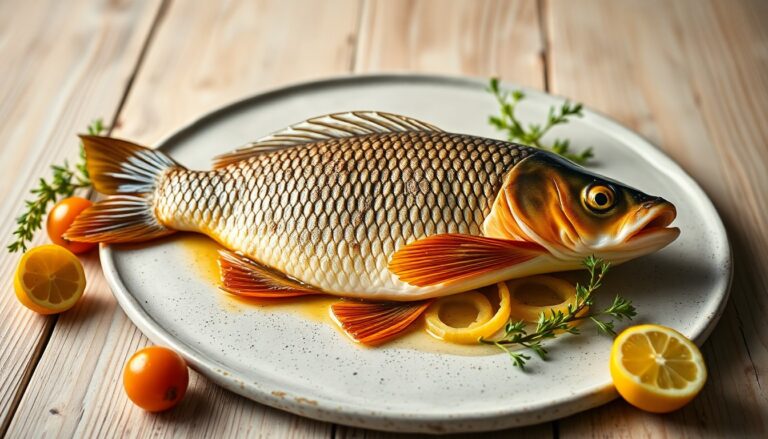
The carp is a freshwater fish enjoyed since antiquity, as much for its firm, tasty flesh as for its abundance in ponds and pools. It comes in several forms: common carp, mirror carp or leather carp, often reared in extensive fish farming. With around 151 kcal per 100 g, it offers an excellent amount of protein (21.6 g) and a moderate amount of fat (7.17 g), with no carbohydrate. Rich in good-quality fatty acids, B vitamins and minerals, it naturally has its place in a balanced, varied diet. Its mild flavour, sometimes marked by a muddy note, suits many traditional, festive or everyday preparations.
Macronutrient breakdown
Nutrition table per 100 g
| Calories | 151 kcal |
| Kilojoules | 633 kJ |
| Protein | 21,6 g |
| Fat | 7,2 g |
Micronutrients per 100 g
All measured nutrients, ranked by share of the daily reference intake.
- EPA0,19 g76 %
- Phosphorus531 mg76 %
- Vitamin D3,25 µg65 %
- Vitamin B121,47 µg59 %
- DHA0,1 g40 %
- Selenium20,2 µg37 %
- Potassium427 mg21 %
- Zinc1,58 mg16 %
See the other 15 nutrients
- Vitamin B60,22 mg16 %
- Vitamin B50,87 mg15 %
- Vitamin B32,1 mg13 %
- Vitamin B10,14 mg13 %
- Copper0,12 mg12 %
- Total omega-30,29 g12 %
- Manganese0,23 mg12 %
- Iron1,59 mg11 %
- Magnesium38 mg10 %
- Vitamin B917 µg9 %
- Calcium52 mg7 %
- Vitamin B20,07 mg5 %
- Iodine6 µg4 %
- Vitamin C1,6 mg2 %
- Vitamin A10 µg1 %
Anses Ciqual 2025. Source: Anses, 2025, Ciqual food composition table
Tips
To get the most from the nutrition facts of carp, a portion of 120 to 150 g is just right for a main meal. Its flesh, generous in protein, makes it a filling food, useful for weight loss as well as for maintaining muscle mass. Before cooking, be sure to rinse it well and, if necessary, soak it in slightly vinegared water to reduce the muddy taste sometimes found in freshwater fish.
Cooking methods and pairings. Carp can be cooked in many ways: oven-baked in parchment, poached in court-bouillon, in a wine stew, stuffed (a typical Central European recipe) or grilled. Choose gentle cooking to keep the flesh tender and preserve its nutrients; you will find useful advice in this article on gentle cooking that preserves nutrients and flavour. Serve it with steamed vegetables, fresh herbs (dill, parsley, chives) and a squeeze of lemon to lift its mildness. For starchy foods, brown rice or plain potatoes balance the plate.
- Seasonality: carp is mostly eaten from autumn to winter, when it is traditionally caught.
- Key nutrients: complete protein, vitamins B12 and D, phosphorus, selenium and a good amount of omega-3 fatty acids.
- Storage: eat it very fresh, within 24 to 48 hours, or freeze it quickly after buying.
Tips for active people. With nearly 21.6 g of protein per 100 g and no carbohydrate, carp is an excellent ally for muscle recovery and cutting phases. Include it in a post-workout meal with a source of complex carbohydrates to replenish energy stores. If you want to top up your protein intake over the day, discover our ideas for protein snacks and our guidance on fitness nutrition.
Weight control. Its calorie density stays reasonable as long as the cooking is light. Avoid frying and sauces rich in cream or butter, which push up the total energy. Prefer baking, steaming or poaching. You can compare carp with other freshwater fish such as trout or pike, and explore the whole fish family to vary your menus. To see how its calories compare with other foods, the calorie table remains a handy reference.