Group · Meat
Chicken wing
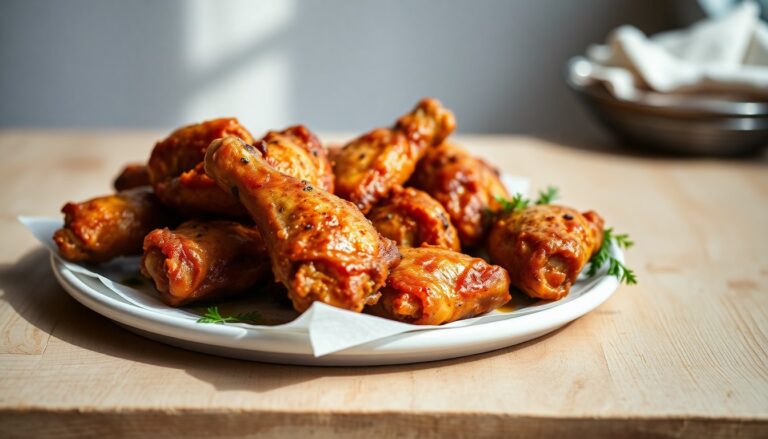
The chicken wing is a popular cut, loved for its tasty meat and golden skin, found in party snacks and everyday meals alike. Made up of a fleshy part, a drumette and the wing tip, it suits plenty of preparations: grilled, roasted, marinated or simmered. Nutritionally, it provides around 247 kcal per 100 g, with nearly 23.8 g of protein and 16.9 g of fat, and no carbohydrates or fibre. It is a useful source of animal protein, but its fatty skin makes it more calorific than chicken breast. Well prepared, the chicken wing has a place in a balanced, varied diet.
Macronutrient breakdown
Nutrition table per 100 g
| Calories | 247 kcal |
| Kilojoules | 1030 kJ |
| Protein | 23,8 g |
| Fat | 16,9 g |
Micronutrients per 100 g
All measured nutrients, ranked by share of the daily reference intake.
- Vitamin B60,56 mg40 %
- Vitamin B36,32 mg40 %
- Omega-6 LA3,18 g32 %
- Phosphorus147 mg21 %
- Zinc1,64 mg16 %
- Vitamin B50,86 mg14 %
- Vitamin B120,35 µg14 %
- Vitamin B20,15 mg11 %
See the other 16 nutrients
- Potassium212 mg11 %
- Omega-3 ALA0,16 g8 %
- Total omega-30,17 g7 %
- Iron0,84 mg6 %
- Vitamin B10,07 mg6 %
- Vitamin E0,69 mg6 %
- Magnesium19 mg5 %
- Vitamin B99 µg5 %
- Copper0,04 mg4 %
- Vitamin D0,2 µg4 %
- DHA0,01 g2 %
- Calcium18 mg2 %
- EPA0 g2 %
- Vitamin A12 µg2 %
- Manganese0,01 mg1 %
- Vitamin K10,3 µg0 %
Anses Ciqual 2025. Source: Anses, 2025, Ciqual food composition table
Tips
To enjoy the chicken wing without piling on the calories, the cooking method makes all the difference. Choose oven-baking, grilling or a flat-top griddle rather than deep-frying, which multiplies the fat. Removing the skin after cooking cuts the fat noticeably while keeping the protein, which is useful for fullness and for maintaining muscle mass. A sensible portion is 2 or 3 wings, depending on your appetite and your needs.
In terms of nutrition facts, the wing provides phosphorus, potassium, B vitamins (notably B3 and B6) and selenium. Its glycaemic index is zero since it contains no carbohydrates, which makes it compatible with many balanced diets. To lift the flavour without excess calories, rely on homemade marinades made with lemon, paprika, garlic, fresh herbs or reduced-salt soy sauce, and avoid sugary shop-bought sauces.
- Smart pairings: serve your wings with roasted vegetables or a crunchy salad for a balanced, filling meal.
- Storage: keep raw meat for 1 to 2 days in the fridge, or freeze it quickly. Once cooked, eat it within 48 hours.
- Best time: at lunch or dinner, as part of a plate built around protein and fibre.
For active people, the chicken wing is a good source of protein after exercise, helpful for muscle recovery. Its fat content makes it less suitable just before training, though: opt instead for a leaner cut such as chicken breast or turkey breast, which are easier to digest. When you are trying to gain mass, its energy density can on the contrary be an advantage. To go further on your needs, see our guide to nutrition for fitness.
For weight control, bear in mind that the skin and frying are the main sources of calories. By cooking without added fat, you turn a food known as a treat into a sensible option. You can compare its values with other cuts such as the chicken thigh using our food calorie table. And to explore other tasty cuts, browse the meat family and vary your meals as you go.