Group · Seafood
Cod liver
Cod liver is a seafood product in a class of its own, prized as much for its melt-in-the-mouth texture as for its nutritional richness. It is most often sold tinned, preserved in its own oil, ready to spread or to enjoy as it is. Very energy-dense, it provides around 433 kcal per 100 g, with a high proportion of fat (44.4 g), some protein (7.25 g) and a little carbohydrate (1 g). Its reputation rests mainly on its fatty acids and fat-soluble vitamins. In a balanced diet, cod liver is enjoyed in small amounts, as an accompaniment or with drinks, rather than as a main course. A food with character, to be included with discernment and relish.
Macronutrient breakdown
Nutrition table per 100 g
| Calories | 433 kcal |
| Kilojoules | 1780 kJ |
| Protein | 7,3 g |
| Carbohydrate | 1 g |
| Fat | 44,4 g |
Micronutrients per 100 g
All measured nutrients, ranked by share of the daily reference intake.
- DHA4,06 g1624 %
- EPA3,08 g1232 %
- Vitamin D54,3 µg1086 %
- Vitamin B1214,4 µg576 %
- Total omega-37,42 g297 %
- Selenium107 µg195 %
- Vitamin B9188 µg94 %
- Iodine105 µg70 %
See the other 14 nutrients
- Vitamin B20,6 mg43 %
- Copper0,4 mg40 %
- Phosphorus145 mg21 %
- Vitamin B33,28 mg21 %
- Zinc2 mg20 %
- Iron2,1 mg15 %
- Omega-3 ALA0,28 g14 %
- Vitamin B60,15 mg11 %
- Vitamin B50,54 mg9 %
- Potassium130 mg7 %
- Omega-6 LA0,56 g6 %
- Vitamin C4 mg5 %
- Magnesium10,3 mg3 %
- Calcium10 mg1 %
Anses Ciqual 2025. Source: Anses, 2025, Ciqual food composition table
Tips
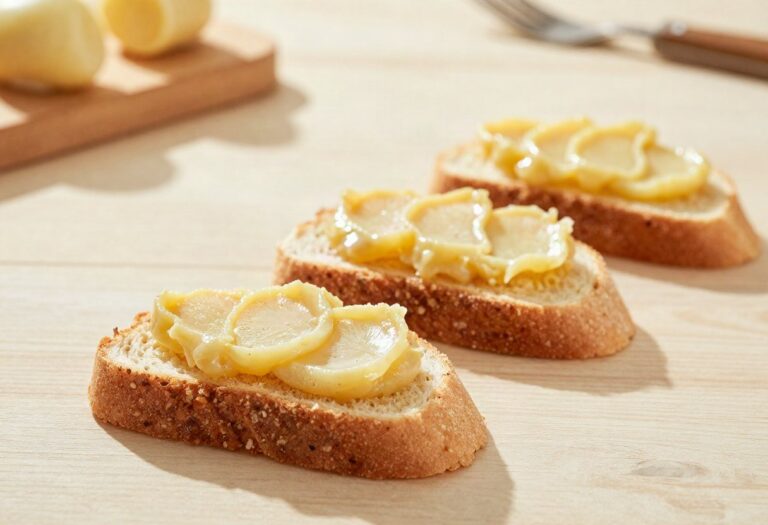
Cod liver is a dense food, so a small portion is enough. Allow a tablespoon (15 to 25 g) on a slice of wholemeal bread, in a salad or with hard-boiled eggs. Its smooth texture goes well with a dash of lemon, capers, red onion or fresh herbs, which balance its richness.
In terms of nutrition facts, its particular feature is its concentration of fat, including omega-3 fatty acids, as well as naturally present fat-soluble vitamins. With 0 g of fibre and a modest protein content, it is not a leading source of protein, unlike other, leaner seafood. If protein is what you are after, turn to prawns or queen scallops, which are far lower in calories.
Here are a few practical pointers:
- Storage: once the tin is open, transfer the cod liver to an airtight container and eat it within 48 hours, kept in the fridge.
- Smart pairings: rye bread, blinis, green salad, crunchy vegetables. Avoid combining it with other fats on the same plate.
- Best timing: with drinks or at lunch, rather than in the evening, given its energy density.
For active people, cod liver can provide energy in the form of good fats, which is useful during mass-gain phases or to vary the sources of fat on your plate. However, it has no place as an immediate recovery snack: choose a source of carbohydrate and protein instead, such as a protein snack or a post-workout shaker. Remember to stay hydrated and to include starchy foods around your sessions.
For weight control, vigilance is needed: at 433 kcal per 100 g, cod liver is one of the highest-calorie seafood products. That does not rule it out of a slimming plan, but it calls for moderation and sticking to portions. A well-measured spoonful brings pleasure and flavour without upsetting the day. To compare its calories with other foods, see the calorie table, and explore the many options in the seafood family to diversify your meals. Lighter but just as tasty, the periwinkle offers a good iodine-rich alternative.