Group · Seafood
Queen scallops
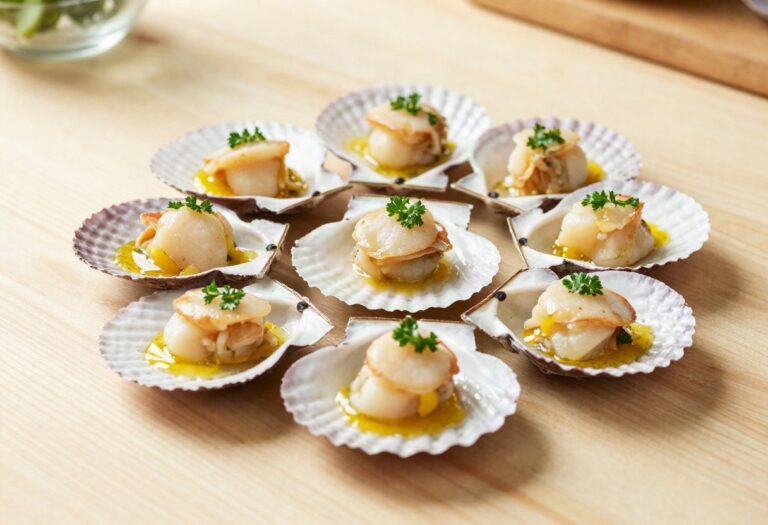
Small cousins of scallops, queen scallops are bivalve molluscs with tender, delicately sweet flesh. They are sold fresh, frozen or shelled, and their pearly meat lends itself to a thousand preparations. With only 88.7 kcal per 100 g and no carbohydrate, they have a very interesting nutritional profile: 17.5 g of protein, barely 0.7 g of fat and no fibre. Rich in lean protein, minerals and marine trace elements, they fit perfectly into a balanced diet as well as a slimming menu. Their delicate flavour and low calorie density make them a great ally for anyone who wants to enjoy their food without weighing down the plate while varying the pleasures of the sea.
Macronutrient breakdown
Nutrition table per 100 g
| Calories | 89 kcal |
| Kilojoules | 376 kJ |
| Protein | 17,5 g |
| Carbohydrate | 3,1 g |
| Fat | 0,7 g |
Tips
Queen scallops cook in no time: their delicate flesh needs only a few minutes, or it turns rubbery. A quick sear in a pan over a high heat in a drizzle of olive oil is enough to caramelise them lightly. You can also poach them, stir-fry them with vegetables, or eat them as a carpaccio if they are impeccably fresh. To preserve nutrients, favour gentle cooking that is brief.
Serving tips and pairings:
- A portion of 100 to 150 g suits a light main course.
- Pair them with lemon, garlic, parsley or a splash of white wine.
- Combine them with green vegetables or wholegrain cereals for a complete meal.
- On storage: eat them very fresh, or thaw them slowly in the fridge.
Nutrition facts and benefits. Queen scallops are a remarkable source of good-quality protein (17.5 g per 100 g), low in fat and free of carbohydrate, which gives them a zero glycaemic index. They provide marine minerals such as phosphorus, selenium, zinc and iodine, as well as vitamin B12. Their low calorie content makes them a great choice in a balanced diet or a weight-loss goal.
For active people. With their lean protein and very low fat content, queen scallops support the maintenance and recovery of muscle mass after exercise. Included in a post-training dinner with a source of carbohydrate (rice, sweet potato), they promote effective recovery without excess calories. If you are looking for other protein sources from the sea, take a look at scallops or prawns, which are just as light and tasty.
Points to watch. In themselves, queen scallops are very low in calories. It is often the accompaniment (butter sauces, cream, frying, breadcrumbs) that pushes up the energy bill. So watch how they are prepared if you are watching your weight, and limit added salt. Be careful too if you have a shellfish allergy. To compare their benefits with other products, explore the seafood family or see the food calorie table to build balanced menus.