Group · Vegetables
Cos lettuce
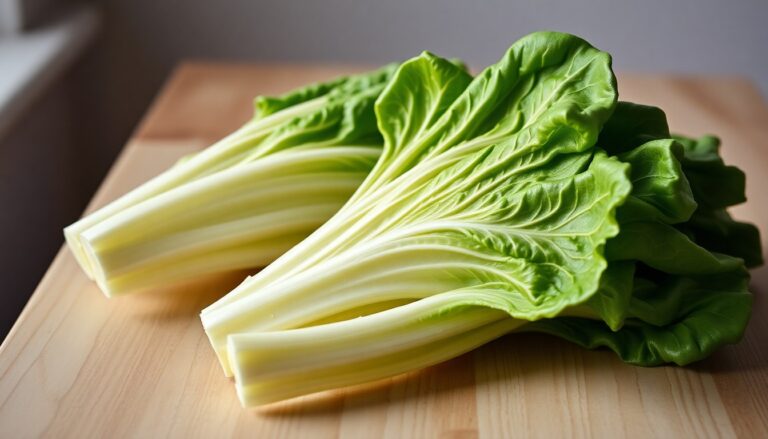
Cos lettuce, also known as romaine or Greek lettuce, is a salad leaf recognisable by its long, upright, crunchy leaves of a bright green. An essential star of the famous Caesar salad, it differs from round lettuce in its firmer texture and fleshy central rib. At just 17.2 kcal per 100 g, it is among the lightest vegetables, while still providing fibre (2.1 g), a little plant protein and plenty of water. Available for much of the year, it suits fresh salads as well as cooked or grilled dishes. Its richness in vitamins and minerals makes it a natural ally of a balanced, low-calorie diet.
Macronutrient breakdown
Nutrition table per 100 g
| Calories | 17 kcal |
| Kilojoules | 72 kJ |
| Protein | 1,3 g |
| Carbohydrate | 1,4 g |
| Fat | 0,3 g |
| Fibre | 2,1 g |
Micronutrients per 100 g
All measured nutrients, ranked by share of the daily reference intake.
- Vitamin K1103 µg137 %
- Vitamin A436 µg55 %
- Potassium247 mg12 %
- Manganese0,16 mg8 %
- Iron0,97 mg7 %
- Vitamin B10,07 mg7 %
- Omega-3 ALA0,11 g6 %
- Vitamin B60,07 mg5 %
- Vitamin B9dietary folate equivalents136 µg
See the other 13 nutrients
- Vitamin C4 mg5 %
- Copper0,05 mg5 %
- Vitamin B20,07 mg5 %
- Phosphorus30 mg4 %
- Calcium33 mg4 %
- Magnesium14 mg4 %
- Vitamin B50,14 mg2 %
- Zinc0,23 mg2 %
- Vitamin B30,31 mg2 %
- Selenium1 µg2 %
- Vitamin E0,13 mg1 %
- Iodine1,25 µg1 %
- Omega-6 LA0,05 g0 %
Anses Ciqual 2025. Source: Anses, 2025, Ciqual food composition table
Tips
Cos lettuce is best eaten raw, in a salad, to keep all its nutrition facts. A generous 100 g portion weighs in at only 17 calories: it is the ideal food for a voluminous but light meal. Wash the leaves carefully, spin them well, then dress at the last moment with a drizzle of olive oil, lemon juice and a few herbs. Limit shop-bought sauces rich in fat, which quickly push up the calorie count of an otherwise slimming dish.
On benefits, cos lettuce provides vitamin K, folate (vitamin B9), provitamin A and a little vitamin C, as well as potassium. Its gentle fibre contributes to fullness and digestive comfort. With a very low glycaemic index and minimal energy density, it fits perfectly into a balanced diet.
- Varieties and season: it can be found almost all year round, but it is best from spring to autumn.
- Culinary uses: in a Caesar salad, in a vegetable wrap (the leaves replace bread), lightly grilled on a griddle, or added raw to a sandwich.
- Storage: in the fridge, in a damp cloth or a perforated bag, for 4 to 6 days.
- Pairings: tomato, cucumber, egg, chicken or fish for a complete, filling meal.
To vary things, alternate cos with other salad leaves of the same family such as round lettuce or lamb’s lettuce, and complete your plates with crunchy vegetables such as cucumber. You will find more fresh, light ideas in the vegetable family.
For active people: low in calories and rich in water, cos lettuce is perfect as a side during a cutting or fat-loss phase, as it fills the plate without weighing on the energy balance. It does not supply quick energy for exercise: so combine it with a source of protein (chicken, tuna, eggs) and complex carbohydrate for a balanced plate after training. To go further on organising meals and macronutrient intake, see our advice on fitness nutrition.
Weight control: the food itself poses no problem, it is the dressing that makes the difference. Favour a home-made vinaigrette used in moderation and keep cheese and croutons for special occasions. A base of cos lettuce remains one of the best strategies for eating in volume while controlling your calories.