Group · Fruit
Grapefruit
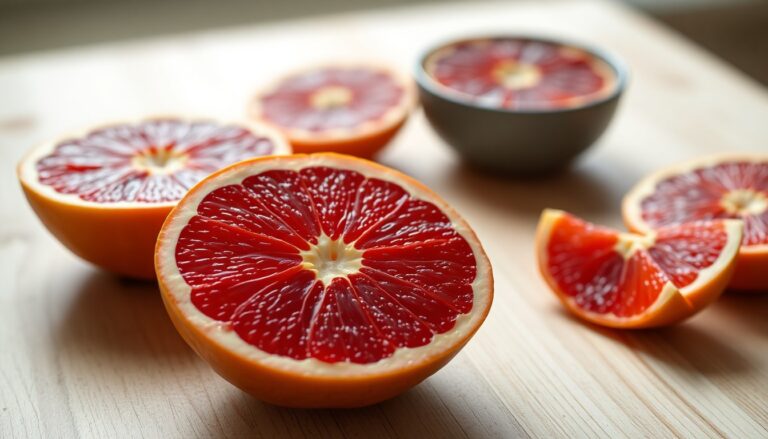
The grapefruit is a generous citrus fruit, not to be confused with the pomelo, even though the two names are often used interchangeably in everyday speech. Its juicy, slightly tangy and sometimes bitter flesh ranges from pale yellow to pink and ruby red depending on the variety. With only 38.4 kcal per 100 g, it is one of the least caloric fruits, while still providing water, fibre and vitamin C. Fresh, squeezed into juice or added to a salad, it naturally has its place in a balanced diet. Refreshing and thirst-quenching, the grapefruit appeals as much to fans of sharp flavours as to those watching their weight.
Macronutrient breakdown
Nutrition table per 100 g
| Calories | 38 kcal |
| Kilojoules | 163 kJ |
| Protein | 0,8 g |
| Carbohydrate | 7,2 g |
| Fat | 0,1 g |
| Fibre | 1 g |
Micronutrients per 100 g
All measured nutrients, ranked by share of the daily reference intake.
- Vitamin C61 mg76 %
- Potassium216 mg11 %
- Copper0,05 mg5 %
- Vitamin B10,03 mg3 %
- Vitamin B60,04 mg3 %
- Phosphorus17 mg2 %
- Vitamin B20,03 mg2 %
- Magnesium6 mg2 %
See the other 5 nutrients
- Vitamin B30,22 mg1 %
- Manganese0,02 mg1 %
- Zinc0,08 mg1 %
- Iron0,11 mg1 %
- Calcium4 mg1 %
Anses Ciqual 2025. Source: Anses, 2025, Ciqual food composition table
Tips
To get the most from the grapefruit, ideally eat it fresh and fully ripe, at breakfast or as a snack. Half a fruit is often enough, as its intense flavour fills you up quickly. Cut in half, you can eat it with a spoon; in segments, it brightens a green salad, a fish recipe or a carpaccio. Its acidity lifts sweet-and-savoury dishes and goes nicely with avocado, prawns or fresh herbs such as mint.
Nutrition facts and benefits: the grapefruit is rich in water and vitamin C, and contains fibre (1 g per 100 g) and antioxidants such as flavonoids. Its glycaemic index is moderate and its energy density low, making it an ally of light meals. The red and pink varieties owe their colour to lycopene, a carotenoid pigment. If you are looking for equally vitamin-rich fruits, take a look at the orange or the pomelo, its close cousins in the large fruit family.
- Storage: at room temperature for a few days, or in the salad drawer of the fridge, alongside the vegetables, for up to two weeks.
- Cooking: it can be pan-fried or lightly caramelised, but vitamin C is better preserved raw.
- Seasonality: citrus fruits such as the grapefruit are at their best in winter.
For active people: with its readily available carbohydrates and richness in water, the grapefruit makes a refreshing snack after exercise, helping with rehydration. Paired with a source of protein (plain yoghurt, fromage blanc), it completes a well-balanced post-workout high-protein snack. Its lightness also makes it an ideal bite as part of a fitness nutrition programme.
Weight control: low in calories and naturally sweet, the grapefruit suits a slimming approach, as long as you eat it whole rather than as juice, to keep its fibre and filling effect. Avoid adding sugar to soften its bitterness: prefer a light drizzle of honey or nothing at all. Be careful, though: grapefruit can interact with certain medicines, so ask a healthcare professional for advice if you are on treatment. Included in moderation in a varied diet, this fruit full of freshness remains an excellent daily habit.
Grapefruit, pomelo or Chinese grapefruit? Differences, vitamin C and interactions with medicines: our complete guide.
