Group · Dairy
Morbier
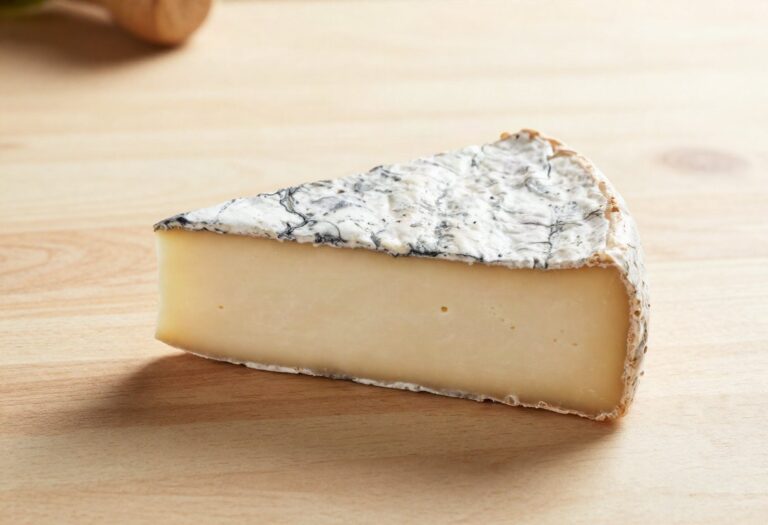
Morbier is a French uncooked pressed cheese from Franche-Comté, recognisable by the thin black line of vegetable ash that splits the cheese in two. Made with raw cow’s milk, it has PDO status, which guarantees its origin and know-how. Its soft, melting paste, ivory to pale yellow in colour, develops milky, fruity and slightly vegetal aromas. Nutritionally, Morbier provides around 355 kcal per 100 g, with a good protein content (22.4 g) and 0 g of carbohydrate. It is also a useful source of calcium and fat. Enjoyed on a cheeseboard or melted, it has its place in a varied diet, eaten in moderation.
Macronutrient breakdown
Nutrition table per 100 g
| Calories | 355 kcal |
| Kilojoules | 1470 kJ |
| Protein | 22,4 g |
| Fat | 29,2 g |
Micronutrients per 100 g
All measured nutrients, ranked by share of the daily reference intake.
- Calcium600 mg75 %
- Vitamin B121,79 µg72 %
- Phosphorus430 mg61 %
- Zinc2,8 mg28 %
- Vitamin B20,21 mg15 %
- Vitamin B929 µg15 %
- Copper0,14 mg14 %
- Omega-3 ALA0,21 g11 %
See the other 12 nutrients
- Total omega-30,23 g9 %
- Vitamin B50,48 mg8 %
- Magnesium23 mg6 %
- Vitamin B30,88 mg6 %
- Vitamin E0,55 mg5 %
- Omega-6 LA0,42 g4 %
- Potassium83 mg4 %
- EPA0,01 g4 %
- Vitamin K12,25 µg3 %
- Vitamin B60,04 mg3 %
- Manganese0,02 mg1 %
- Iron0,06 mg0 %
Anses Ciqual 2025. Source: Anses, 2025, Ciqual food composition table
Tips
Morbier is best eaten at room temperature, taken out of the fridge 30 minutes before eating to release its aromas. A sensible portion of 30 to 40 g is enough to enjoy its flavour without weighing down the calorie count of your meal. On a cheeseboard, it goes with country bread, dried fruit or a fruit compote, and sits well alongside other pressed cheeses such as Comté or Reblochon.
In the kitchen, Morbier melts wonderfully well. You can use it in a revisited raclette, to top potatoes au gratin, to fill a tartiflette or to enrich an indulgent croque-monsieur. Its ash line disappears when cooked, but its aromas remain generous. Keep it wrapped in its original paper or baking paper, in the vegetable drawer of the fridge, and eat it within the week to preserve its freshness.
In terms of nutrition facts, Morbier stands out for its richness in good-quality protein (22.4 g per 100 g), and its calcium, phosphorus and B vitamins. Its glycaemic index is nil since it contains no carbohydrate. However, its calorie density and fat content (29.2 g) call for moderation, especially if you are watching your weight. To limit saturated fat, pair it with vegetables or a salad rather than rich starchy foods.
- Favour quality over quantity: a small, well-matured piece satisfies the taste buds more.
- Include it at the end of a meal or as a savoury snack, rather than piling it up over the day.
- Vary your dairy sources by exploring the dairy products family.
For active people, Morbier can round out your protein intake, but its richness in fat makes it less suitable just before exercise. Keep it instead for recovery meals, in a controlled amount, pairing it with a source of carbohydrate such as wholemeal bread. If your goal is bulking up or a more digestible snack, options such as 0% fat fromage blanc or protein snacks are often more practical. To compare the intakes of different foods, see the calorie table and adjust your portions to your needs.