Group · Dairy
Raclette (cheese)
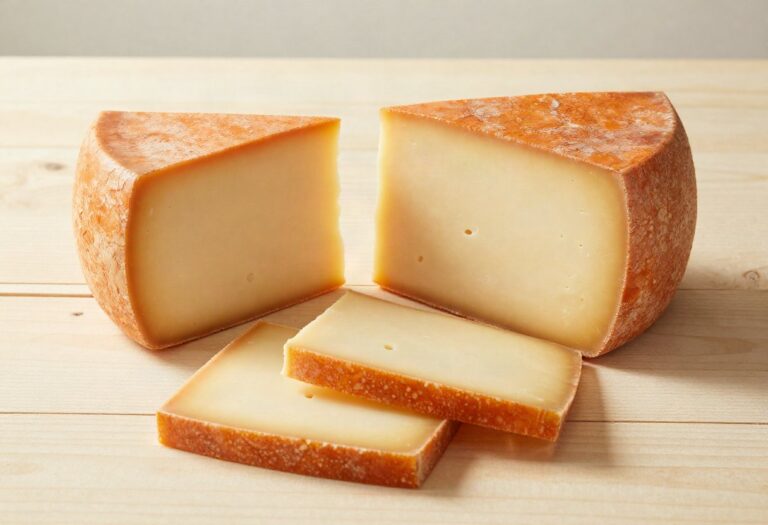
Raclette is a mountain cheese, an uncooked pressed cheese, born in the Swiss Valais where shepherds melted half a wheel in front of the fire and scraped off the surface. The dish now carries the name of the cheese, which keeps up a confusion worth clearing: they do not have the same calories.
On the nutrition side, the cheese comes in at 342 kcal per 100 g, with 22.9 g of protein, 27.5 g of fat, of which 18.5 g saturated, and no carbohydrate. It provides 658 mg of calcium and 460 mg of phosphorus per 100 g, along with 1.69 g of salt.
Macronutrient breakdown
Nutrition table per 100 g
| Calories | 342 kcal |
| Kilojoules | 1420 kJ |
| Protein | 22,9 g |
| Fat | 27,5 g |
Micronutrients per 100 g
All measured nutrients, ranked by share of the daily reference intake.
- Calcium658 mg82 %
- Phosphorus460 mg66 %
- Zinc3 mg30 %
- Vitamin B951 µg26 %
- Selenium8 µg15 %
- Iodine20 µg13 %
- EPA0,02 g8 %
- Omega-3 ALA0,14 g7 %
See the other 5 nutrients
- Magnesium24,5 mg7 %
- Total omega-30,16 g6 %
- Copper0,06 mg6 %
- Omega-6 LA0,43 g4 %
- Potassium75,9 mg4 %
Anses Ciqual 2025. Source: Anses, 2025, Ciqual food composition table
Tips
The real portion is the actual issue. A slice of raclette weighs about 30 g, or around a hundred kilocalories. The problem is never the first slice, it is the sixth: a raclette meal commonly exceeds 200 g of cheese per person, nearly 700 kcal for the cheese alone.
What goes with it weighs just as much. Potatoes, cured meats, white wine: the total is made across the whole meal. Doubling up on gherkins and pickled onions, and counting on three to four slices of cheese, is enough to bring the meal back to normal proportions without changing the enjoyment.
658 mg of calcium is its real contribution. Three slices cover nearly a third of the reference intake. Like all pressed cheeses, raclette concentrates the calcium in milk (see also Beaufort, which is even denser on this point).
The salt shows up at the scale of the meal. 1.69 g per 100 g: 200 g of cheese provides 3.4 g of salt, nearly two thirds of the daily guideline, before the cured meats. That is the reason for the next-day thirst, not the wine.
Raw or pasteurised milk. Farmhouse raw milk raclettes have noticeably more flavour, so you eat less. They are, however, not recommended for pregnant women or people with weakened immune systems, unless the cheese is heated right through, which cooking in a raclette pan does.
Pregnant? Raclette is possible if the cheese is thoroughly melted and there are no raw cured meats. The rules are in our guide on raclette during pregnancy.