Group · Vegetables
Sauerkraut (tinned)
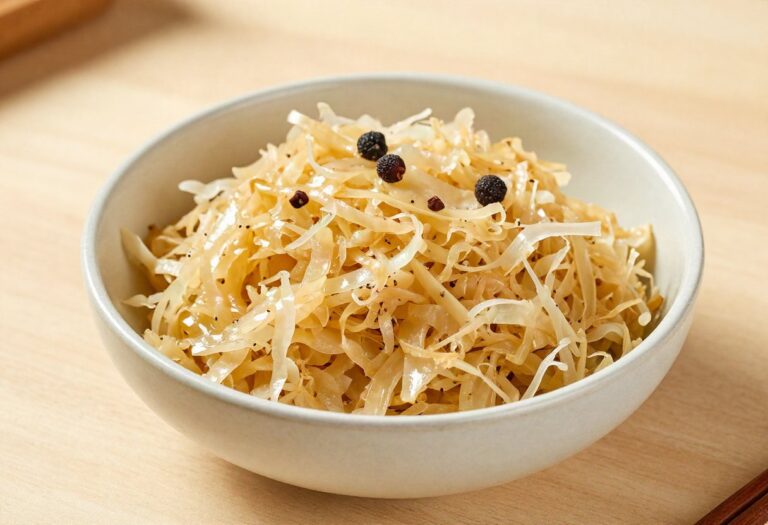
Tinned sauerkraut is white cabbage finely shredded and then fermented with salt. This lactic fermentation gives it its characteristic tangy flavour and crunchy texture. Tinned, it keeps for a long time and stays ready to use, which makes it a practical vegetable for everyday meals. At just 19 kcal per 100 g, it is very low in calories, low in fat (0.14 g) and rich in fibre (2.9 g). Its nutrition facts make it an interesting option in a balanced diet and when watching your weight. Beyond the famous Alsatian dish, raw sauerkraut also turns up in lighter, more modern preparations.
Macronutrient breakdown
Nutrition table per 100 g
| Calories | 19 kcal |
| Kilojoules | 79 kJ |
| Protein | 1 g |
| Carbohydrate | 4,3 g |
| Fat | 0,2 g |
| Fibre | 2,9 g |
Tips
Tinned sauerkraut deserves better than its reputation as a heavy dish. It is the way it is prepared, not the cabbage itself, that weighs the recipe down. Eaten plain, simply warmed or rinsed, it remains a very low-calorie vegetable rich in fibre, perfect for adding volume to the plate without excess energy.
- Portion: a portion of 100 to 150 g is enough as a side. Rinse it quickly under cold water to reduce the salt intake, which is often high in tinned versions.
- Cooking: simmer it gently with aromatics (juniper berries, bay leaf, onion), a little light stock or white wine. Avoid excess fatty cured meats and fats if you are watching your weight.
- Raw: finely shredded, it can be eaten in a fresh salad with a light vinaigrette, apples or seeds.
- Storage: once the tin is opened, transfer the rest to an airtight container and eat within 3 to 4 days.
On nutrition facts, sauerkraut has a very favourable profile: low energy density, moderate carbohydrate (4.28 g) and a good amount of fibre (2.9 g), useful for transit and fullness. The fermentation, which is reminiscent of that of pickled red cabbage, develops its typical aromas. Like all cabbages, it belongs to the brassicas; you can vary things with curly kale or Chinese cabbage. To discover other low-calorie options, explore the vegetable family.
For active people: sauerkraut is not a source of energy or protein, but it ideally complements a recovery meal by providing fibre, freshness and volume without unnecessary calories. Combine it with a source of lean protein (fish, poultry, trimmed ham) and a starchy food to replenish glycogen after exercise. Beware, though, of the salt content of tinned versions: remember to hydrate well and favour low-salt recipes if you are watching water retention before a competition.
Weight control: sauerkraut itself is a slimming ally thanks to its very low energy density. The trap comes from fatty accompaniments and cooking in lard. Prefer a lean garnish and gentle cooking methods. To plan your meals better, consult our food calorie table and you will see how light this fermented vegetable remains.