Group · Fats & oils
Palm kernel oil
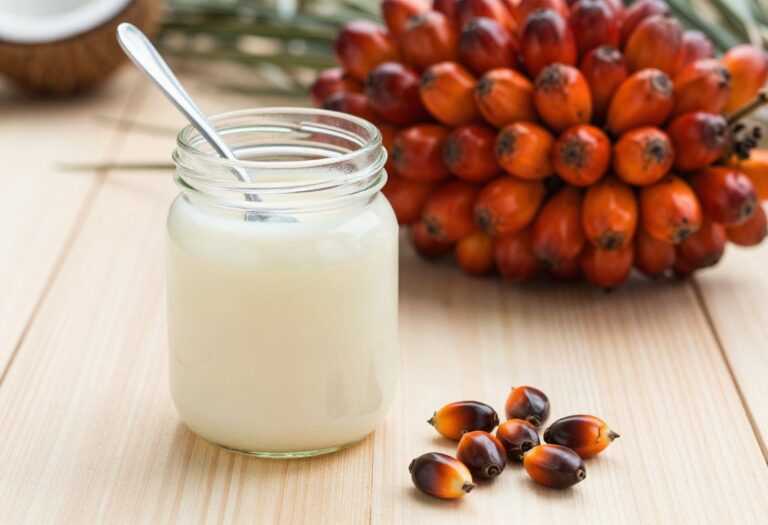
Palm kernel oil is a vegetable fat extracted from the kernel (the stone) of the oil palm fruit, not to be confused with palm oil, which comes from the pulp. Pale in colour and neutral in taste, it is solid at room temperature because of its richness in saturated fatty acids. Widely used in the food industry (confectionery, biscuits, margarines, coatings), it is valued for its heat stability and melt-in-the-mouth texture. Like all oils, it is 100% fat and high in energy, at about 900 kcal per 100 g. Its place in a balanced diet remains limited, to be eaten in moderation.
Macronutrient breakdown
Nutrition table per 100 g
| Calories | 900 kcal |
| Kilojoules | 3700 kJ |
| Fat | 100 g |
Micronutrients per 100 g
All measured nutrients, ranked by share of the daily reference intake.
- Vitamin K124,7 µg33 %
- Vitamin E3,81 mg32 %
Anses Ciqual 2025. Source: Anses, 2025, Ciqual food composition table
Tips
Palm kernel oil is rarely used as it is in home cooking: you mostly come across it in processed products, where it serves as a structural fat for industrial pastries, toppings and cocoa butter substitutes. Its high content of saturated fatty acids gives it excellent cooking performance and a long shelf life, which explains its industrial success. All the same, these characteristics call for moderation.
Nutrition facts and watch-points:
- Very high calorie density: about 900 kcal per 100 g, or nearly 90 kcal per tablespoon.
- 100% fat, mostly saturated fatty acids, with no protein, carbohydrate or fibre.
- Zero glycaemic index, but no value in micronutrients compared with other vegetable oils.
How to use palm kernel oil? If you have access to it, keep it for occasional uses and favour oils that are nutritionally more worthwhile day to day. For raw dressing, turn to olive oil or rapeseed oil, which are richer in unsaturated fatty acids. For a solid fat of plant origin, Végétaline (coconut oil) is a common alternative. You can compare all the options in the fats and oils family to make an informed choice.
Storage: thanks to its stability, palm kernel oil hardly goes rancid. Keep it in an airtight container, away from light and heat. It stays solid or paste-like depending on the room temperature.
For active people: fats contribute to overall energy intake and to the transport of certain vitamins, but palm kernel oil does not provide the essential fatty acids you are looking for (omega-3, omega-6) or micronutrients useful for recovery. To structure your diet around exercise, it is better to rely on oils rich in good fatty acids and to look after your overall fitness nutrition.
Weight control: like all oils, its calories add up fast. Measure with a spoon, weigh if needed, and limit processed products that contain a lot of it. To see how its calories compare with other foods, check the food calorie table. In short: palm kernel oil makes sense for industry, but it has no real privileged place in a home kitchen focused on weight loss and balance.