Group · Nuts & seeds
Pine nuts
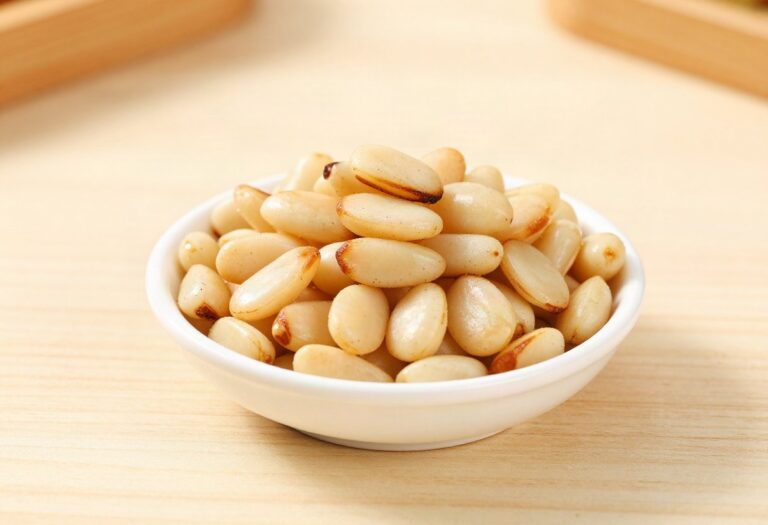
A small oily seed taken from the cones of certain pines, the pine nut is a culinary treasure that has been prized around the Mediterranean since antiquity. Golden, tender and with a subtly resinous taste, it comes in several forms: plain, lightly toasted or ground into a paste. The undisputed star of pesto, it also enhances salads, slow-cooked dishes and baking. Nutritionally, the pine nut is rich in good-quality fat, plant protein, fibre and minerals such as magnesium and zinc. With around 712 kcal per 100 g, it is an energy-dense food that fits into a balanced diet, as long as you stick to small portions. A concentrate of flavour and nutrients.
Macronutrient breakdown
Nutrition table per 100 g
| Calories | 712 kcal |
| Kilojoules | 2930 kJ |
| Protein | 16,2 g |
| Carbohydrate | 3 g |
| Fat | 68,4 g |
| Fibre | 10 g |
Micronutrients per 100 g
All measured nutrients, ranked by share of the daily reference intake.
- Manganese8,2 mg410 %
- Omega-6 LA30,4 g304 %
- Copper1,2 mg120 %
- Phosphorus527 mg75 %
- Vitamin K153,9 µg72 %
- Magnesium227 mg61 %
- Zinc5,6 mg56 %
- Vitamin B10,57 mg52 %
- Vitamin B9dietary folate equivalents80,2 µg
See the other 10 nutrients
- Potassium662 mg33 %
- Iron4,6 mg33 %
- Vitamin B33,29 mg21 %
- Vitamin B60,14 mg10 %
- Vitamin B20,11 mg8 %
- Iodine11,2 µg7 %
- Omega-3 ALA0,11 g6 %
- Vitamin B50,26 mg4 %
- Calcium6,2 mg1 %
- Vitamin A1,42 µg0 %
Anses Ciqual 2025. Source: Anses, 2025, Ciqual food composition table
Tips
The pine nut has generous nutrition facts: 712 kcal, 68.4 g of fat, nearly 16.2 g of protein and 2.93 g of carbohydrate per 100 g, along with 10 g of fibre. Its high calorie density calls for moderation: a portion of 10 to 15 g (one tablespoon) is enough to flavour a dish and bring its benefits without weighing down your energy balance.
How to eat pine nuts? Lightly dry-toasted in a frying pan, they release their full aroma and turn crunchy. A few ideas:
- scattered over a green salad, roasted vegetables or a risotto;
- blended into a homemade pesto with basil and olive oil;
- added to baking, cakes or a tabbouleh;
- combined with dried fruit for a tasty snack.
Keep an eye on them while toasting: pine nuts burn quickly and turn bitter. Store them in the fridge or freezer in an airtight container, as their fats oxidise quickly and can go rancid.
Nutritional profile. Their fats are mostly unsaturated, with a worthwhile share of polyunsaturated fatty acids. Pine nuts also provide magnesium, zinc, manganese, iron and vitamin E, which has antioxidant properties. Their glycaemic index is low, making them a snack suited to steady blood sugar. If you enjoy nuts, vary your pleasures with almonds, hazelnuts or pumpkin seeds, all listed in the Nuts & Seeds family.
For active people. The pine nut is an excellent energy ally: its healthy fats and plant protein make it a fine addition to a recovery snack or a homemade dried fruit bar. Before a long effort, a small handful provides lasting energy thanks to its low GI. After training, pair it with a source of carbohydrate and complete protein to optimise muscle repair, perhaps alongside your protein snack recipes.
Weight control. Although high in calories, the pine nut is not the enemy of weight loss as long as quantities stay under control. Weigh your portions rather than dipping absent-mindedly into the bag, and choose them plain rather than in fatty or sugary preparations. To see how its calories compare with other foods, consult the calorie table. Used wisely, it enriches your plates with flavour and nutrients.