Group · Condiments & sauces
Pesto
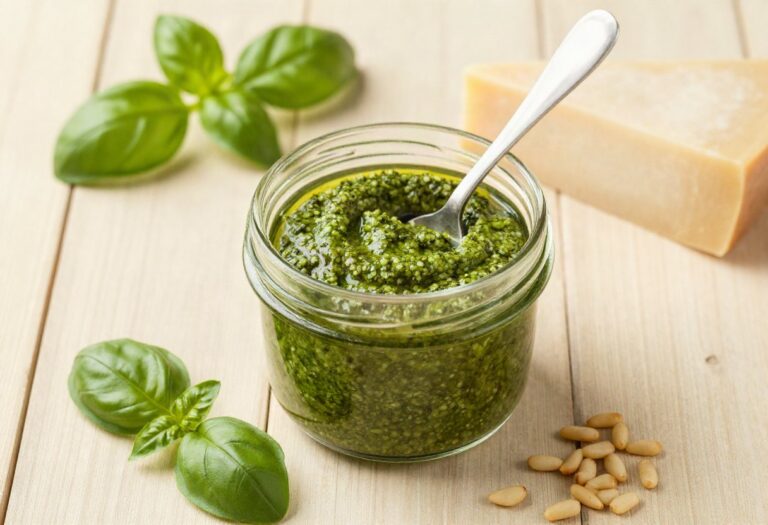
Pesto is a raw Italian sauce made from basil, olive oil, pine nuts, garlic and Parmesan. Fragrant and indulgent, it instantly lifts pasta, vegetables and toast. Rich in healthy fats thanks to the olive oil and pine nuts, it is tasty but high in calories: one spoonful is enough.
Macronutrient breakdown
Nutrition table per 100 g
| Calories | 370 kcal |
| Kilojoules | 1530 kJ |
| Protein | 4 g |
| Carbohydrate | 6,6 g |
| Fat | 35,4 g |
| Fibre | 2,5 g |
Micronutrients per 100 g
All measured nutrients, ranked by share of the daily reference intake.
- Vitamin K1127 µg169 %
- Vitamin E17,9 mg149 %
- Omega-6 LA11,6 g116 %
- Vitamin C92,6 mg116 %
- Copper0,28 mg28 %
- Manganese0,38 mg19 %
- Calcium150 mg19 %
- Phosphorus94 mg13 %
See the other 13 nutrients
- Vitamin B925,8 µg13 %
- Vitamin A82,3 µg10 %
- Potassium200 mg10 %
- Magnesium36 mg10 %
- Vitamin B20,1 mg7 %
- Zinc0,66 mg7 %
- Vitamin B60,07 mg5 %
- Vitamin B50,31 mg5 %
- Vitamin B10,05 mg4 %
- Iron0,59 mg4 %
- Vitamin B30,59 mg4 %
- Total omega-30,08 g3 %
- Omega-3 ALA0,06 g3 %
Anses Ciqual 2025. Source: Anses, 2025, Ciqual food composition table
Tips
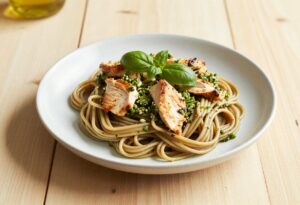
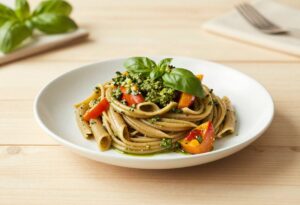
Pesto is stirred into pasta (ideally wholewheat, as in the pesto and vegetable pasta), spooned over roasted vegetables, spread on toast or used to lift a minestrone soup.
- Nutrition values: rich in monounsaturated fat (olive oil) and basil antioxidants; high in calories, so measure it.
- Good to know: homemade pesto (basil, olive oil, pine nuts, garlic, Parmesan) is far better and healthier than the industrial versions.
Keep it in the fridge with a drizzle of oil on top, or freeze it in portions. You can also make it with rocket or walnuts. See the Condiments & Sauces family.
Sources
Average nutrition values per 100 g, given as a guide only (they may vary by brand and preparation).