Group · Nuts & seeds
Chia seeds
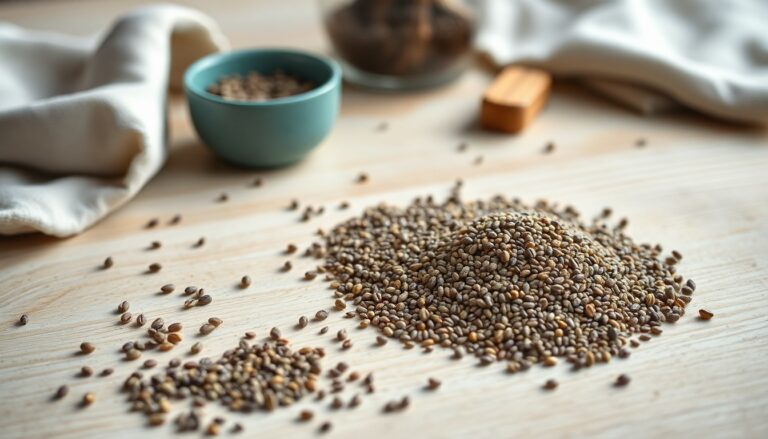
Small but remarkably interesting, chia seeds come from a plant native to Central America, Salvia hispanica. Black, grey or white, they are recognisable by their ability to swell on contact with liquid, forming a mucilaginous gel. At 454 kcal per 100 g they are rich, but they are eaten in small amounts. Their nutritional profile is remarkable: 19.5 g of protein, 30.7 g of fat (including some omega-3 fatty acids) and above all 34.4 g of fibre per 100 g. Versatile, they fit as well into breakfast as into a snack and naturally earn their place in a balanced, varied diet.
Macronutrient breakdown
Nutrition table per 100 g
| Calories | 454 kcal |
| Kilojoules | 1880 kJ |
| Protein | 19,5 g |
| Carbohydrate | 7,8 g |
| Fat | 30,7 g |
| Fibre | 34,4 g |
Micronutrients per 100 g
All measured nutrients, ranked by share of the daily reference intake.
- Omega-3 ALA17,8 g890 %
- Manganese2,72 mg136 %
- Phosphorus860 mg123 %
- Copper0,92 mg92 %
- Magnesium335 mg89 %
- Calcium631 mg79 %
- Omega-6 LA5,84 g58 %
- Vitamin B10,62 mg56 %
- Vitamin B9dietary folate equivalents49 µg
See the other 7 nutrients
- Vitamin B38,83 mg55 %
- Iron7,72 mg55 %
- Zinc4,58 mg46 %
- Potassium407 mg20 %
- Vitamin B20,17 mg12 %
- Vitamin E0,5 mg4 %
- Vitamin C1,6 mg2 %
Anses Ciqual 2025. Source: Anses, 2025, Ciqual food composition table
Tips
The great strength of chia seeds lies in their exceptional fibre content, which contributes to the feeling of fullness. A sensible portion of 1 to 2 tablespoons a day (about 10 to 20 g) is more than enough. There is no need to overdo it: their energy density remains high, as with most nuts and seeds.
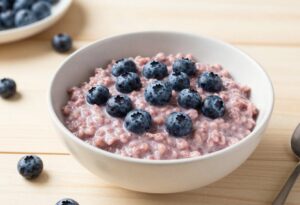
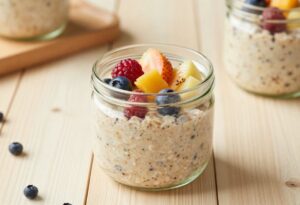
How do you eat chia seeds? The simplest way is to let them soak for 15 to 30 minutes in milk, a plant-based drink or yoghurt to make a creamy chia pudding. You can also sprinkle them over porridge, a salad or a soup, or work them into bread dough and smoothies. Ground, they release more nutrients and even serve as a plant-based binder to replace egg in some recipes.
- Key nutrition facts: plant protein, fat rich in omega-3, soluble and insoluble fibre, magnesium, calcium and iron.
- Glycaemic index: low, thanks to the gel that forms and slows the absorption of carbohydrate.
- Storage: in an airtight jar, away from light and moisture.
Tips for active people: chia seeds are a good ally for snacks. Mixed into yoghurt or oat flakes, they provide carbohydrate, protein and fibre for a filling bite. Their ability to hold water can support hydration during long efforts. For recovery, pair them with a protein source as in these protein snack ideas, or top up your intake with a post-training shaker after the session.
Weight control: despite their many benefits, chia seeds remain high in calories. It is better to measure them with a spoon than by eye, especially if you are slimming. Avoid puddings that are too sweet and favour homemade preparations. To compare their calories with those of other foods, see the calorie table.
As for variations and alternatives, do not hesitate to vary your sources of seeds: flaxseeds offer a similar profile, while pumpkin seeds add crunch. To discover this whole category, explore the Nuts & Seeds family and find the combinations that suit you.