Group · Fruit
Quince
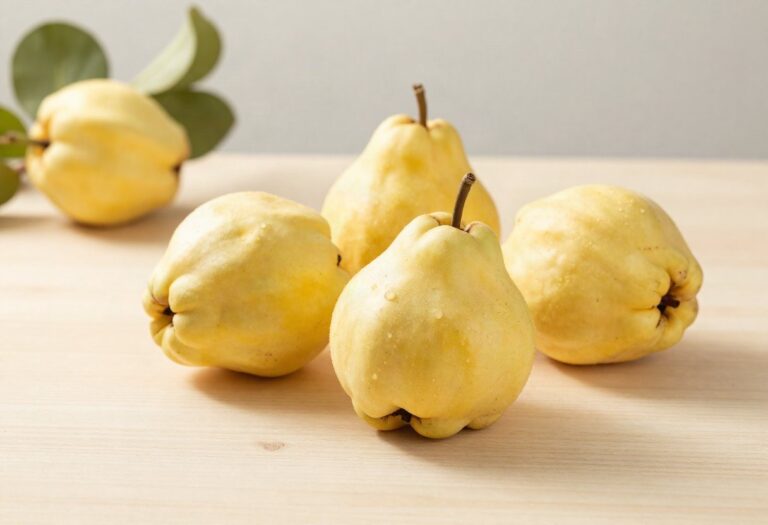
The quince is an autumn fruit with a downy golden-yellow skin, a cousin of the apple and the pear. Very firm and astringent, it is rarely eaten raw: it is turned into jelly, fruit paste, jam or compote. Its fragrant flesh releases all its aroma when cooked. In terms of nutritional values, the quince is low in calories at only 59 kcal per 100 g, rich in fibre (1.9 g) and low in fat. It provides moderate carbohydrate and is of real interest to anyone watching what they eat. Versatile in the kitchen, it fits easily into a balanced diet, from sweet recipes to savoury accompaniments for meat and game.
Macronutrient breakdown
Nutrition table per 100 g
| Calories | 59 kcal |
| Kilojoules | 250 kJ |
| Protein | 0,4 g |
| Carbohydrate | 12,5 g |
| Fat | 0,1 g |
| Fibre | 1,9 g |
Micronutrients per 100 g
All measured nutrients, ranked by share of the daily reference intake.
- Vitamin C15 mg19 %
- Copper0,13 mg13 %
- Potassium197 mg10 %
- Iron0,7 mg5 %
- Vitamin B60,04 mg3 %
- Phosphorus17 mg2 %
- Vitamin B20,03 mg2 %
- Magnesium8 mg2 %
- Vitamin B9dietary folate equivalents3 µg
See the other 7 nutrients
- Vitamin B10,02 mg2 %
- Calcium11 mg1 %
- Vitamin B50,08 mg1 %
- Vitamin B30,2 mg1 %
- Zinc0,04 mg0 %
- Omega-6 LA0,04 g0 %
- Iodine0,4 µg0 %
Anses Ciqual 2025. Source: Anses, 2025, Ciqual food composition table
Tips
The quince is almost never eaten raw because of its hard, astringent flesh. To enjoy its benefits, favour gentle cooking: poaching, baking, compote or jelly. Wash it well to remove the down, then cut it into quarters. Its natural pectin content makes it the ideal ally for jams and the famous quince paste.
- Portions: a serving of compote or a few poached cubes is enough. Watch the added sugar in sweet preparations, which pushes up the calories.
- Pairings: quince goes wonderfully with slow-cooked meats, game and tagines. In a sweet version, combine it with apple or Asian pear to soften its acidity.
- Storage: it keeps for several weeks in a cool, airy place. Avoid storing it near other fruit, as its strong scent permeates them.
Nutritionally, the quince stands out for its fibre, useful for digestive comfort and fullness. It also provides vitamin C and antioxidant compounds, found mostly in the skin and just beneath it. Its glycaemic index remains moderate, all the more so as its carbohydrate content is low (12.5 g per 100 g). You can confidently place it among the fruits of interest for a controlled diet, as long as you limit the added sugar during processing.
For active people, plain quince or quince compote with no added sugar offers light carbohydrates and fibre, ideal in a post-exercise snack paired with a source of protein. If you are preparing a snack, stir a quince compote into a bowl of fromage blanc or add it to a homemade protein snack. Gentle cooking helps preserve its nutrients: discover the principles of gentle cooking so as not to degrade vitamins and flavours.
Weight control: plain quince is very low in calories and filling thanks to its fibre. The trap lies in traditional preparations (quince paste, jelly), which are very high in sugar and should be eaten in moderation. To compare its nutritional values with other fruits, see the food calorie table and choose reduced-sugar versions if you are trying to lose weight.