Group · Seafood
Raw abalone
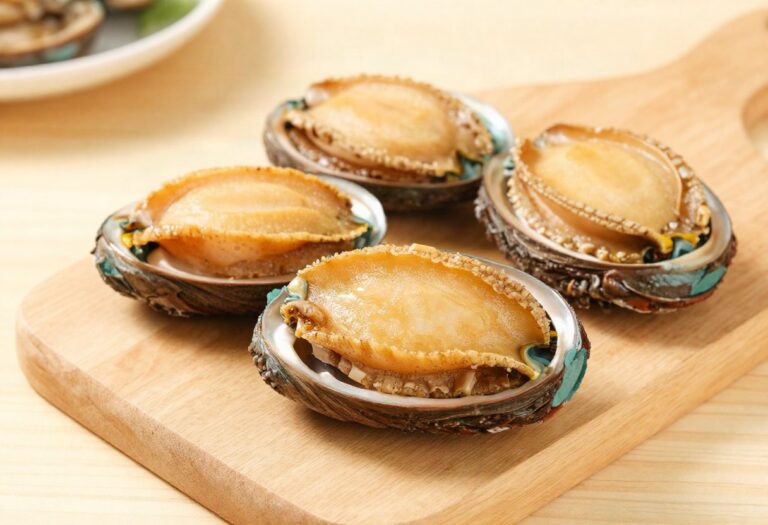
Raw abalone is a gourmet sea shellfish, sometimes nicknamed “sea ear” because of its pearly shell. Prized by connoisseurs, this univalve mollusc with firm, delicately iodine-rich flesh is eaten in coastal regions, notably in Brittany. Its fishing is strictly regulated, which makes it a rare and sought-after product. From a nutritional point of view, raw abalone has an interesting profile: with around 99.6 kcal per 100 g, it provides a good dose of protein (14.4 g), little fat (0.83 g) and moderate carbohydrate (8.69 g). Rich in flavour and low in fat, it naturally has its place in a balanced, varied diet that leans towards seafood.
Macronutrient breakdown
Nutrition table per 100 g
| Calories | 100 kcal |
| Kilojoules | 422 kJ |
| Protein | 14,4 g |
| Carbohydrate | 8,7 g |
| Fat | 0,9 g |
Micronutrients per 100 g
All measured nutrients, ranked by share of the daily reference intake.
- Vitamin B53 mg50 %
- Iron5,9 mg42 %
- Vitamin E4 mg33 %
- Vitamin B120,73 µg29 %
- Phosphorus154 mg22 %
- Copper0,2 mg20 %
- EPA0,05 g20 %
- Vitamin B10,15 mg14 %
See the other 12 nutrients
- Vitamin B20,19 mg14 %
- Magnesium48 mg13 %
- Potassium215 mg11 %
- Vitamin B60,15 mg11 %
- Vitamin B31,5 mg9 %
- Zinc0,82 mg8 %
- Calcium31 mg4 %
- Vitamin C2 mg3 %
- Vitamin B95 µg3 %
- Manganese0,04 mg2 %
- Total omega-30,05 g2 %
- Vitamin A2 µg0 %
Anses Ciqual 2025. Source: Anses, 2025, Ciqual food composition table
Tips
Raw abalone lends itself to many preparations, provided you respect its delicate flesh. Raw, it is enjoyed thinly sliced, carpaccio or sashimi style, lifted with a squeeze of lemon juice, olive oil and a pinch of fleur de sel. Freshness is essential: choose a live abalone, with responsive flesh and a distinctly marine smell. Keep it in the fridge, in a damp cloth, and eat it very soon after buying.
In the kitchen, abalone calls for a delicate touch. If you prefer to cook it, opt for brief, gentle cooking to preserve its tenderness, as it toughens quickly. A gentle cooking method keeps both its taste and nutritional qualities. A reasonable portion is around 80 to 100 g, as a starter or a light dish served with crunchy vegetables.
As for nutrition facts, raw abalone appeals with its richness in good-quality protein (14.4 g per 100 g) and its very low fat content. It also provides minerals such as magnesium, phosphorus and iron, which are valuable as part of a varied diet. Its 8.69 g of carbohydrate make it a slightly more carbohydrate-rich mollusc than the average seafood, but its calorie density stays moderate, which makes it compatible with a slimming approach or a balanced diet.
For active people, abalone is a source of lean protein that helps muscle recovery after exercise. Combined with a portion of wholegrain starchy foods and vegetables, it makes a complete meal without too much fat. Its low fat content makes it an interesting option when cutting or watching your weight.
- Pair it with citrus fruit to lift its iodine-rich flavour.
- Avoid overly fatty sauces that mask its delicacy.
- Slice it thinly to make it easier to enjoy raw.
If you like exploring seafood, discover other shellfish such as scallops or queen scallops, which have comparable nutritional profiles. You can also browse the whole seafood family to vary your intake, or see the food calorie table to compare values and put together balanced meals every day.