Group · Seafood
Scallops
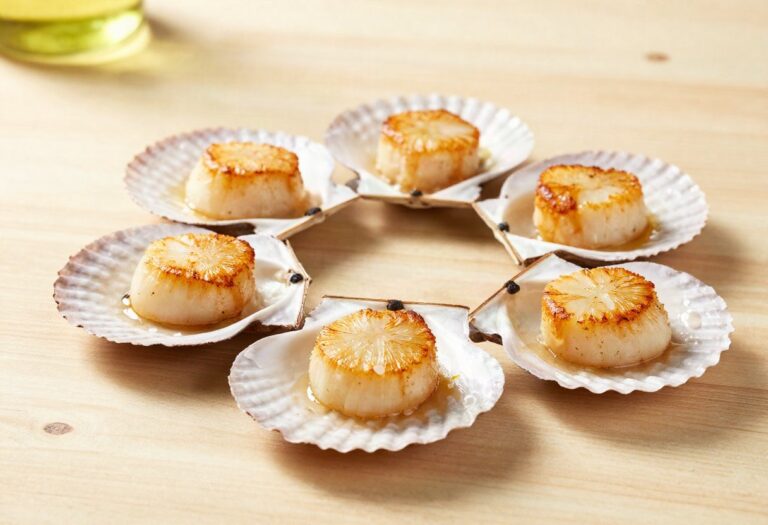
The scallop (coquille Saint-Jacques) refers to the whole mollusc; what is eaten is the white meat, the firm, slightly sweet muscle, and the coral, the orange gland. In France, only Pecten maximus can carry this name: other pectinids are called « queen scallops« . It is found fresh in its shell in season, frozen, or as shelled meat all year round.
In terms of nutrition facts, raw meat and coral: 83 kcal per 100 g for 17 g of protein and 1.31 g of fat. It provides 220 mg of calcium, 4.99 µg of vitamin B12 (twice the reference intake), 388 mg of potassium, 225 mg of phosphorus and 42.6 µg of iodine per 100 g. A lean, protein-rich flesh, appreciated by athletes and by people watching their weight.
Macronutrient breakdown
Nutrition table per 100 g
| Calories | 83 kcal |
| Kilojoules | 351 kJ |
| Protein | 17 g |
| Carbohydrate | 0,8 g |
| Fat | 1,4 g |
Micronutrients per 100 g
All measured nutrients, ranked by share of the daily reference intake.
- Vitamin B124,99 µg200 %
- Manganese2,4 mg120 %
- DHA0,14 g56 %
- EPA0,12 g48 %
- Selenium21,4 µg39 %
- Phosphorus225 mg32 %
- Zinc2,91 mg29 %
- Iodine42,6 µg28 %
See the other 14 nutrients
- Calcium220 mg28 %
- Potassium388 mg19 %
- Magnesium51,4 mg14 %
- Vitamin B31,9 mg12 %
- Total omega-30,27 g11 %
- Vitamin B20,14 mg10 %
- Vitamin E1,17 mg10 %
- Vitamin B917 µg9 %
- Iron1,16 mg8 %
- Vitamin B60,1 mg7 %
- Vitamin B50,4 mg7 %
- Omega-3 ALA0,01 g0 %
- Vitamin A2 µg0 %
- Omega-6 LA0,01 g0 %
Anses Ciqual 2025. Source: Anses, 2025, Ciqual food composition table
Tips
220 mg of calcium: exceptional for seafood. More than a yoghurt of comparable volume. A 150 g portion covers 41% of the reference intake.
The coral is not waste. It is the most flavourful part and the richest in micronutrients. The white meat alone, without the coral, provides only 12 mg of calcium, 2 µg of vitamin B12 and 1.6 mg of zinc per 100 g, against 220 mg, 4.99 µg and 2.9 mg with the coral. Removing it out of habit means losing the essentials.
One minute on each side, over a very high heat. That is all the cooking it needs. The meat should stay pearly in the centre: overcooked, it turns rubbery and releases its water. Extra fresh, it can also be eaten raw, as a carpaccio or tartare marinated in lemon and olive oil, or cooked en papillote for a gentle cooking method that preserves nutrients.
October to May for fresh ones. That is the fishing season in France. Choose pearly, firm meat with no smell of ammonia. Store it in the coldest part of the fridge and eat it within 24 to 48 hours, or freeze it.
Frozen: read the label. Many frozen scallops have added polyphosphates that retain water: they then release that water in the pan and never brown. « No additives » is the wording to look for.
It is the sauce that adds the calories. Simply pan-fried, scallops stay light: it is the butter, cream or béchamel gratin that push up the total. For a slimming meal, scallops pan-fried in olive oil with green vegetables are enough. Allow 4 to 6 per person.
For athletes, its lean protein supports muscle recovery. Pair it with complex carbohydrates (brown rice, quinoa) to replenish energy stores, in line with nutrition for fitness.
Pairings that work: celeriac purée, caramelised chicory, citrus butter, a hint of saffron. The pan-fried scallops with celeriac purée recipe is a good example. For variety, explore the seafood family or compare intakes with the food calorie table.
Major allergen. Molluscs are among the fourteen allergens that must be declared: avoid if you are allergic.