Group · Vegetables
Celery
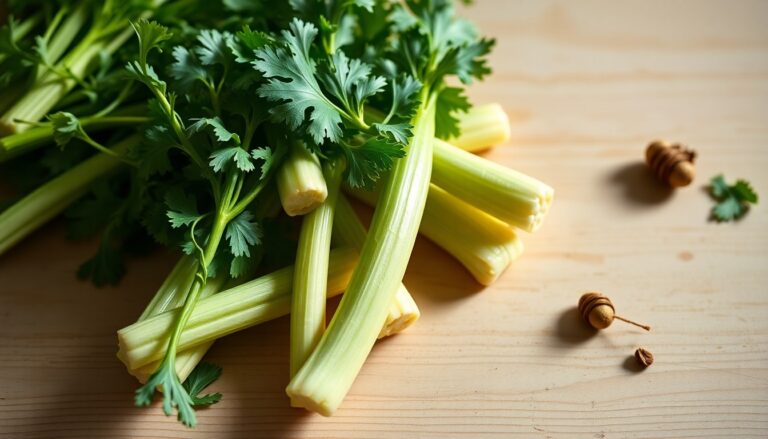
Celery is a vegetable from the Apiaceae family, valued for its crunchy freshness and characteristic aroma. The main distinction is between stalk celery, of which the stalks and leaves are eaten, and celeriac, grown for its fleshy root. With only 15.4 kcal per 100 g, it is one of the lightest vegetables, ideal in a balanced diet and for weight control. Rich in water and fibre, low in carbohydrate and fat, it adds texture and flavour without weighing down the plate. Raw or cooked, celery slips as easily into salads as into stocks, soups and slow-cooked dishes.
Macronutrient breakdown
Nutrition table per 100 g
| Calories | 15 kcal |
| Kilojoules | 64 kJ |
| Protein | 0,7 g |
| Carbohydrate | 2,5 g |
| Fat | 0,2 g |
| Fibre | 2,2 g |
Micronutrients per 100 g
All measured nutrients, ranked by share of the daily reference intake.
- Potassium390 mg20 %
- Vitamin C5,51 mg7 %
- Vitamin K14,86 µg6 %
- Calcium46 mg6 %
- Vitamin B50,27 mg5 %
- Manganese0,08 mg4 %
- Vitamin B60,05 mg4 %
- Phosphorus24 mg3 %
- Vitamin B9dietary folate equivalents56,8 µg
See the other 6 nutrients
- Copper0,03 mg3 %
- Magnesium11 mg3 %
- Total omega-30,03 g1 %
- Zinc0,09 mg1 %
- Vitamin A6,22 µg1 %
- Iron0,06 mg0 %
Anses Ciqual 2025. Source: Anses, 2025, Ciqual food composition table
Tips
Celery has many culinary uses. Raw, cut into sticks, it goes ideally with a fromage blanc dip at a light drinks party. Finely sliced, it lifts mixed salads and adds crunch. Cooked, it flavours stocks, boiled dinners and velvety soups. Remember to keep the leaves, rich in aroma, to add at the end of cooking or to chop into a vinaigrette.
In terms of nutrition facts, celery stands out for its very low energy density and its fibre content (2.2 g per 100 g), useful for digestive comfort and fullness. It also provides potassium, vitamin K and aromatic compounds. Its low glycaemic index and 2.41 g of carbohydrate make it an ally of slimming plates and a balanced diet.
- Storage: keep the stalks in the fridge, wrapped in a damp cloth, to preserve their crunch for several days.
- Cooking: favour steaming or gentle simmering to keep flavours and nutrients. Discover the principles of gentle cooking.
- Pairings: celery goes very well with carrot, leek and onion in aromatic bases.
For active people, celery is not an energy source, but it is an excellent option for bulking out meals without adding many calories, especially when cutting or losing weight. Its water and potassium contribute to hydration, especially after exercise, when it goes well with a source of lean protein. As a snack, celery sticks with a little soft cheese offer volume and crunch for few calories. For protein needs, complete your diet instead with other sources suited to your training.
When it comes to weight control, celery is a valuable asset: it lets you fill the plate while limiting energy intake. Beware of the preparations, though: a remoulade too rich in mayonnaise or fatty sauces push the calorie total up. To vary the pleasure, explore other low-calorie vegetables such as raw fennel and the whole vegetable family. To compare intakes, you can consult the food calorie table.