Group · Fish
Red mullet (cooked)
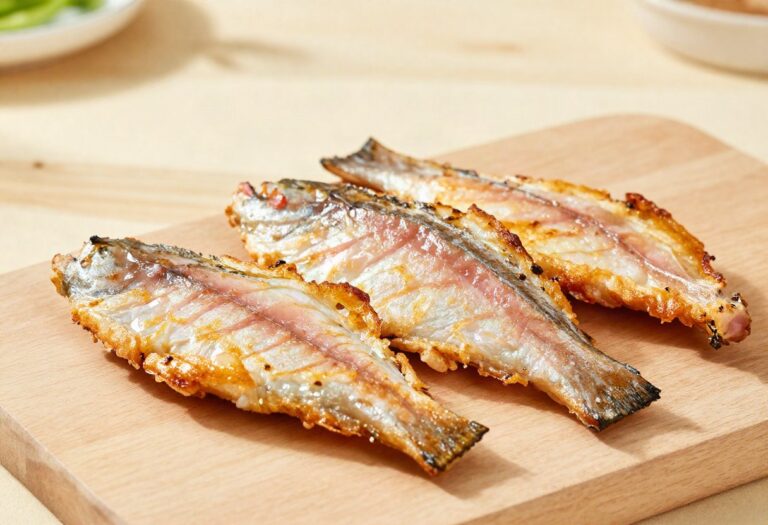
The red mullet (rouget-barbet in French) is a small Mediterranean fish with pink, firm and very fragrant flesh, recognisable by its two barbels. It is one of the best-loved fish in Provençal and Italian cooking, where it is often cooked whole.
In terms of nutrition facts, steamed, it provides 143 kcal per 100 g with 24.1 g of protein and 5.2 g of fat. Its standout figure is selenium: 50 µg per 100 g, or 91% of the reference intake. It also provides 410 mg of potassium, 230 mg of phosphorus and 40 µg of iodine per 100 g.
Macronutrient breakdown
Nutrition table per 100 g
| Calories | 143 kcal |
| Kilojoules | 602 kJ |
| Protein | 24,1 g |
| Fat | 5,2 g |
Micronutrients per 100 g
All measured nutrients, ranked by share of the daily reference intake.
- Vitamin B123,74 µg150 %
- Selenium50 µg91 %
- Phosphorus230 mg33 %
- Iodine40 µg27 %
- Vitamin D1,27 µg25 %
- Vitamin B33,47 mg22 %
- Potassium410 mg21 %
- Vitamin E2,1 mg18 %
See the other 16 nutrients
- Vitamin B60,17 mg12 %
- Magnesium33 mg9 %
- Vitamin B914,3 µg7 %
- Vitamin B50,41 mg7 %
- Copper0,05 mg5 %
- Vitamin C3,17 mg4 %
- Zinc0,39 mg4 %
- Iron0,48 mg3 %
- Calcium21 mg3 %
- Omega-6 LA0,25 g3 %
- Vitamin B20,03 mg2 %
- Vitamin K11,59 µg2 %
- Total omega-30,05 g2 %
- Vitamin B10,02 mg2 %
- Omega-3 ALA0,03 g2 %
- Manganese0,02 mg1 %
Anses Ciqual 2025. Source: Anses, 2025, Ciqual food composition table
Tips
One portion covers almost all of your selenium requirement. Selenium contributes to antioxidant defence and thyroid function. European soils are relatively poor in it, which makes seafood an all the more useful source.
Its liver is traditionally eaten. Red mullet is one of the few fish that are cooked without gutting, notably in the Mediterranean. It is an established culinary practice, but the liver also concentrates contaminants: keep it for special occasions, and avoid it if you are pregnant.
Whole, it cooks in six minutes. Two to three minutes per side in a very hot pan, with just a drizzle of olive oil. Its skin crisps and protects the flesh. Small ones are eaten fried, which obviously changes the calculation.
It is expensive, and it is enough on its own. No need to drown it: thyme, a little lemon zest, fleur de sel to finish. Allow one red mullet of 150 to 200 g per person as a main course.
There are many bones. That is its real drawback, particularly for children. Ask your fishmonger to fillet it if that is a problem: it loses a little flavour, but it is still excellent.
Sources
Average nutritional values per 100 g, provided for guidance only (may vary by brand, cut and preparation).