Group · Cereals & grains
Rice Krispies
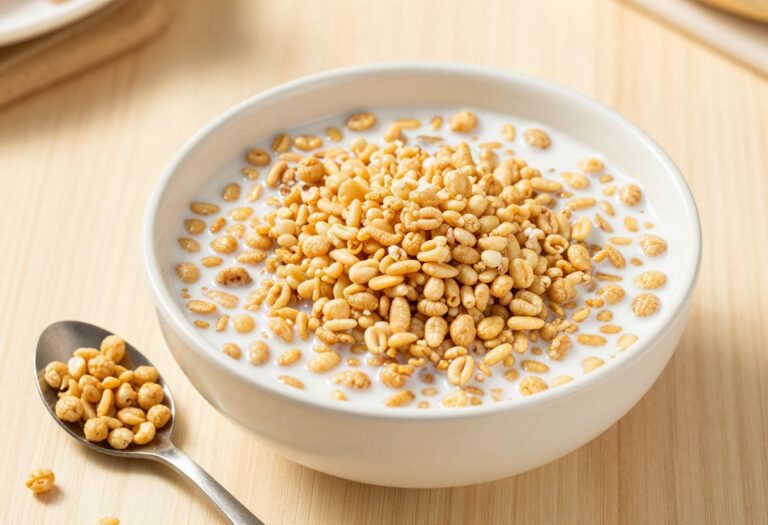
Rice Krispies are among the most recognisable breakfast cereals, famous for their light crunch and their well-known « snap, crackle and pop » when milk is added. Made from puffed rice, they have an airy texture and a neutral taste that appeals to young and old. Nutritionally, these cereals provide around 388 kcal per 100 g, with a high carbohydrate content (86.3 g), little protein (7 g), very little fat (1.2 g) and only 2 g of fibre. Easy to include in your day, they have a place in a balanced diet as long as you watch the portions and choose accompaniments that enrich the meal.
Macronutrient breakdown
Nutrition table per 100 g
| Calories | 388 kcal |
| Kilojoules | 1650 kJ |
| Protein | 7 g |
| Carbohydrate | 86,3 g |
| Fat | 1,2 g |
| Fibre | 2 g |
Micronutrients per 100 g
All measured nutrients, ranked by share of the daily reference intake.
- Vitamin D8,4 µg168 %
- Vitamin B21,2 mg86 %
- Vitamin B61,2 mg86 %
- Vitamin B122,1 µg84 %
- Vitamin B313,3 mg83 %
- Vitamin B9166 µg83 %
- Vitamin B10,91 mg83 %
- Zinc7 mg70 %
See the other 9 nutrients
- Iron8 mg57 %
- Manganese0,7 mg35 %
- Phosphorus150 mg21 %
- Selenium7,33 µg13 %
- Vitamin B50,64 mg11 %
- Potassium170 mg9 %
- Magnesium25,3 mg7 %
- Iodine2 µg1 %
- Calcium9,5 mg1 %
Anses Ciqual 2025. Source: Anses, 2025, Ciqual food composition table
Tips
To enjoy Rice Krispies without too much sugar, go for a reasonable portion of 30 to 40 g, or a small bowl. Pour them over semi-skimmed milk or a plain yoghurt, and add fresh fruit (banana, red berries) for more fibre and vitamins. This tip improves fullness, because the nutritional values of these cereals show a low fibre content and a high glycaemic index linked to the puffed rice.
How to eat these cereals
- At breakfast, paired with a source of protein (milk, fromage blanc, egg) to balance the meal.
- As a quick snack before activity, when you want easily absorbed carbohydrate.
- In home baking, to make crunchy bars or coat a dessert.
For storage, keep the packet tightly closed, away from moisture, to preserve the characteristic crunch. Once poured into milk, eat them quickly before they go soft.
A word for active people. Thanks to their high carbohydrate content (84.9 g per 100 g) and very low fat, Rice Krispies are a useful source of quick energy before exercise, or for replenishing glycogen stores after training. Remember to add protein, though: a bowl of cereal with milk, or followed by a post-workout shaker, supports better recovery. To go further, discover our advice on fitness nutrition.
Weight control. With about 384 calories per 100 g and often added sugars, Rice Krispies should be eaten in moderation if you are trying to lose weight. Their low fibre content limits the filling effect, which can tempt you to have a second helping. Weigh your portion, vary with higher-fibre alternatives such as All Bran or a bowl of oats, and notice how you respond to this type of puffed cereal. If you are hesitating between several brands, compare them with other products in the cereal family.
In short, Rice Krispies remain a practical, light option, to be included sensibly in a varied diet. Their benefits lie mainly in their ease of digestion and their quick energy, to be balanced with more wholegrain foods through the day.