Group · Vegetables
Tinned sweetcorn
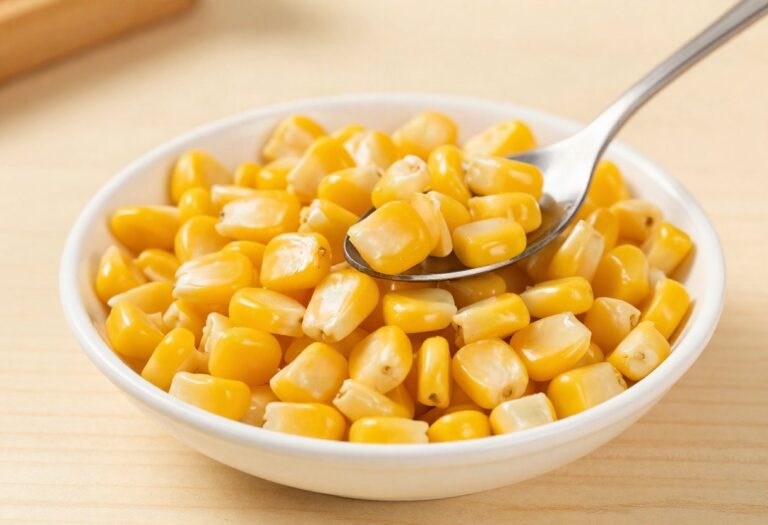
Tinned sweetcorn is one of the most practical ways to enjoy these golden kernels all year round. Shelled and pre-cooked, it keeps for a long time and can be eaten with no preparation, which makes it an ally for quick meals. Botanically, sweetcorn is a cereal, but it is often classed with vegetables because of how it is used in cooking. At around 105 kcal per 100 g, it provides energising carbohydrate (18.3 g), a little protein (2.66 g), very little fat (1.68 g) and fibre (3.1 g). Its sweet, crunchy flavour makes it a popular ingredient in salads, stews and colourful side dishes. In the right amounts, it has its place in a balanced, varied diet.
Macronutrient breakdown
Nutrition table per 100 g
| Calories | 105 kcal |
| Kilojoules | 443 kJ |
| Protein | 2,7 g |
| Carbohydrate | 18,3 g |
| Fat | 1,7 g |
| Fibre | 3,1 g |
Micronutrients per 100 g
All measured nutrients, ranked by share of the daily reference intake.
- Potassium224 mg11 %
- Magnesium26,9 mg7 %
- Phosphorus46 mg7 %
- Vitamin B50,36 mg6 %
- Manganese0,11 mg6 %
- Vitamin B30,88 mg6 %
- Vitamin B60,07 mg5 %
- Omega-6 LA0,4 g4 %
- Vitamin B9dietary folate equivalents75 µg
See the other 11 nutrients
- Zinc0,39 mg4 %
- Copper0,04 mg4 %
- Vitamin C2,1 mg3 %
- Iron0,35 mg3 %
- Iodine2,55 µg2 %
- Vitamin B10,02 mg1 %
- Vitamin B20,02 mg1 %
- Omega-3 ALA0,02 g1 %
- Vitamin E0,07 mg1 %
- Calcium3,51 mg0 %
- Vitamin A1,83 µg0 %
Anses Ciqual 2025. Source: Anses, 2025, Ciqual food composition table
Tips
Tinned sweetcorn is easy to work into everyday meals. Before using it, remember to drain it well and rinse it under cold water to reduce the salt and the sweet canning liquid. You can serve it cold in a mixed salad, hot as a side dish, or add it to soups, patties and grain dishes.
How to eat it? A reasonable portion is around 60 to 80 g. Pair it with crunchy vegetables such as pepper, tomato or cucumber for fresh, colourful bowls. It also goes with pulses (kidney beans, chickpeas) to make a complete, filling plate. For variety, you can pan-fry it for a few minutes to bring out its toasted flavour.
- Nutrition facts: its carbohydrate makes it a useful source of energy, while its fibre supports digestive comfort.
- Glycaemic index: moderate, especially when combined with protein and fibre, which slows the absorption of sugars.
- Practical benefits: ready to use, ideal for batch cooking and quick meals.
For active people: tinned sweetcorn provides readily available carbohydrate, useful in a pre-workout meal or to replenish stores after exercise. Combine it with a source of protein (egg, tuna, poultry) to support muscle recovery. When you are trying to gain mass, it complements a plate rich in starchy foods; to find out more about organising meals around physical activity, see our guidelines on fitness nutrition.
Weight control: although low in calories per 100 g, sweetcorn is still denser in carbohydrate than most green vegetables. If you are watching your waistline, measure your portions and favour a plate where it complements lighter vegetables rather than forming the base of the dish. Be wary too of seasoned versions or very salty mixed vegetables. You will find more light plant-based ideas in the vegetable family, and you can compare its nutrients using the food calorie table.
In short, tinned sweetcorn is a practical, tasty and energising ingredient. Eaten in moderation and well combined, it enriches your recipes while staying compatible with a varied diet.