Group · Meat
Turkey sausage
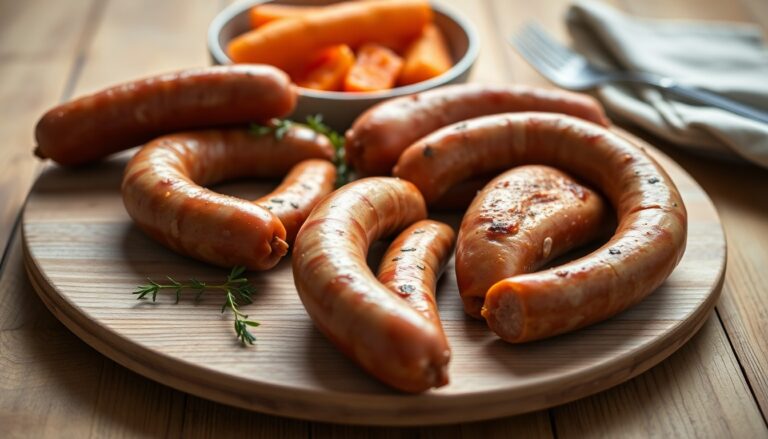
Turkey sausage is one of the poultry-based cured meats that appeal to anyone who wants tasty flavours with a lighter touch. Made from minced turkey and seasoned, it comes as fresh versions for grilling, smoked or pre-cooked, sometimes flavoured with herbs or paprika. With around 239 kcal per 100 g, it has a good protein profile (nearly 15.6 g of protein) and a more moderate fat content than many standard sausages (19.1 g), with very little carbohydrate. This alternative to pork sausage easily finds a place in a balanced diet, as long as you keep an eye on the salt. It suits quick meals as well as more structured plates.
Macronutrient breakdown
Nutrition table per 100 g
| Calories | 239 kcal |
| Kilojoules | 992 kJ |
| Protein | 15,6 g |
| Carbohydrate | 1,2 g |
| Fat | 19,1 g |
Micronutrients per 100 g
All measured nutrients, ranked by share of the daily reference intake.
- Calcium8 mg1 %
Anses Ciqual 2025. Source: Anses, 2025, Ciqual food composition table
Tips
Turkey sausage is simple to cook: grilled in a pan, in the oven or on the barbecue, it develops a golden crust while staying tender. Avoid pricking it too early so that it keeps its juices, and choose gentle cooking that preserves its tenderness. Controlled cooking also limits the formation of unwanted compounds linked to high temperatures, as explained in this article on gentle cooking.
In terms of nutrition facts, it stands out for its high content of good-quality protein, which is useful for maintaining muscle mass. The absence of carbohydrate and fibre makes it compatible with many ways of eating. Like any cured meat, however, it is processed and often salty: a reason to eat it in moderation and serve it with fresh vegetables or seasonal vegetables rich in fibre.
- Recommended portion: one or two sausages (around 80 to 120 g) are enough for a balanced meal.
- Smart pairings: grilled vegetables, lentils, wholewheat semolina or ratatouille.
- Storage: a few days in the fridge for fresh versions, and keep a close eye on the date for smoked versions.
For active people, turkey sausage is a convenient source of protein to help rebuild muscle fibres after exercise. You can include it in a post-workout meal with a source of carbohydrate such as rice or potatoes. To top up your protein intake over the day, also think about varying with other lean poultry such as turkey breast or chicken breast, which are even lower in fat. If you like protein snacks, you will find more ideas in this guide to the protein snack.
For weight control, turkey sausage is still a better choice than fatty cured meats, but its calorie density and salt content call for moderation. Choose versions that are lower in fat, limit rich sauces and round off your plate with raw vegetables. You can compare its energy content with other products using the food calorie table. And to explore the full variety of this category, discover the meat family. Included sensibly, turkey sausage brings pleasure and protein without weighing your meals down too much.