Group · Vegetables
Turnip
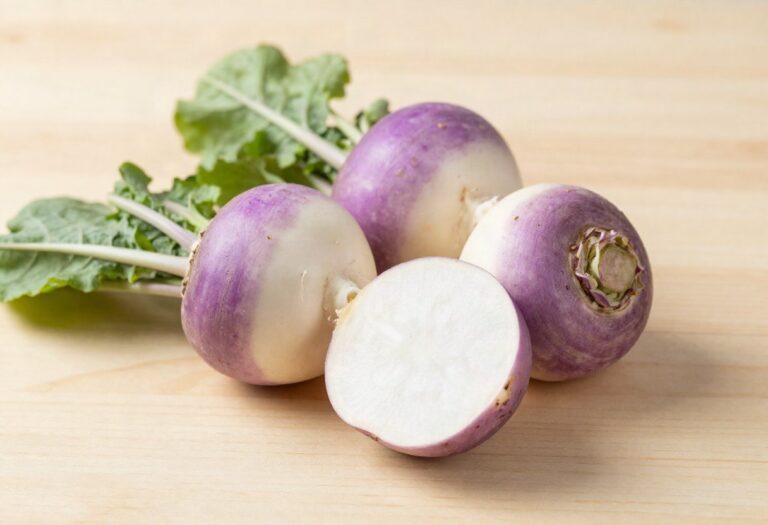
The turnip is a root vegetable from the large brassica family, grown since antiquity and prized for its tender flesh with a slightly peppery flavour. White, purple-topped, yellow or in early spring varieties, it comes in many forms through the seasons. At just 25 kcal per 100 g, it is a low-calorie food, rich in water and containing fibre, which fits naturally into a balanced diet. Turnip provides moderate carbohydrate (3.8 g), very little fat and a good dose of minerals. Versatile in the kitchen, it works as well in winter soups as in crunchy raw vegetable platters.
Macronutrient breakdown
Nutrition table per 100 g
| Calories | 25 kcal |
| Kilojoules | 105 kJ |
| Protein | 0,9 g |
| Carbohydrate | 3,8 g |
| Fat | 0,2 g |
| Fibre | 2,2 g |
Micronutrients per 100 g
All measured nutrients, ranked by share of the daily reference intake.
- Potassium237 mg12 %
- Vitamin C5,6 mg7 %
- Calcium37,3 mg5 %
- Copper0,05 mg5 %
- Vitamin B60,06 mg4 %
- Phosphorus26 mg4 %
- Vitamin B50,21 mg4 %
- Magnesium8,75 mg2 %
- Vitamin B9dietary folate equivalents9 µg
See the other 7 nutrients
- Manganese0,05 mg2 %
- Zinc0,1 mg1 %
- Iron0,11 mg1 %
- Vitamin B30,05 mg0 %
- Vitamin A2,08 µg0 %
- Vitamin E0,02 mg0 %
- Vitamin K10,1 µg0 %
Anses Ciqual 2025. Source: Anses, 2025, Ciqual food composition table
Tips
The turnip can be cooked in a thousand ways. Young and early, it is enjoyed raw, grated or in thin slices in a salad for its crunch and freshness. When more mature, it shows its full sweetness steamed, glazed in butter, mashed, in a gratin or simmered in a stew. Gentle cooking by steaming best preserves its vitamins and texture without making it soggy.
Nutrition facts and benefits: turnip is mostly water, which explains its low energy density. It provides vitamin C, B vitamins, potassium, calcium and a little sulphur, typical of brassicas. Its fibre (2.2 g per 100 g) contributes to fullness and digestive comfort. Its glycaemic index stays moderate, especially when eaten whole or in pieces rather than as a very soft mash.
- Portions: 150 to 200 g cooked makes a good portion of vegetables for a meal.
- Pairings: it goes well with carrot, leek and celeriac in hotpots and broths.
- Storage: keep it in the fridge in the vegetable drawer, and cut off the tops, which are also edible, sauteed or in soup.
For active people: low in calories but filling, turnip is an excellent ally for generous plates, ideal when cutting or watching your weight. It complements starchy foods and a source of protein after exercise without adding much energy. For a recovery meal, pair it with rice and lean meat or fish to balance carbohydrate and protein.
Weight control: at 25 kcal per 100 g, turnip is one of the best vegetables for slimming. Beware of preparations that transform it, such as turnips glazed in butter and sugar or gratins rich in cream, which push up the calories. Stick to light cooking and simple seasoning. You can compare its nutrients with other foods using the calorie table, and find more ideas in the vegetable family to vary your plate through the seasons.