Group · Meat
Wild rabbit
Wild rabbit (lapin de garenne) is the wild rabbit, hunted rather than farmed. Its meat is darker, firmer and leaner than that of the domestic rabbit: an animal that runs develops muscle and no marbling.
As for nutrition facts, raw: 108 kcal per 100 g for 21.8 g of protein and only 2.32 g of fat including 0.69 g of saturated fat. It provides 378 mg of potassium, 226 mg of phosphorus, 3.2 mg of iron and 6.5 mg of vitamin B3 per 100 g, with 0.13 g of salt.
Macronutrient breakdown
Nutrition table per 100 g
| Calories | 108 kcal |
| Kilojoules | 456 kJ |
| Protein | 21,8 g |
| Fat | 2,4 g |
Micronutrients per 100 g
All measured nutrients, ranked by share of the daily reference intake.
- Vitamin B36,5 mg41 %
- Phosphorus226 mg32 %
- Iron3,2 mg23 %
- Potassium378 mg19 %
- Magnesium29 mg8 %
- Vitamin B20,06 mg4 %
- Vitamin B10,03 mg3 %
- Calcium12 mg2 %
Anses Ciqual 2025. Source: Anses, 2025, Ciqual food composition table
Tips
One of the leanest meats in the database. 2.32 g of fat for 21.8 g of protein: on a par with kid and venison, and well below any poultry with its skin.
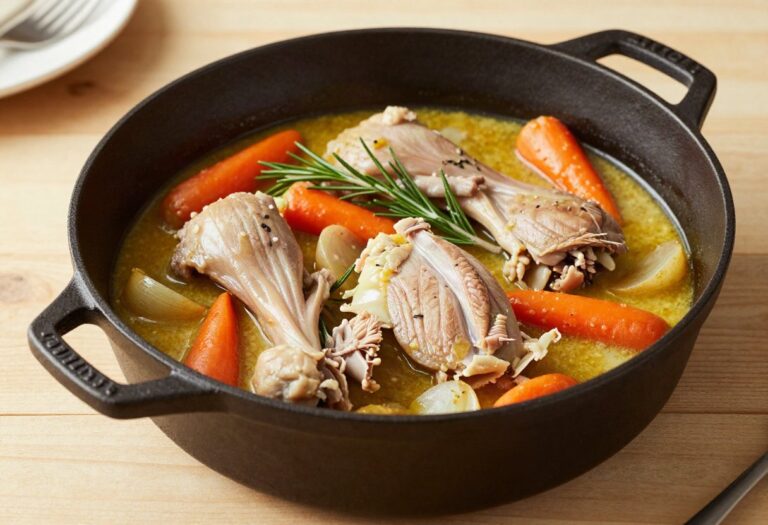
Its leanness calls for slow cooking. Without fat, it toughens with dry cooking. Stew, casserole, wine marinade: this is the only way for wild rabbit, whose meat is also firmer than that of farmed rabbit.
It is much more flavourful. That is its reason for being in the kitchen: domestic rabbit is mild, wild rabbit is frankly game. It stands up to strong aromatics such as thyme, bay and juniper.
0.13 g of salt: it is a meat, not a cold cut. It does not count towards the 150 g a week guideline, which applies to processed products.
Game: two precautions. Cook it right through, because of the risk of tularaemia and toxoplasmosis, and watch out for lead shot. Pregnant women should choose farmed rabbit.