Type 2 diabetes: diet and prevention
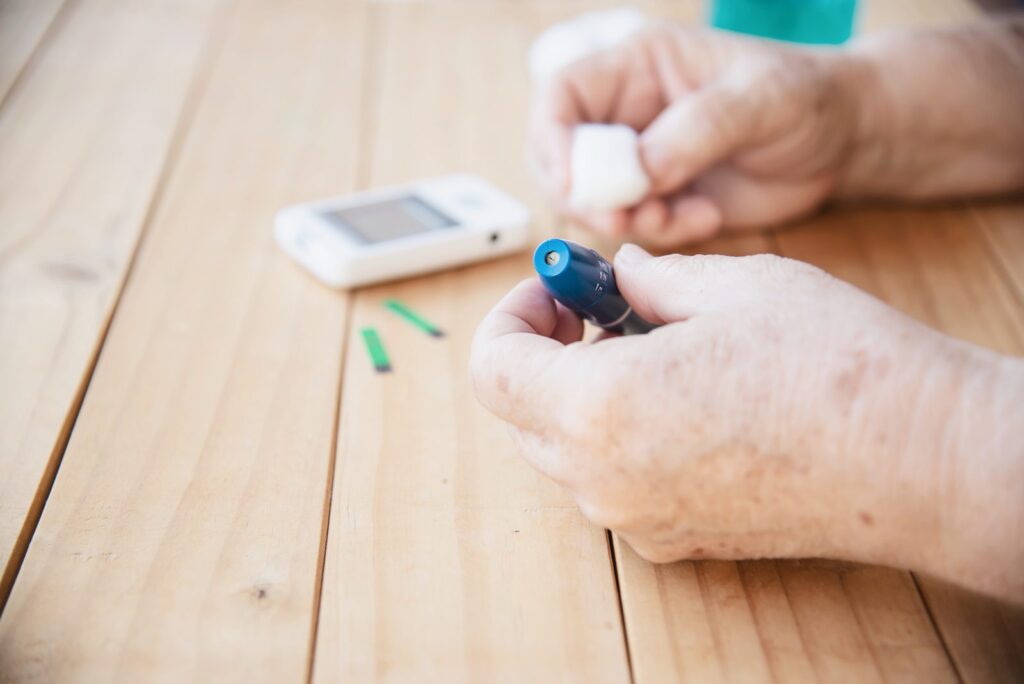
Type 2 diabetes is prevented and treated first of all through lifestyle. The major trials show it: in people at high risk, losing a little weight, being active for 150 minutes a week and eating more fibre reduces the risk of developing diabetes by 58%. On the plate, the priorities are simple: starchy foods at every meal but preferably wholegrain ones or pulses, plenty of vegetables, two pieces of fruit a day, as few sugary drinks as possible, and less red meat and processed meat. This guide brings together the official figures, portions and a sample day.
👉 Free tool: BMI calculator – calculate it in 30 seconds, no sign-up needed.
Type 2 diabetes in France
According to Santé publique France, more than 3.8 million people were being treated with medication for diabetes in 2023, or 5.6% of the population, and the prevalence continues to rise. Type 2 is the most common form. It combines insulin resistance (cells respond poorly to insulin) with insulin production that has become insufficient. It should not be confused with type 1 diabetes, an autoimmune disease in which insulin is vital from the outset.
Santé publique France cites age, overweight, a sedentary lifestyle, a history of gestational diabetes, a family history of diabetes and prediabetes as the main risk factors. The disease is also marked by strong inequalities: its prevalence is nearly twice as high in the French overseas departments as the national average.
The thresholds to know
| Situation | Criterion |
|---|---|
| Prediabetes | Fasting blood glucose between 1.10 g/L (6.1 mmol/L) and 1.26 g/L (7.0 mmol/L) |
| Diabetes | Fasting venous blood glucose (at least 8 hours) above 1.26 g/L (7 mmol/L), on two occasions |
| Diabetes with symptoms | Intense thirst, frequent need to urinate, unexplained weight loss and a single blood glucose above 2 g/L (11.1 mmol/L) |
| HbA1c target (general case) | 7% or less for most patients; 6.5% or less for recent diabetes, with no cardiovascular history and a life expectancy of more than 15 years |
HbA1c, or glycated haemoglobin, reflects the average of your blood glucose over several weeks. It is the indicator your doctor follows, not a single reading after a meal.
What the trials have proved
Prevention: lifestyle does better than medication
Two randomised trials laid the foundations. In the Finnish Diabetes Prevention Study (New England Journal of Medicine, 2001), 522 overweight adults with glucose intolerance received individual advice: lose weight, cut total and saturated fat, eat more fibre, be more active. After four years, 11% of the supported group had become diabetic compared with 23% of the control group, a risk reduction of 58%, for an average weight loss of about 4 kg in the first year.
The American Diabetes Prevention Program (New England Journal of Medicine, 2002) compared, in 3,234 people with raised blood glucose, a lifestyle programme (target: at least 7% less body weight and at least 150 minutes of activity a week) with metformin and a placebo. Lifestyle reduced the onset of diabetes by 58%, metformin by 31%. Supporting 6.9 people for three years was enough to prevent one case of diabetes.
Treatment: losing 5% of your weight already changes things
The French National Authority for Health (HAS) updated its recommendation in May 2024. It makes lifestyle change (nutrition programme, physical activity, tackling sedentary behaviour) a prerequisite to drug treatment, to be continued throughout care. It states that a loss of 5% of body weight or more at diagnosis significantly improves blood glucose, lipids and blood pressure in most overweight people. At 90 kg, that means 4.5 kg.
Remission is possible, under medical supervision
The DiRECT trial (The Lancet, 2018) followed 306 people diagnosed less than six years earlier. The programme was based on total meal replacement with a formula providing 825 to 853 kcal a day for 3 to 5 months, followed by gradual reintroduction of food, with supervised withdrawal of medication. At one year, 46% of participants in the intervention group were in remission, compared with 4% in the control group. Remission followed weight loss: it applied to 86% of those who had lost 15 kg or more. This protocol is medical: do not try it on your own, especially if you take a treatment that lowers blood glucose.
Your plate day to day
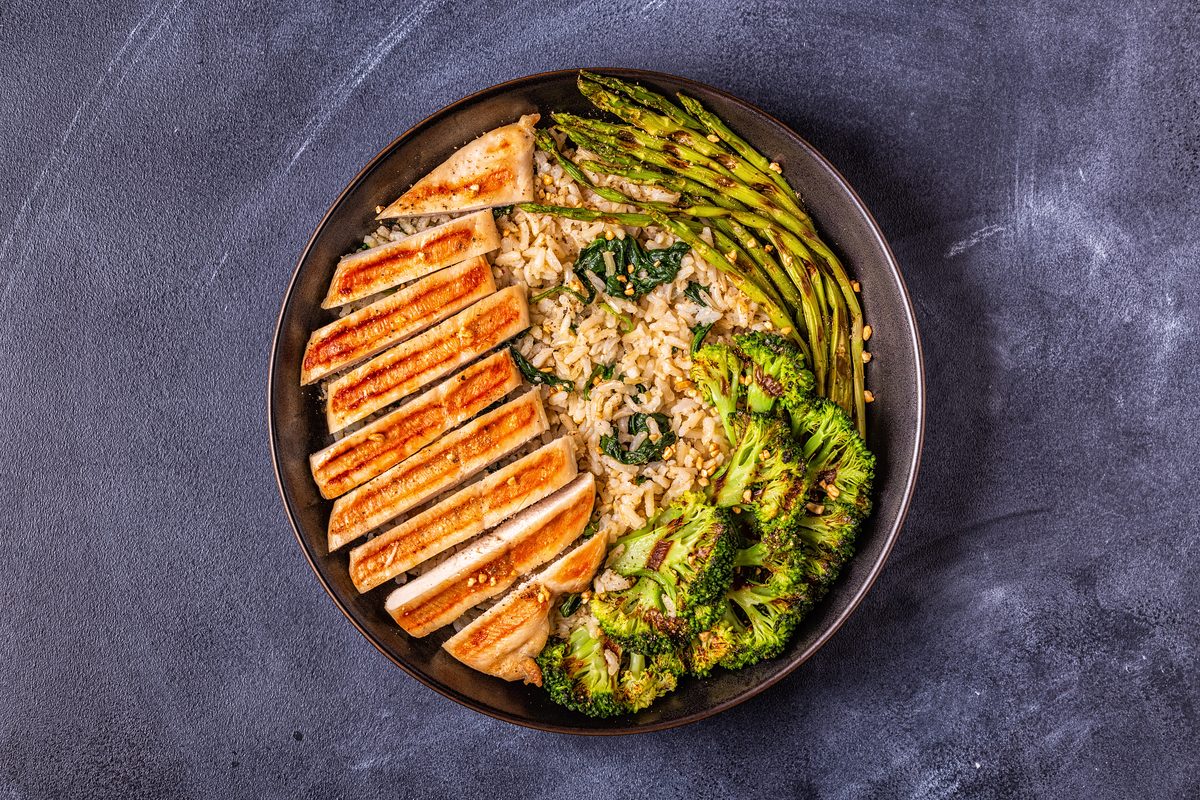
The French diabetes federation (Fédération française des diabétiques) sums up balance in a few principles: three to four meals a day (three meals and a snack), all food groups at every meal, and sweet products in small amounts and only occasionally. It also stresses regular mealtimes, without skipping any.
Starchy foods at every meal, but the right ones
It is often counter-intuitive: cutting out starchy foods is not advised. The Federation recommends eating them at every meal, at a quarter to a third of the plate, or about six tablespoons. Cutting them out exposes you to cravings or hypoglycaemia, depending on your treatment. It advises favouring pulses and wholegrain cereals, which are richer in fibre and plant protein and limit the rise in blood glucose after the meal, and cooking al dente, because overcooking raises the glycaemic index.
| Cooked starchy food (per 100 g) | Carbohydrate | Fibre | Protein |
|---|---|---|---|
| Cooked lentils | 16.2 g | 8.5 g | 10.1 g |
| Cooked chickpeas | 17.7 g | 8.2 g | 8.3 g |
| Boiled potato | 16.8 g | 1.8 g | 1.8 g |
| Cooked sweet potato | 16.3 g | 2.9 g | 1.7 g |
| Cooked quinoa | 27.9 g | 3.8 g | 4.7 g |
| Cooked wholewheat pasta | 31.3 g | 5.1 g | 7.4 g |
| Cooked standard pasta | 31.4 g | 2.2 g | 6.1 g |
| Cooked brown rice | 37.6 g | 2.1 g | 3.9 g |
| Cooked white rice | 33.2 g | 1.4 g | 3.2 g |
| Wholemeal bread (T150) | 41.2 g | 7.3 g | 8.7 g |
| White bread (baguette, round loaf) | 58.3 g | 2.7 g | 8.3 g |
This table shows why lentils and chickpeas are the starchy foods of choice: weight for weight, they provide half the carbohydrate of pasta or rice, and about four times as much fibre. Wholewheat pasta has as much carbohydrate as regular pasta, but more than twice as much fibre. For bread, the differences between white bread and wholemeal bread are detailed in which bread for people with diabetes, and for rice in rice and diabetes.
Fibre: aim for 25 to 30 g a day
Santé publique France sets the benchmark at 25 g of fibre a day. The major synthesis by Reynolds et al. (The Lancet, 2019), which pooled 185 prospective studies and 58 clinical trials, links the highest fibre intakes to a 15 to 30% drop in several diseases, including type 2 diabetes, with a maximum benefit between 25 and 29 g a day. The same results are found for wholegrain cereals.
One special case is worth knowing: the beta-glucans in oats and barley. The European Union authorises the claim that they help reduce the rise in blood glucose after a meal, provided the meal supplies 4 g of beta-glucans per 30 g of available carbohydrate. To go further, read oats and diabetes and our guide to dietary fibre.
Fruit: two a day, in suitable portions
Fruit is not forbidden. The French diabetes federation ideally advises two pieces of fruit a day, at least one of them raw, with a portion that depends on their sugar content.
| Fruit category | Examples | Indicative portion |
|---|---|---|
| Lowest in sugar | Lemon, rhubarb | 300 g |
| Low in sugar | Red berries, grapefruit | 250 g |
| Moderate in sugar | Apple, peach, nectarine | 150 g |
| Highest in sugar | Fig, grape, banana, cherry | 100 g |
| Dried fruit | 3 dried apricots, 3 prunes, 1 dried fig, 3 dates, 10 raisins | at breakfast or at the end of a meal |
Fruit juices, even 100% pure juice, are classed by the Federation among sweet products: pure orange juice contains 9.6 g of sugars per 100 g according to Ciqual, almost as much as a sugary cola (10 g). To choose your fruit, see the least sugary fruits and the pages in the fruit series, such as banana and diabetes or apple and diabetes.
Sugary drinks: the first thing to cut
The meta-analysis by Imamura et al. (British Medical Journal, 2015; 17 cohorts) links each daily serving of sugary drink to an 18% higher risk of type 2 diabetes, and still 13% after accounting for weight: the effect therefore does not work only through the kilos. Santé publique France recommends limiting sugary drinks as much as possible, without replacing them with sweetened drinks, and no more than one glass a day. Water remains the only recommended drink; tea, coffee in moderation and unsweetened herbal teas are fine too. To spot sugar where you do not expect it, read hidden sugar and how much sugar a day.
Meat, processed meat, dairy products
- Red meat and processed meat: Santé publique France indicates that eating them increases the risk of type 2 diabetes. Guidelines: 500 g of meat other than poultry and 150 g of processed meat at most per week.
- Dairy products: overall consumption lowers the risk of type 2 diabetes, with a level of evidence judged probable. The guideline is two dairy products a day, for example a plain yoghurt and a piece of cheese. See cheese and diabetes.
- Fish, pulses, eggs: to alternate with meat over the week, with fish twice a week, one of them oily.
- Fats: rapeseed, walnut and olive oils first, as for heart health. Heart attacks and strokes are among the diabetes complications monitored each year by Santé publique France. Our guide cholesterol: the foods to favour details these choices.
Being active: a treatment in its own right
The HAS puts it bluntly: physical activity is a treatment in its own right for type 2 diabetes, from diagnosis. It also recommends reducing time spent sitting, an independent risk factor, and breaking up long periods of sitting by standing up and moving for at least one minute every hour. For people over 65, the targets are 150 to 300 minutes a week of moderate-intensity activity, muscle strengthening at least twice a week and balance exercises at least three times a week. For the general population, Santé publique France advises at least 30 minutes of dynamic activity a day.
The HAS recommends a medical assessment before starting or increasing activity of at least moderate intensity. To get started gently, see our guide to daily physical activity.
A sample day
An example for an adult, to adapt to your appetite, your treatment and your dietitian’s advice.
- Breakfast: two slices of wholemeal bread, a plain yoghurt, a portion of red berries (250 g according to the Federation), tea or coffee without sugar.
- Lunch: crudités with rapeseed oil, a fillet of fish, six tablespoons of lentils or brown rice, cooked vegetables as you like, an apple.
- Snack: a small handful of unsalted nuts and a piece of cheese, or a dairy product.
- Dinner: chickpea and spinach curry, a little wholemeal bread, a plain dairy product.
More ideas: chicken and quinoa salad, red lentil soup and all of our low-GI recipes.
Common myths
- “If you have diabetes, you must cut out bread and starchy foods.” False: the French diabetes federation recommends starchy foods at every meal, in a suitable amount and preferably wholegrain.
- “Fruit is forbidden.” False: two pieces of fruit a day are advised, adjusting the portion to the fruit. It is juice that is the problem.
- “Diet drinks are the solution.” Santé publique France advises against replacing sugary drinks with sweetened drinks. In the Imamura meta-analysis, sweetened drinks remained associated with an 8% higher risk after accounting for weight, although with publication bias and possible confounding factors. See also our guides on stevia and maltitol.
- “Honey or agave syrup is better than sugar.” These are sweet products too. Read honey and diabetes and our guide to agave syrup.
- “Type 2 diabetes is inevitable once it sets in.” Not always: the DiRECT trial achieved 46% remission at one year through major, supervised weight loss.
Precautions
- Very low-carbohydrate or ketogenic diet: the HAS flags a risk of ketoacidosis in people treated with an SGLT2 inhibitor, a class of diabetes medication. Do not start this type of diet without talking to your doctor. Our guide to the keto diet details its limits, and so does the one on intermittent fasting.
- Hypoglycaemia: if your treatment can cause it, do not skip meals. The Federation points out that cutting out starchy foods exposes you to cravings and hypoglycaemia.
- Frail older people: the HAS strongly advises against restrictive diets in people at risk of undernutrition or sarcopenia.
- “Blood sugar” supplements: none replaces treatment or lifestyle. Our comparison of blood sugar supplements takes stock of what the studies say.
If you want to measure your starting point, our waist-to-hip ratio calculator and our guide to losing belly fat complement this page. The “food and diabetes” series, just below, details the glycaemic index and the right portion for around twenty foods.

Frequently asked questions
Can type 2 diabetes be cured?
We talk about remission rather than cure. In the DiRECT trial, 46% of participants were in remission at one year, defined as an HbA1c below 6.5% at least two months after stopping medication. Remission depended mainly on the amount of weight lost and requires medical follow-up.
How much starchy food per meal if you have diabetes?
The French diabetes federation advises a quarter to a third of the plate, or about six tablespoons, at every meal, favouring pulses and wholegrain cereals cooked al dente. Your dietitian can adjust this to your treatment and activity.
How much weight should you aim to lose?
The HAS states that losing 5% of body weight or more at diagnosis clearly improves blood glucose, lipids and blood pressure in most overweight people. In the Diabetes Prevention Program, the target was at least 7%.
What exactly is prediabetes?
According to Santé publique France, it is a fasting blood glucose between 1.10 and 1.26 g/L. This is the stage where lifestyle changes have shown the greatest preventive effect in trials.
Does type 2 diabetes only affect older people?
No. Santé publique France points out that it occurs mainly in middle-aged adults, but that it can appear earlier, even in adolescence. Prevalence increases with age and is higher in men than in women.
This article is for information only and does not replace the advice of your doctor or a dietitian.
The food and diabetes series
Glycaemic index, glycaemic load and the right portion, food by food: apple and diabetes, pear and diabetes, orange and diabetes, banana and diabetes, grapes and diabetes, dates and diabetes, melon and diabetes, strawberry and diabetes, pineapple and diabetes, cheese and diabetes, mango and diabetes, honey and diabetes, dark chocolate and diabetes, lentils and diabetes, potato and diabetes, avocado and diabetes, oats and diabetes, bread and diabetes, kiwi and diabetes, sweet potato and diabetes, rice and diabetes.
Our sources
- Haute Autorité de santé. Treatment strategy for patients living with type 2 diabetes: recommendations (in French), May 2024.
- Santé publique France. Dossier Diabète : la maladie; 2023 surveillance data, updated 2025-2026.
- Fédération française des diabétiques. Nutrition mini-site: Starchy foods (in French) and Fruit (in French) sheets; Diabetes and a balanced diet (in French) page.
- Tuomilehto J, Lindström J, Eriksson JG et al. Prevention of type 2 diabetes mellitus by changes in lifestyle among subjects with impaired glucose tolerance. New England Journal of Medicine, 2001. PMID 11333990.
- Knowler WC, Barrett-Connor E, Fowler SE et al. Reduction in the incidence of type 2 diabetes with lifestyle intervention or metformin. New England Journal of Medicine, 2002. PMID 11832527.
- Lean ME, Leslie WS, Barnes AC et al. Primary care-led weight management for remission of type 2 diabetes (DiRECT): an open-label, cluster-randomised trial. The Lancet, 2018. PMID 29221645.
- Imamura F, O’Connor L, Ye Z et al. Consumption of sugar sweetened beverages, artificially sweetened beverages, and fruit juice and incidence of type 2 diabetes: systematic review, meta-analysis, and estimation of population attributable fraction. BMJ 2015 (republished in British Journal of Sports Medicine, 2016). PMID 27044603.
- Reynolds A, Mann J, Cummings J et al. Carbohydrate quality and human health: a series of systematic reviews and meta-analyses. The Lancet, 2019. PMID 30638909.
- Santé publique France, Manger Bouger. The essentials of the dietary recommendations (in French) (2019 recommendations for adults).
- European Commission. Regulation (EU) No 432/2012, claim “oat and barley beta-glucans and rise in blood glucose after a meal”, 2012.
- Anses. Ciqual food composition table 2025.