Elderberry: benefits, syrup, side effects and toxicity
The short answer
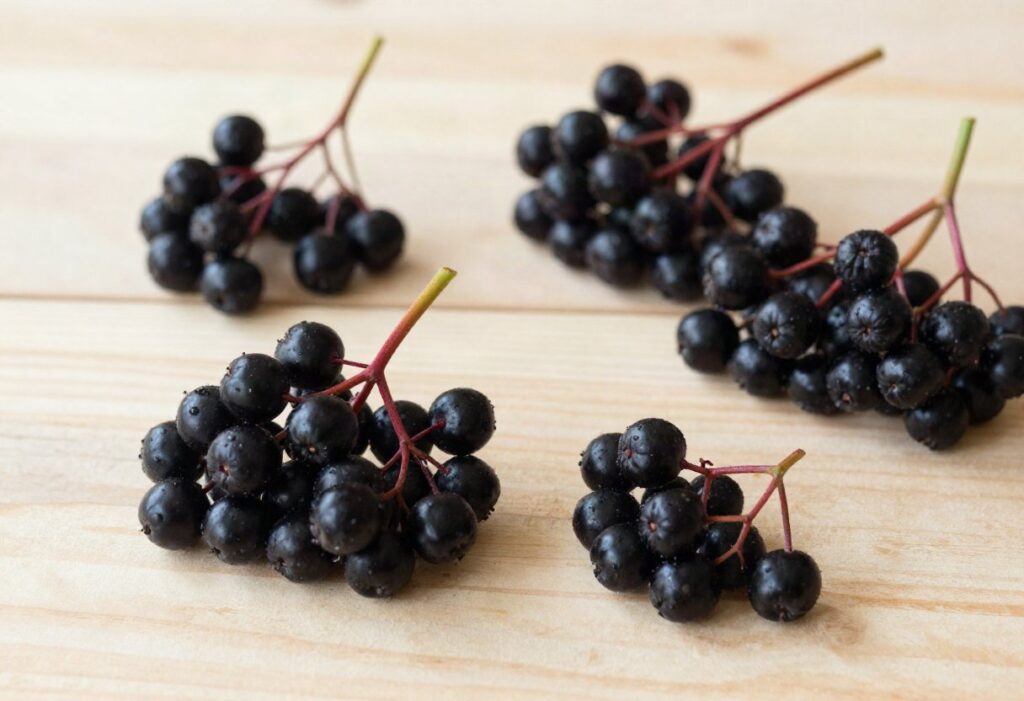
Black elder (Sambucus nigra) is a shrub whose berries and flowers are used for colds and flu. Elderberry syrup and extracts shortened colds or flu in a few small trials, but a more rigorous trial found no benefit for flu, and the latest systematic review calls the evidence uncertain. Elderflower tea is recognised by the European Medicines Agency (EMA) as a traditional remedy for the early symptoms of a cold, based on long-standing use rather than trials. Safety: leaves, bark, stems and raw or unripe berries contain sambunigrin, which can release cyanide. Ripe berries should be cooked before eating.
This article is for information and does not replace medical advice. If you are pregnant, breastfeeding, have a chronic illness or take medication, talk to your doctor or pharmacist before taking elderberry supplements.
What is elderberry?
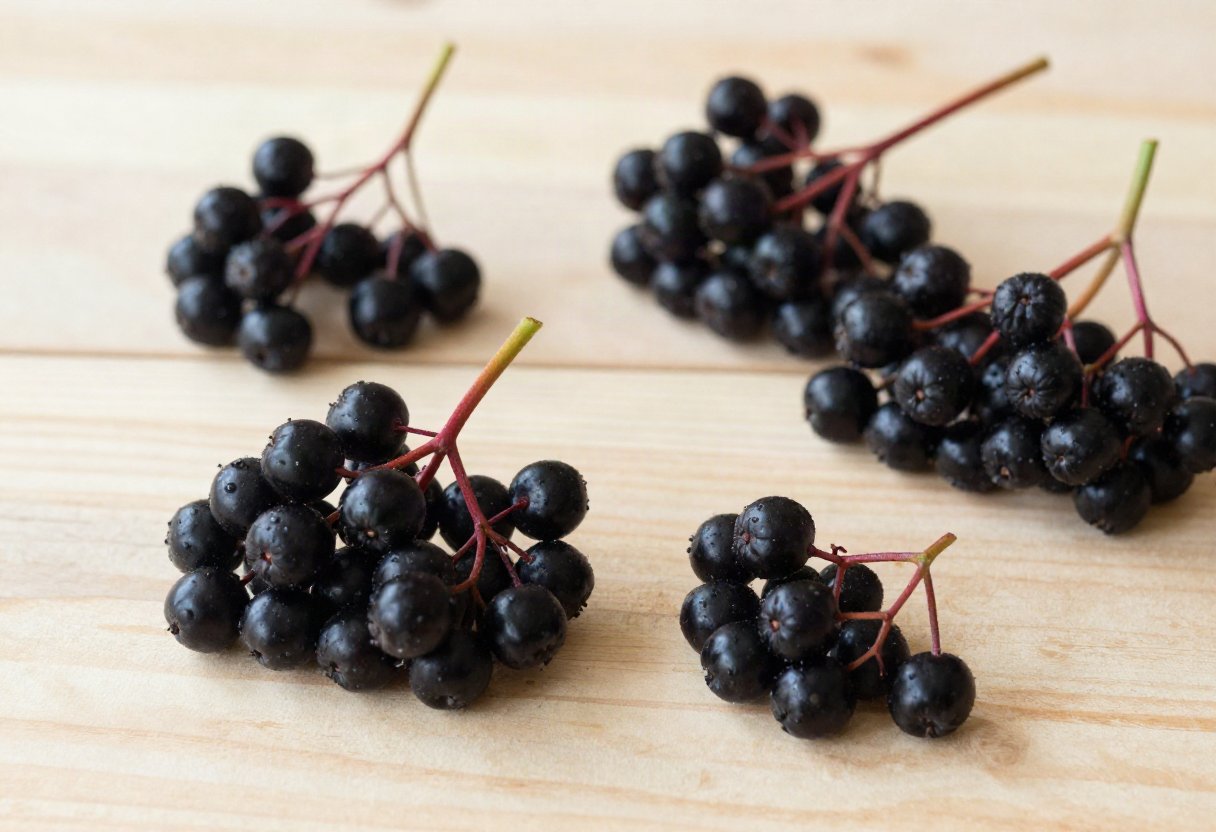
Black elder is a common shrub or small tree of hedgerows. It flowers in late spring with broad, flat clusters of small, fragrant white flowers, followed by bunches of dark purple-black berries. In the US, the native American elder (Sambucus canadensis) is closely related. Each part of the plant has a different use:
| Part | Common uses | What is established |
|---|---|---|
| Flowers | Elderflower tea, cordial, fritters | EMA traditional use for early cold symptoms |
| Ripe berries | Syrup, gummies, jam, extracts | A few cold and flu trials, conflicting results |
| Leaves, bark, stems, roots | None as food | Contain sambunigrin: do not consume |
The berries are rich in anthocyanins, the purple pigments also found in blueberries. See our elderberries nutrition page for details.
Look-alikes: black elder is a woody shrub several metres tall. Dwarf elder (Sambucus ebulus), common in Europe, also has black berries but is a non-woody plant 1 to 2 metres tall that dies back each year; it is considered toxic. Red elder (Sambucus racemosa), with bright red berries, should not be picked either. If in doubt, don’t forage.
Elderberry benefits: what the studies show
Elderberry syrup for colds and flu: conflicting trials
Early trials were positive. In Norway, 60 adults with flu (Zakay-Rones et al., 2004) took 15 ml of elderberry syrup four times a day for 5 days or a placebo; their symptoms cleared about 4 days sooner, with less use of rescue medication.
Among 312 long-haul air travellers (Tiralongo et al., 2016), an elderberry extract did not significantly reduce the number of colds (12 vs 17 with placebo), but colds were shorter: 57 cold days in total vs 117, with milder symptoms.
Then a more rigorous emergency-room trial in Ohio (Macknin et al., 2020) enrolled 87 patients with laboratory-confirmed flu and found no difference: 5.3 days to mild symptoms with elderberry vs 4.9 with placebo, and 8.6 vs 8.7 days to full recovery. The authors note that their results contradict earlier studies.
| Study | Participants | Main finding |
|---|---|---|
| Zakay-Rones et al., 2004 | 60 adults with flu | Symptoms relieved about 4 days sooner |
| Tiralongo et al., 2016 | 312 travellers | No fewer colds, but shorter ones |
| Hawkins et al., 2019 (meta-analysis) | 180 participants in total | Large reduction in upper respiratory symptoms |
| Macknin et al., 2020 | 87 patients, flu confirmed by PCR | No effect on duration or severity |
| Wieland et al., 2021 (review) | 5 randomised trials | Possibly shorter colds and flu: uncertain evidence |
The Hawkins meta-analysis reported a large effect, but it pooled only 180 people and predates the negative 2020 trial. The most recent systematic review (Wieland et al., 2021) is more cautious: elderberry may not lower your risk of catching a cold; it may shorten colds and flu, but the evidence is uncertain. It also found no evidence that elderberry overstimulates the immune system, a concern raised during the COVID-19 pandemic.
Bottom line: elderberry syrup is not a flu treatment. Trials used specific standardised extracts, not homemade syrups of unknown strength.
Elderberry gummies and supplements
Gummies and capsules are popular, but their extract content varies widely and none of the trials above used a typical gummy. Check the amount and ratio of extract, follow the label dose, and keep realistic expectations. Our best immune support supplement comparison covers better-documented options.
Elderflower tea: recognised traditional use
The EMA monograph on elderflower (revised in 2018) classifies it as a traditional herbal medicine for “relief of early symptoms of common cold”. That status means long-standing, plausible and safe use at the stated doses, not proven efficacy. It lists no known side effects or interactions.
Does elderberry boost your immune system? No trial shows that it strengthens immunity in healthy people. Sleep, a varied diet and adequate vitamin C, zinc and vitamin D matter more: see our guides on how to boost your immune system with food and foods high in vitamin C.
Elderberry side effects and toxicity
What part of elderberry is poisonous?
The bark, leaves and roots contain sambunigrin, a cyanogenic glycoside that can release hydrogen cyanide. Unripe berries contain it too, and levels fall as they ripen. In a Slovenian study (Senica et al., 2017), ripe berries had the lowest levels of any part of the plant. As the US LactMed database puts it, cooked berries do not carry this risk.
A documented poisoning
In 1984, the CDC described an outbreak in California: wild berries had been crushed raw with their leaves and branches and mixed with apple juice. Of 25 people at the gathering, 11 had nausea and vomiting within 15 minutes and 8 were taken to hospital with abdominal cramps, weakness, dizziness and numbness. All recovered quickly. The CDC concluded that the berries may be eaten, especially cooked, but leaves and stems should not be crushed into juice.
Safe use rules
- Berries: fully ripe, stripped from green stems, and cooked (syrup, jam). No raw berries in quantity.
- Flowers: tea, cordial or fritters, with as little stem as possible.
- Leaves, bark, stems: never, in tea or juice.
Who should avoid it or ask a doctor
| Situation | Why |
|---|---|
| Pregnancy and breastfeeding | Safety not established: not recommended by the EMA; no breastfeeding data (LactMed) |
| Children under 12 | Not recommended by the EMA for lack of data |
| Known elder allergy | Allergic reactions are rare but reported |
| High fever, worsening symptoms or symptoms beyond a week | See a doctor, as the EMA advises |
| Immunosuppressants, autoimmune disease | No data: ask your doctor before supplements |
How to take elderberry
- Elderflower tea (EMA): 2 to 5 g of dried flowers in 150 ml of boiling water, three times a day, from age 12. See a doctor if symptoms last more than a week.
- Elderberry syrup: the adult trials used standardised extracts at 15 ml four times a day for 5 days. Homemade syrup is different: treat it as food, and mind the sugar.
- Duration: a few days at the start of a cold, as in the trials. No data support taking it all winter.
A warm cup of tea with a little honey is still a comforting choice when you have a cold. For another popular winter remedy, see bee propolis: benefits and side effects.
Frequently asked questions
What is elderberry good for?
It is mainly used for colds and flu. Small trials suggested shorter illness, but a more rigorous flu trial found no benefit, and the evidence is rated uncertain.
Does elderberry syrup work?
Possibly a little for colds, but not reliably. It is not a substitute for flu treatment in people at risk of complications.
Can you eat raw elderberries?
Not in quantity: raw or unripe berries can cause nausea and vomiting. Cook ripe berries before eating them.
Is elderberry safe during pregnancy?
Safety has not been established, and the EMA does not recommend medicinal elder products in pregnancy or breastfeeding.
Is elderberry tea the same as elderflower tea?
No. Elderflower tea uses the dried flowers, the form covered by the EMA monograph; elderberry tea uses dried berries, which have not been studied as a tea.
Sources
- Wieland L.S. et al. Elderberry for prevention and treatment of viral respiratory illnesses: a systematic review. BMC Complement Med Ther, 2021; 21(1): 112. PubMed 33827515
- Macknin M. et al. Elderberry Extract Outpatient Influenza Treatment for Emergency Room Patients Ages 5 and Above: a Randomized, Double-Blind, Placebo-Controlled Trial. J Gen Intern Med, 2020; 35(11): 3271-3277. PubMed 32929634
- Tiralongo E. et al. Elderberry Supplementation Reduces Cold Duration and Symptoms in Air-Travellers: A Randomized, Double-Blind Placebo-Controlled Clinical Trial. Nutrients, 2016; 8(4): 182. PubMed 27023596
- Zakay-Rones Z. et al. Randomized study of the efficacy and safety of oral elderberry extract in the treatment of influenza A and B virus infections. J Int Med Res, 2004; 32(2): 132-40. PubMed 15080016
- Hawkins J. et al. Black elderberry (Sambucus nigra) supplementation effectively treats upper respiratory symptoms: A meta-analysis of randomized, controlled clinical trials. Complement Ther Med, 2019; 42: 361-365. PubMed 30670267
- CDC. Poisoning from elderberry juice, California. MMWR, 1984; 33(13): 173-4. PubMed 6422238; full text on cdc.gov
- LactMed (NIH). Elderberry, updated 15 April 2025. PubMed 30000895
- Senica M. et al. The higher the better? Differences in phenolics and cyanogenic glycosides in Sambucus nigra leaves, flowers and berries from different altitudes. J Sci Food Agric, 2017; 97(8): 2623-2632. PubMed 27734518
- EMA (HMPC). European Union herbal monograph on Sambucus nigra L., flos, revision 1, 2018 (EMA/HMPC/611512/2016). ema.europa.eu