Calorie deficit: how to calculate it and stick to it without frustration
A calorie deficit means giving your body slightly less energy than it burns, so that it draws on its reserves. To keep it manageable, the European benchmarks used by the HAS (the French national health authority) advise a cut of 15 to 30% of your usual intake, which most often means a deficit of around 600 kcal a day, corresponding to a loss of about 0.5 kg a week. And no lower than 1,200 kcal a day without medical supervision. Here is how to calculate it, check it and stick to it without going hungry.
👉 Free tool: Calorie deficit: calculate it in 30 seconds, no sign-up needed.
Where your energy expenditure comes from
Your daily expenditure has three components:
- Basal metabolic rate: the energy needed to keep your organs running at rest (heart, brain, liver, muscles).
- Food thermogenesis: the energy used to digest and store what you eat.
- Physical activity: sport, but also walking, housework and climbing stairs.
In a sedentary person, Anses (the French food safety agency) indicates that basal metabolic rate accounts for nearly 80% of 24-hour expenditure, food thermogenesis around 10% and everyday activity around 10%. And the level of basal metabolic rate depends mainly on lean mass: muscles and organs. This is why protecting your muscles during a diet is not a detail, as we will see below.
To give an order of magnitude, Anses points out that the recommended energy intake is 1,800 kcal a day for women and 2,200 kcal for men, with usual physical activity. Your own needs can differ a lot depending on your age, height, weight and activity. Our basal metabolic rate tool and the calorie needs calculator give you a personalised estimate.
Calculating your deficit in three steps
Step 1: estimate your needs
Two methods complement each other. The first: an estimate by calculation, with our tools. The second, more reliable in the long run: observation. If your weight has been stable for several weeks, your current intake roughly matches your needs. The HAS also points out that people with obesity tend to under-report their usual intake, which is why it is worth referring to calculated needs too.
Step 2: apply a 15 to 30% cut
This is the range that the HAS rationale (2011) considers « sufficient and appropriate » for a person with a stable weight. The example it gives: a sedentary woman with a BMI of 32, whose intake is estimated at 2,100 kcal a day, would be offered 1,400 to 1,600 kcal a day.
Step 3: check the floor
Diets providing at least 1,200 kcal a day are described as balanced low-calorie diets. Below that, the HAS points to a risk of undernutrition, micronutrient deficiencies and rebound after stopping. Below 800 kcal a day, follow-up by a doctor specialising in nutrition is essential.
| Estimated needs (kcal/day) | 15% cut | 30% cut | 600 kcal deficit |
|---|---|---|---|
| 1,800 | 1,530 | 1,260 | 1,200 |
| 2,000 | 1,700 | 1,400 | 1,400 |
| 2,200 | 1,870 | 1,540 | 1,600 |
| 2,500 | 2,125 | 1,750 | 1,900 |
You will notice that for needs of 1,800 kcal, a 600 kcal deficit already takes you to the floor. The lower your needs, the better it is to stay at the lower end of the range. Our calorie deficit tool does this calculation for you, taking your profile into account.
Why the scales do not follow a simple rule of three
You often read that you only need to accumulate a fixed number of calories to lose a kilo, week after week. The reality is less linear.
- The response is slow. The mathematical model by Hall et al. (Lancet, 2011) shows that weight responds to a change in intake with a half-life of about a year. Weight loss therefore naturally slows over the months, even if you change nothing.
- Expenditure falls as weight falls. In the study by Leibel et al. (1995), maintaining a weight at least 10% below usual weight was accompanied by a drop in total expenditure of 6 to 8 kcal per kilo of lean mass per day. These adjustments work against maintaining the new weight.
- Lost muscle is costly. Anses uses a value of 20 kcal a day per kilo of muscle. Losing 3 kg of muscle therefore lowers basal metabolic rate by about 60 kcal a day, or 9,000 kcal over 150 days, which the body will store as roughly a kilo of fat mass if intake does not change.
Keep the general idea in mind: a deficit is not fixed. What worked at the start will need to be reassessed after a few months, without dropping below the floor.
The trap of a deficit that is too aggressive
Cutting hard seems effective, and it is what many popular diets offer. Anses analysed around fifteen of them in 2010: their intakes ranged from 574 to 2,600 kcal a day, and several phases of well-known diets fell below 1,200 kcal. The consequences are documented:
- Muscle loss: all weight-loss diets cause a loss of lean mass, around 15% of the weight lost according to Anses, and the effect becomes stronger when the loss is massive.
- Deficiencies: in the Anses analysis, 74% of diet phases provided less fibre than recommended, and 61% did not meet women’s average iron requirement.
- Lasting hunger: after rapid weight loss, appetite hormones stay altered for at least a year, with higher hunger (Sumithran et al., 2011).
- Regain: this is the subject of our guide on yo-yo dieting.
The extreme case is documented: six years after the show « The Biggest Loser », 14 former contestants had regained an average of 41 kg of the 58 kg lost, and their resting metabolism remained about 700 kcal a day below its starting level (Fothergill et al., 2016). Nobody is asking you to aim for that, and that is a good thing.
Protecting your muscles during the deficit
Enough protein
The recommended intake of protein is 0.83 g per kilo of body weight per day for adults, Anses reminds us. During restriction, a meta-analysis of 24 trials (Wycherley et al., 2012) shows that a higher-protein diet, at equal calories, preserves lean mass and resting metabolic rate a little better. A review by Leidy et al. (2015) mentions intakes of 1.2 to 1.6 g per kilo per day in these studies. Be careful, though: Anses points out that high-protein diets that are not low in calories can exceed 2.2 g per kilo per day, and that a kidney check-up is needed before any diet in people at risk of kidney failure. The protein needs tool helps you find where you stand.
Physical activity
According to Anses, physical activity combined with restriction leads to little extra weight loss, but it helps maintain muscle mass. The Santé publique France benchmarks: at least 30 minutes of dynamic activity a day, and muscle strengthening twice a week.
Sleep
In the trial by Nedeltcheva et al. (2010), the same diet followed with 5.5 hours of sleep instead of 8.5 hours led to 60% more lean mass lost and 55% less fat lost. A small trial, but a clear signal.
Sticking with it without frustration: levers that have been tested
Start with a bulky, low-calorie food
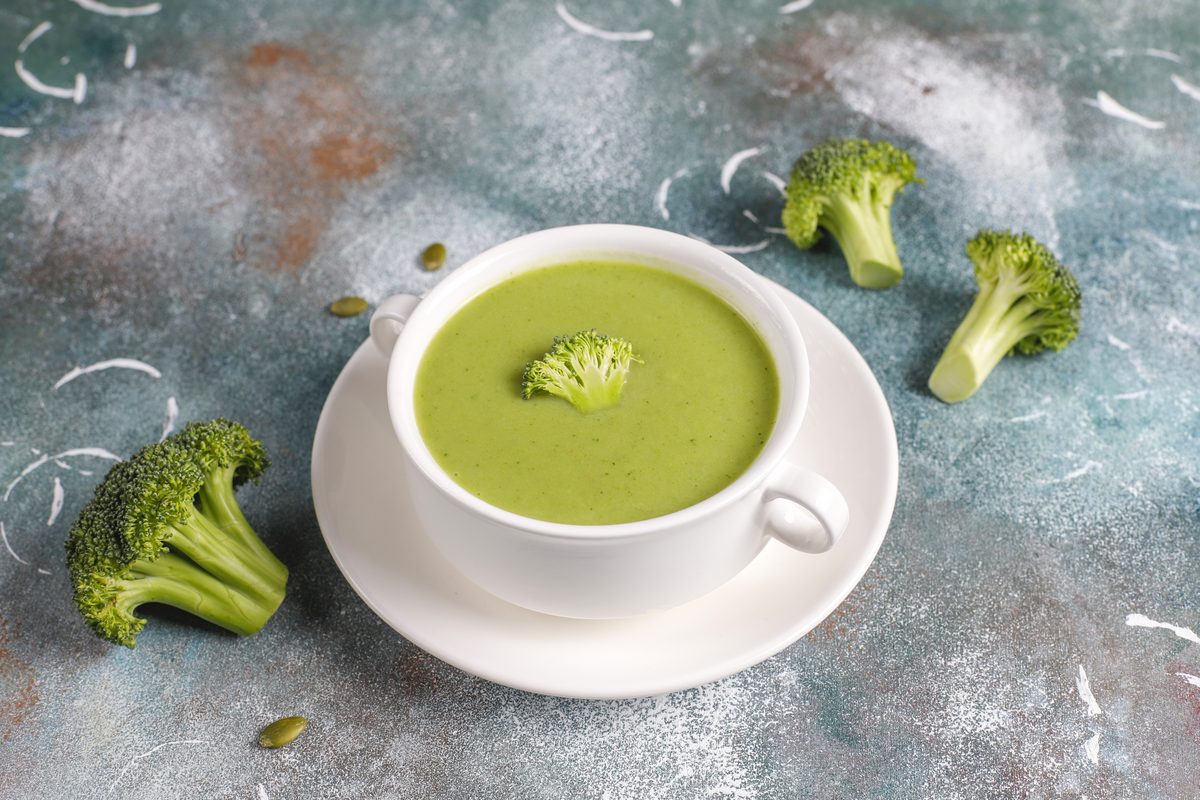
In a laboratory study (Rolls et al., 2004), eating a low-calorie salad first reduced the meal’s total intake by 7% with a small portion and by 12% with a large one. But a salad rich in cheese and dressing increased it by 8 to 17%. With a soup as a starter, the meal’s intake fell by 20% (Flood and Rolls, 2007). Soups and vegetables are therefore your best allies, as long as you keep the seasoning light.
Drink water before meals
In 48 adults aged 55 to 75 following a low-calorie diet, drinking 500 ml of water before each main meal led to about 2 kg more weight loss over 12 weeks (Dennis et al., 2010). For your water needs, see our guide on how much water to drink a day.
Eat slowly
A meta-analysis of 22 studies (Robinson et al., 2014) confirms that people eat less when they eat more slowly. The HAS advises at least 20 minutes per meal.
Spot liquid and hidden calories
Some intakes go almost unnoticed, yet they weigh on the balance. Alcohol provides 7.1 kcal per gram according to the HAS, and moderate consumption is poorly compensated by a drop in other intake. Here are a few examples calculated from the Ciqual table:
| Food or drink | Quantity | Approximate energy |
|---|---|---|
| Sugary cola | 33 cl can | about 132 kcal |
| Red wine | 10 cl | about 76 kcal |
| Beer (4 to 5% alcohol) | 25 cl | about 98 kcal |
| Potato crisps | 30 g | about 160 kcal |
| Emmental | 30 g | about 112 kcal |
| Olive oil | 10 g | about 90 kcal |
| Cooked broccoli | 200 g | about 60 kcal |
Replacing the daily can with water already accounts for a notable part of a deficit, without taking anything off your plate. Our alcohol calories tool and the calorie table help you spot your own sources. And to find out what a complete plate contains, try the meal calories tool.
Forbid nothing
The HAS recommends not cutting out your favourite foods but eating them in moderation, and lifting food taboos, which are sources of frustration and disinhibition. Anses describes cognitive restraint, this desire to control permanently what you eat, as a risk factor for eating disorders. A lasting deficit leaves room for pleasure.
Tracking your progress without becoming obsessed
Tracking helps, as long as it remains a tool. In an analysis of 47 participants in a six-month trial (Steinberg et al., 2015), those who weighed themselves every day on a smart scale lost an average of 6.1 kg more than those who weighed themselves a little less often, and had adopted more favourable behaviours. An interesting result, but in a small group.
A few common-sense rules:
- Look at the trend over two to four weeks, not the figure on the day.
- Measure your waist too, halfway between the lowest rib and the top of the hip, as the HAS describes.
- Take the displayed body fat with a pinch of salt: the HAS does not recommend bioelectrical impedance to assess body composition in first-line medical care. The percentages on consumer scales are estimates.
- Stop if it makes you anxious: the HAS (2023) notes that the use of self-monitoring devices and the interpretation of the data deserve support.
If you want to buy one, our comparison of smart scales compares models, their claimed accuracy and their apps.
The plateau: what to do when weight loss stops
The slowdown is expected: your expenditure has fallen along with your weight. Before cutting further, take stock:
- Check your real intake for a few days: portions often creep up without you noticing.
- Recalculate your needs with your new weight.
- Increase activity rather than dropping below 1,200 kcal: it is also the best maintenance factor according to Anses.
- Accept a stabilisation phase: the HAS reminds us that stabilising your weight is already a worthwhile goal, and that maintaining the loss is essential.
Recipes that are perfect in a deficit
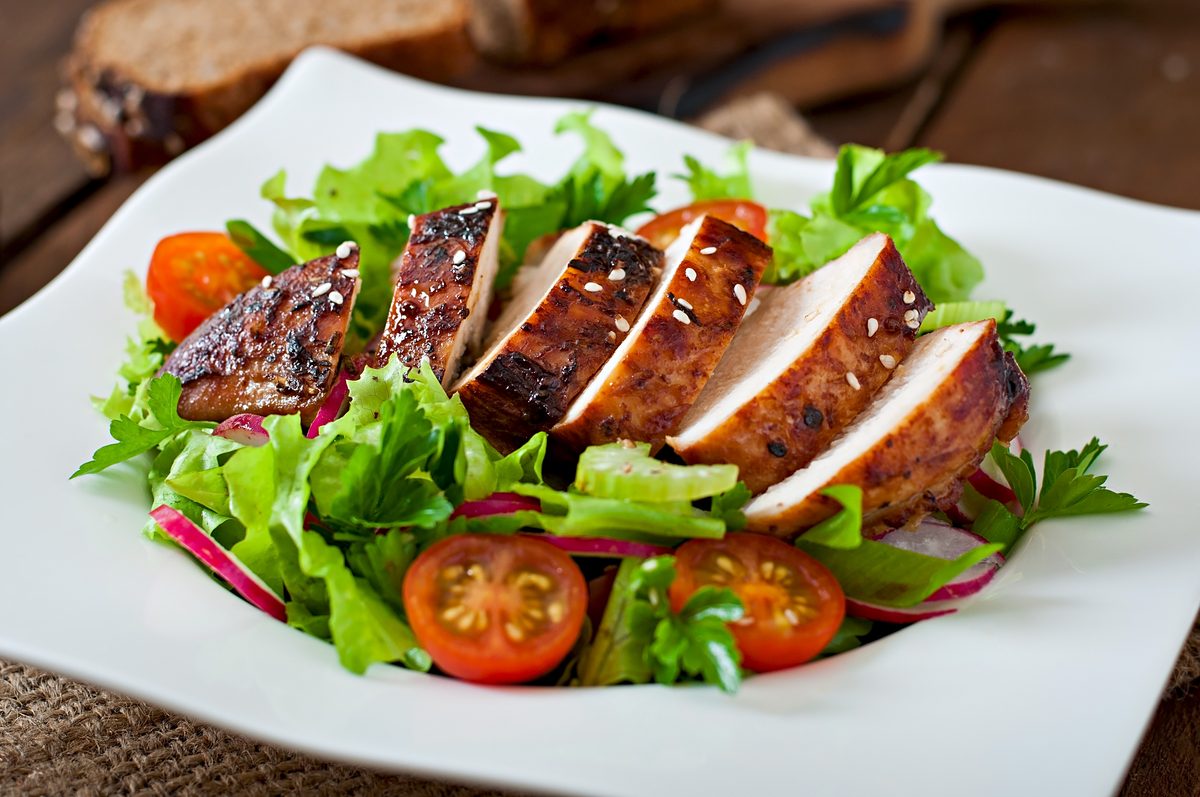
Head for filling, low-calorie dishes: lentil and vegetable soup, chicken and quinoa salad, courgette velouté, broccoli velouté or oven-baked salmon fillet with broccoli. Explore all our slimming recipes. For the overall principles, see our guide to losing weight healthily.
Myths about the calorie deficit
« The more I cut, the more I lose »
In the short term, yes. But below 1,200 kcal a day, the HAS points to a risk of deficiencies and rebound, and Anses shows that muscle loss lowers expenditure. A gentler deficit held for longer gives a better end result.
« A calorie of carbohydrate makes you fatter than a calorie of fat »
In the POUNDS Lost trial (Sacks et al., 2009), four diets with the same calorie level but very different compositions produced the same weight loss at two years. Anses concludes that overall calorie intake is the major factor.
« Exercise is enough to create the deficit »
Anses reminds us that physical activity alone does not cause significant weight loss. Its main role: protecting muscle and preventing regain.
« Days off ruin everything »
Weight responds slowly to changes in intake (Hall, 2011). What counts is the average over weeks, not one celebration meal.
Precautions
- No energy restriction during pregnancy, Anses insists, nor in children and teenagers without medical supervision.
- Treated diabetes, kidney disease, long-term medication: talk to your doctor before making major changes to your diet.
- History of eating disorders: a calorie-counted deficit can reawaken restriction. Specialist support is preferable.
- After 65, the priority is to preserve muscle: see our guide to nutrition for older adults.
Frequently asked questions
What calorie deficit should you aim for to lose weight?
The European benchmarks used by the HAS suggest a cut of 15 to 30% of usual intake, often around 600 kcal a day, without dropping below 1,200 kcal a day outside medical supervision.
How long does it take to see a result?
A deficit of about 600 kcal a day corresponds to a loss of about 0.5 kg a week according to the same benchmarks. Weight loss then slows, because your expenditure falls with your weight.
Should you eat less on days when you do not exercise?
It is not necessary if your calculation is based on your average activity level. What matters is the average over the week.
My weight has not moved for two weeks, is that normal?
Weight responds slowly to changes in intake (Hall, 2011). Look at the trend over a month and at your waist measurement before changing your deficit.
Does a calorie deficit make you lose muscle?
Yes, in part: around 15% of the weight lost according to Anses. Physical activity, enough protein and good sleep limit this loss.
This article is for information only and does not replace the advice of your doctor or a dietitian.
Our sources
- Haute Autorité de santé. Surpoids et obésité de l’adulte : prise en charge médicale de premier recours. Argumentaire. Septembre 2011.
- Haute Autorité de santé. Guide du parcours de soins : surpoids et obésité de l’adulte. Janvier 2023, mis à jour en février 2024.
- Anses. Évaluation des risques liés aux pratiques alimentaires d’amaigrissement. Rapport d’expertise collective. Novembre 2010.
- Santé publique France. Recommandations relatives à l’alimentation, à l’activité physique et à la sédentarité pour les adultes. 2019.
- Anses. Table de composition nutritionnelle des aliments Ciqual. 2025.
- Hall KD, Sacks G, Chandramohan D et al. Quantification of the effect of energy imbalance on bodyweight. Lancet. 2011. PMID 21872751.
- Leibel RL, Rosenbaum M, Hirsch J. Changes in energy expenditure resulting from altered body weight. N Engl J Med. 1995. PMID 7632212.
- Sumithran P, Prendergast LA, Delbridge E et al. Long-term persistence of hormonal adaptations to weight loss. N Engl J Med. 2011. PMID 22029981.
- Fothergill E, Guo J, Howard L et al. Persistent metabolic adaptation 6 years after « The Biggest Loser » competition. Obesity. 2016. PMID 27136388.
- Wycherley TP, Moran LJ, Clifton PM, Noakes M, Brinkworth GD. Effects of energy-restricted high-protein, low-fat compared with standard-protein, low-fat diets: a meta-analysis of randomized controlled trials. Am J Clin Nutr. 2012. PMID 23097268.
- Leidy HJ, Clifton PM, Astrup A et al. The role of protein in weight loss and maintenance. Am J Clin Nutr. 2015. PMID 25926512.
- Nedeltcheva AV, Kilkus JM, Imperial J et al. Insufficient sleep undermines dietary efforts to reduce adiposity. Ann Intern Med. 2010. PMID 20921542.
- Rolls BJ, Roe LS, Meengs JS. Salad and satiety: energy density and portion size of a first-course salad affect energy intake at lunch. J Am Diet Assoc. 2004. PMID 15389416.
- Flood JE, Rolls BJ. Soup preloads in a variety of forms reduce meal energy intake. Appetite. 2007. PMID 17574705.
- Dennis EA, Dengo AL, Comber DL et al. Water consumption increases weight loss during a hypocaloric diet intervention in middle-aged and older adults. Obesity. 2010. PMID 19661958.
- Robinson E, Almiron-Roig E, Rutters F et al. A systematic review and meta-analysis examining the effect of eating rate on energy intake and hunger. Am J Clin Nutr. 2014. PMID 24847856.
- Steinberg DM, Bennett GG, Askew S, Tate DF. Weighing every day matters: daily weighing improves weight loss and adoption of weight control behaviors. J Acad Nutr Diet. 2015. PMID 25683820.
- Sacks FM, Bray GA, Carey VJ et al. Comparison of weight-loss diets with different compositions of fat, protein, and carbohydrates. N Engl J Med. 2009. PMID 19246357.