Nutrition for older adults: needs and preventing undernutrition
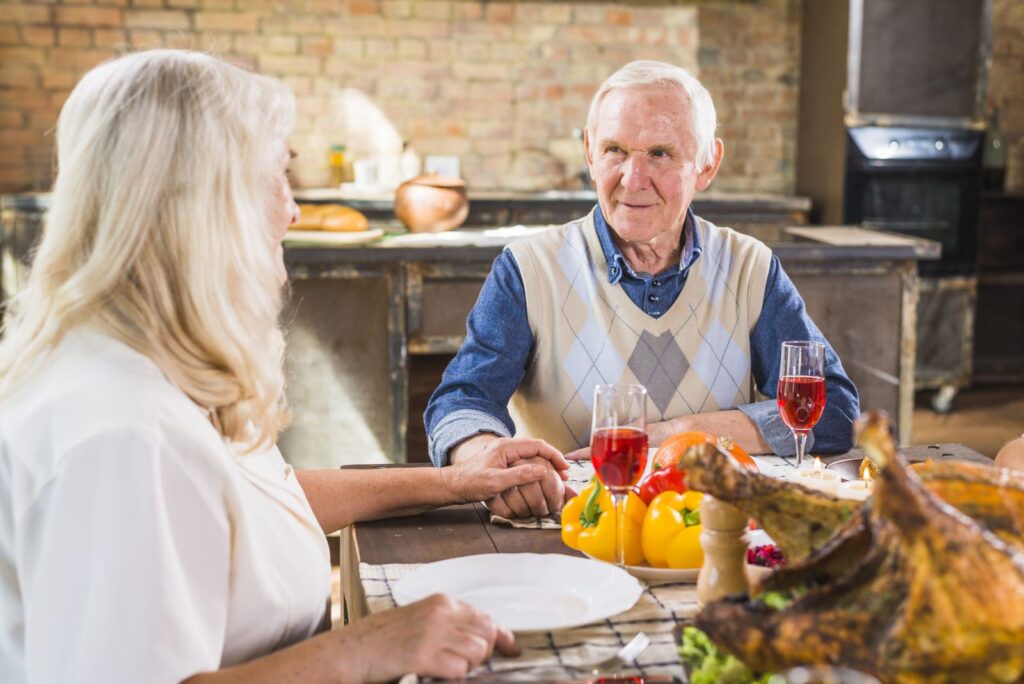
As we age, we often eat less, even though our needs barely fall. Anses reference intakes for vitamins and minerals are the same at 70 as at 40, for lack of data showing they should change. For protein, European geriatric societies even advise eating more: at least 1.0 to 1.2 g per kilo of body weight per day. The real danger after 65 is therefore not excess but shortfall: muscle loss, falls, infections, loss of independence. This guide brings together the official guidelines (Anses, EFSA, HAS, Santé publique France) and practical ways to meet them when appetite is small, whether you are an older adult yourself or are helping a relative.
👉 Free tool: Calorie needs – get your result in 30 seconds, no sign-up.
What changes with age
Less muscle, more fat, at the same weight
HAS (the French national health authority) points out that ageing comes with a change in body composition: lean mass decreases and fat mass increases. The weight on the scales can therefore stay stable while muscle melts away. This muscle loss has a name, sarcopenia. The Afssa report on protein (2007) defines it as a loss of muscle mass, quality and strength, which undermines independence and clearly increases the risk of falls and fractures.
Another point stressed by HAS: in older people, epidemiological data show excess mortality below a BMI of 22. The « ideal weight » of a 30-year-old adult is therefore not a good target at 75. A little reserve is rather protective.
Lower expenditure, but not lower needs
A sedentary older person burns less energy. EFSA draws an important consequence from this: their protein needs do not fall, so the share of protein in what they eat must be higher than in a younger adult. The same logic applies to water: adequate intakes are identical to those of adults, but because the kidney concentrates urine less well, the need for water per calorie consumed increases.
Very concrete obstacles
HAS lists the situations that lower intakes in older people. Many have nothing to do with medicine in the strict sense:
- the mouth: poor dental condition, ill-fitting dentures, dry mouth, taste disorders, difficulty chewing;
- social life: isolation, bereavement, financial difficulties, moving into a care home;
- medicines: taking many medicines at once, treatments that dry the mouth, alter taste, suppress appetite or cause digestive problems;
- restrictive diets: salt-free, slimming, « diabetic », anti-cholesterol, long-term low-residue;
- dependence for shopping, cooking or eating, swallowing difficulties, depression, cognitive impairment;
- any acute episode: infection, fall with fracture, surgery, hospital stay, pain, severe constipation.
Spotting these obstacles is often more useful than looking for a « miracle food ». A denture that hurts or a strict salt-free diet prescribed ten years ago can be enough to make intakes melt away.
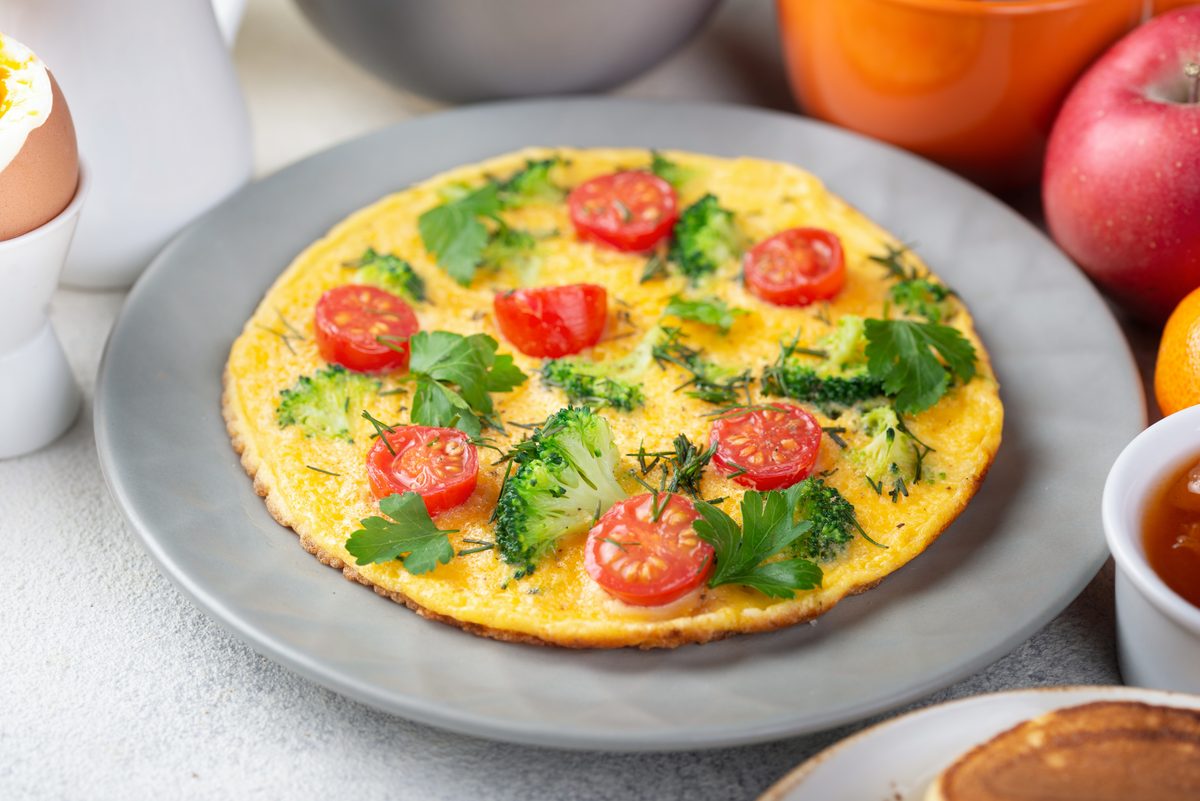
Protein: priority number one
How much a day?
Not all institutions give the same figure, and it is important to understand why. EFSA considers that the needs of older people are equal to those of adults. Afssa (now Anses), in 2007, takes the opposite view: it estimates that the ageing body uses protein less efficiently and sets a higher recommended intake. The European expert groups in geriatrics (PROT-AGE, ESPEN) go further still.
| Body | For whom | Protein guideline |
|---|---|---|
| EFSA (2017) | Adults, older people included | 0.83 g/kg/day |
| Afssa (2007) | Older people | Average requirement 0.8 g/kg/day, recommended intake 1.0 g/kg/day |
| PROT-AGE (2013) | Healthy over-65s | At least 1.0 to 1.2 g/kg/day |
| PROT-AGE (2013) | Over-65s who are active or exercise | 1.2 g/kg/day or more |
| PROT-AGE and ESPEN (2013, 2014) | Older people who are ill (acute or chronic illness) | 1.2 to 1.5 g/kg/day |
| HAS (2007) | Undernourished older person, treatment target | 1.2 to 1.5 g/kg/day |
In practice, for a person weighing 70 kg, 1.0 to 1.2 g/kg means 70 to 84 g of protein a day. You can work it out for your own weight with our protein needs calculator.
One important exception: the PROT-AGE group states that people with severe kidney disease (estimated glomerular filtration rate below 30 mL/min/1.73 m²) who are not on dialysis may, on the contrary, need to limit their protein. If you have kidney disease, your nephrologist sets the target.
Where to find this protein?
When appetite is reduced, you need to rely on foods that provide a lot of protein in a small volume, are easy to chew and are inexpensive. Here are the contents measured by Anses in the Ciqual table.
| Food | Portion | Protein | Calcium |
|---|---|---|---|
| Grilled chicken breast | 100 g | 30.1 g | 5 mg |
| Tuna in brine, drained | 100 g | 26.8 g | 6 mg |
| Sardines in oil, drained | 100 g | 23.3 g | 333 mg |
| Cooked lentils | 200 g | 20.2 g | 79 mg |
| Hard-boiled egg | 100 g | 13.5 g | 41 mg |
| Skimmed milk powder | 20 g | 7.1 g | 252 mg |
| Fromage blanc 2-3% fat | 100 g | 7.3 g | 131 mg |
| Semi-skimmed milk | 250 g (a large bowl) | 8.7 g | 303 mg |
| Grated Emmental | 20 g | 5.5 g | 195 mg |
| Plain yoghurt | 125 g | 4.8 g | 171 mg |
Two rows deserve a closer look. Skimmed milk powder contains 35.3 g of protein and 1,260 mg of calcium per 100 g: it is one of the best « fortifiers » around, discreet in flavour and very cheap. Tinned sardines combine protein, calcium (thanks to the bones) and vitamin D: 7.56 µg per 100 g according to Ciqual, which is half of the daily reference of 15 µg. For a broader overview, see our guide to the highest-protein foods.
Spreading it over the day
In many older people, breakfast and dinner are low in protein, and everything rests on lunch. The PROT-AGE group notes that the timing of intake and the quality of the protein could matter, but that the evidence is still insufficient for a precise recommendation. The right reflex remains simple: a source of protein at every meal and every snack (dairy, egg, cheese, ham, leftover meat or fish), rather than one big meat dish once a day.
Energy: do not « go on a diet » after 70
Eating fewer calories when you move less seems logical. Yet it is a trap. HAS ranks slimming diets among the situations at risk of undernutrition in older people, alongside prolonged salt-free or anti-cholesterol diets. In its 2021 recommendation, it also states that an older person with obesity can be undernourished: a weight loss of 5% in one month or 10% in six months counts as a criterion for undernutrition, whether intentional or not, as soon as a cause such as illness or reduced intake is present. Hence the importance of a personalised assessment before any intentional weight loss after 70.
If weight loss is medically justified, it is done with a doctor or dietitian, with enough protein and physical activity to limit muscle loss. For the general principles of a calorie deficit, our guide calorie deficit without frustration explains the calculations, but it is aimed first at younger adults.
The same caution applies to salt: HAS lists the salt-free diet among the restrictive diets at risk. If a low-salt diet has been prescribed for you, do not change it on your own, but ask your doctor whether it is still necessary and at what level, especially if you eat little because food no longer has any taste.
Bones: calcium, vitamin D and movement
Anses did not find enough data to set references specific to older people: adult values apply. For calcium, the population reference intake is 950 mg a day from the age of 25, for men and women. For vitamin D, the adequate intake is 15 µg a day, with a safety limit of 100 µg a day.
In the table above, a large bowl of milk (303 mg), a yoghurt (171 mg) and 20 g of grated Emmental on a dish (195 mg) already cover about 670 mg. Vitamin D is harder to find on the plate: sardines (7.56 µg per 100 g), tuna in brine (5.08 µg) and some fortified products provide it. For example, Ciqual gives 6.07 µg per 100 g in a fromage blanc 2-3% fat fortified with vitamin D, compared with traces in the unfortified version. Supplementation is something to discuss with your doctor, who can prescribe a dose. All the detail is in our guide vitamin D: role, deficiency and supplementation and in the one on bone health and osteoporosis.
Calcium without muscle is not enough: it is the fall that breaks the hip. Santé publique France recommends that adults do muscle-strengthening activities 1 to 2 days a week and balance exercises at least 2 days a week, especially those aged 65 and over. The ESPEN group, for its part, advises all older people to do daily physical activity or exercise (strengthening, endurance) for as long as possible, because it is the combination of protein plus exercise that best protects muscle function. Our guide on daily physical activity gives suitable ideas.
Water: drink before you feel thirsty
EFSA sets adequate intakes of total water (drinks and water from food) at 2.0 litres a day for women and 2.5 litres for men, and applies the same values to older people. Because the kidneys concentrate less well, the need for water relative to the energy consumed increases with age. In other words, a person who eats little still has to drink just as much.
The sensation of thirst dulls with age, and some people deliberately limit their drinks for fear of getting up in the night. A few tips: a glass of water each time you take medication, a bottle visible on the table, a variety of drinks (water, herbal tea, broth, milk, soup), and water-rich foods (soups, stewed fruit, dairy). To estimate your needs, you can use our hydration calculator; for the warning signs, see the dehydration entry and our guide how much water to drink a day.
Organising meals when appetite drops
HAS has set out simple nutritional advice for older people at risk. It applies to anyone whose appetite is falling:
- follow the PNNS guidelines (fruit and vegetables, starchy foods, dairy, protein, quality fats);
- increase the number of eating occasions in the day: three meals plus one or two snacks;
- avoid an overnight fast that is too long, that is, more than 12 hours. If dinner is served at 6 pm, an evening snack (dairy, stewed fruit, biscuit) or an earlier breakfast shortens the night without food;
- favour foods rich in energy or protein, suited to the person’s tastes;
- arrange help with meals if needed (home meal delivery, help with cutting food, adapted utensils) and encourage a pleasant environment for the meal.
Fortifying: more nutrients without more volume
When you cannot eat more, you can eat « more densely ». HAS calls this fortified food: adding basic products to usual dishes such as milk powder, full-fat evaporated milk, grated cheese, eggs, crème fraîche, melted butter, oil, or protein-enriched pasta and semolina. The aim is to increase the energy and protein of a portion without increasing its volume.
In practical terms, with Ciqual values:
- 20 g of skimmed milk powder in a mash, a soup or a dairy dessert: +7 g of protein and +250 mg of calcium, for 72 kcal;
- 20 g of grated Emmental on pasta, a gratin or a soup: +5.5 g of protein and 74 kcal;
- a beaten egg stirred into a mash or a hot velouté soup: high-quality protein, a smoother texture;
- 20 g of thick crème fraîche at 30% fat: 57 kcal more, for a richer dish;
- 10 g of rapeseed oil or olive oil: 90 kcal and good-quality fatty acids.
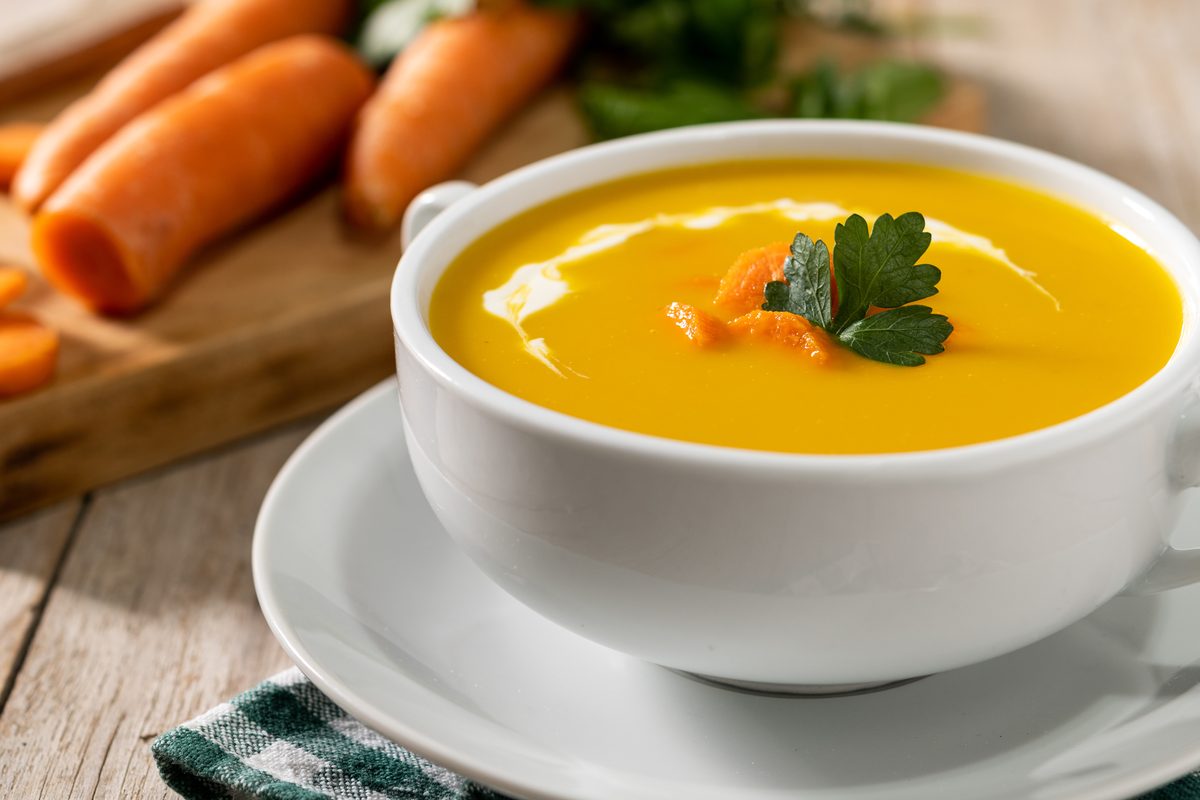
On the recipe side, a butternut squash velouté fortified with milk powder and grated cheese, baked eggs with spinach, a sweet potato mash or a rice pudding made with whole milk lend themselves very well to fortifying. So do the gratin dauphinois or a vegetable flan: tender, easy to chew and rich in dairy.
Oral nutritional supplements
When fortified food is not enough, the doctor can prescribe oral nutritional supplements (ONS), high-energy or high-protein drinks, creamy desserts or soups. HAS sets out how to use them properly: they are taken as a snack, at least 2 hours from a meal, or during the meal in addition to it, never in its place. The aim is an extra intake of 400 kcal a day and/or 30 g of protein, most often with 2 units a day. Once opened, they keep for 2 hours at room temperature and 24 hours in the fridge. They are not products to buy at random in a supermarket: their usefulness should be discussed with a professional.
Textures and the mouth: adapt rather than give up
HAS recommends regularly monitoring older people’s oral health and their ability to chew and swallow. A dental check-up and adjusting a denture are part of nutritional care, just as much as the menu.
If chewing becomes difficult, there is no need to blend everything straight away. You can first choose proteins that are naturally tender (fish, scrambled eggs or omelette, minced meat, pulses as a mash or soup, dairy), cook vegetables for longer and serve sauces. Fully blended food should only be considered if necessary, and fortified, because a blended dish thinned with water loses a lot of density. If there is choking, talk to the doctor: swallowing disorders call for a specialist assessment, often with a speech and language therapist.
A typical day to reach the guidelines
Here is an example for a 70 kg person aiming for around 75 g of protein, with reasonable portions. Protein contents come from Ciqual 2025.
| Time | Example | Protein (approx.) |
|---|---|---|
| Breakfast | A large bowl of semi-skimmed milk (250 g) fortified with 20 g of milk powder, bread, butter, fruit | 15.8 g from the milk and powder |
| Lunch | 100 g of chicken breast, vegetables, starchy food, a plain yoghurt | 30.1 + 4.8 = 34.9 g from the chicken and yoghurt |
| Snack | 100 g of fromage blanc 2-3% fat and stewed fruit | 7.3 g |
| Dinner | Vegetable velouté with 20 g of grated Emmental, 100 g of hard-boiled egg in a salad, fruit | 5.5 + 13.5 = 19 g |
| Total | About 77 g, not counting bread, starchy foods and vegetables |
This day also provides, with the milk, milk powder, yoghurt, fromage blanc and Emmental, about 1,050 mg of calcium, above the reference of 950 mg. You can swap the chicken for fish, the eggs for sardines, or a dinner for a lentil soup. For variety, our guide healthy snack ideas suggests other bites.
Keeping watch without worrying: weight and strength
This guide is about needs and the plate. Spotting undernutrition, its signs and its consequences are covered in our guide undernutrition: risks and early screening. Simply remember the HAS monitoring guidelines (2021) for people aged 70 and over:
- weigh yourself regularly, once a month at home, always on the same scales, and write the weight down;
- keep an eye on appetite and on what is really eaten, especially after an infection, a fall or a hospital stay;
- monitor strength (HAS mentions grip strength or the chair-stand test);
- step monitoring up to once a week in the event of an acute episode or a drop in appetite.
For HAS, a weight loss of 5% in one month or 10% in six months, or a BMI below 22, are signs that should lead you to see a doctor. For a 70 kg person, 5% is 3.5 kg. It is not for the reader to make a diagnosis, but knowing these thresholds helps you not to shrug off trousers that have become too loose.
Common myths
« At my age, you need to eat less »
You need less energy if you move less, but not less protein, calcium, vitamins or water. Anses applies adult references to older people, and European experts advise more protein. It is therefore the quality and density of each mouthful that count.
« A bit less weight is always good for your health »
Not after 70 without supervision. HAS notes excess mortality below a BMI of 22 in older people and considers rapid weight loss a criterion for undernutrition, even in a person who is overweight or has obesity.
« Meat is too tough, so I go without »
The problem is not meat but chewing. Eggs, fish, minced meat, dairy, cheese and pulses as a mash provide protein without any chewing effort.
« I am not thirsty, so I do not need to drink »
Thirst is a less reliable signal with age. EFSA keeps the same adequate water intakes for older people as for adults, and stresses that the kidney concentrates less well.
« Powdered supplements are for athletes »
HAS in fact lists protein powders and enriched pasta among the products that can be used to fortify the diet of an older person at risk. Ordinary milk powder remains the simplest and cheapest solution.
Precautions
- Kidney disease: a high protein intake may be inadvisable. Ask your doctor for the target.
- Diabetes: HAS ranks the strict « diabetic » diet among the diets at risk in older people. Do not cut out food groups without advice; our guide type 2 diabetes and diet gives the guidelines.
- Swallowing disorders: no textures chosen « at random ». Medical and speech therapy advice is needed.
- Supplements: vitamin D, calcium or protein should be discussed with your doctor, who knows your treatments and test results.
Frequently asked questions
How much protein is needed after 65?
Afssa advises 1.0 g per kilo per day for older people, and the European PROT-AGE group at least 1.0 to 1.2 g/kg, up to 1.2 to 1.5 g/kg in the case of illness. EFSA uses 0.83 g/kg, as for all adults. For 70 kg, aiming for 70 to 84 g a day is a good guide, except in severe kidney disease.
Should you eat less as you get older?
Less energy if you move less, yes, but not fewer nutrients. Anses references for vitamins and minerals remain those of adults. It is better to have smaller but richer portions, spread over three meals and one or two snacks.
How can you fortify a dish without increasing the amount?
HAS mentions milk powder, grated cheese, eggs, crème fraîche, melted butter and oil. For example, 20 g of skimmed milk powder adds about 7 g of protein and 250 mg of calcium to a mash or a soup.
How much should you drink after 70?
EFSA uses the same intakes as for adults: 2.0 litres of total water a day for a woman and 2.5 litres for a man, water from food included. Drinking at set times helps when thirst is felt less.
Do oral nutritional supplements replace a meal?
No. HAS states that they are taken as a snack, at least 2 hours from a meal, or during the meal in addition to it. They are prescribed by a doctor when fortified food is not enough.
When should you see a doctor?
In the case of unintentional weight loss (5% in one month or 10% in six months according to HAS), a lasting drop in appetite, difficulty chewing or swallowing, falls or loss of strength. Our guide on undernutrition covers the warning signs.
This article is for information only and does not replace the advice of your doctor or a dietitian.
💼 Careers & training: interested in this field professionally? Discover our career profiles: adapted physical activity (APA) teacher.
Our sources
- Haute Autorité de santé (HAS), Fédération française de nutrition. Diagnostic de la dénutrition chez la personne de 70 ans et plus. Recommandation de bonne pratique, novembre 2021.
- Haute Autorité de santé (HAS). Stratégie de prise en charge en cas de dénutrition protéino-énergétique chez la personne âgée. Synthèse des recommandations professionnelles, 2007.
- Afssa. Apport en protéines : consommation, qualité, besoins et recommandations. Rapport, 2007.
- Anses. Actualisation des références nutritionnelles françaises en vitamines et minéraux. Avis, saisine 2018-SA-0238, mars 2021.
- EFSA. Dietary Reference Values for nutrients, Summary report. EFSA supporting publication 2017:e15121.
- Santé publique France. Recommandations relatives à l’alimentation, à l’activité physique et à la sédentarité pour les adultes. 2019.
- Bauer J, Biolo G, Cederholm T, et al. Evidence-based recommendations for optimal dietary protein intake in older people: a position paper from the PROT-AGE Study Group. J Am Med Dir Assoc. 2013;14(8):542-559. PMID 23867520.
- Deutz NE, Bauer JM, Barazzoni R, et al. Protein intake and exercise for optimal muscle function with aging: recommendations from the ESPEN Expert Group. Clin Nutr. 2014;33(6):929-936. PMID 24814383.
- Cruz-Jentoft AJ, Bahat G, Bauer J, et al. Sarcopenia: revised European consensus on definition and diagnosis. Age Ageing. 2019;48(1):16-31. PMID 30312372.
- Anses. Table de composition nutritionnelle des aliments Ciqual 2025.