Kudzu root: benefits for alcohol and menopause, side effects and dosage
The short answer
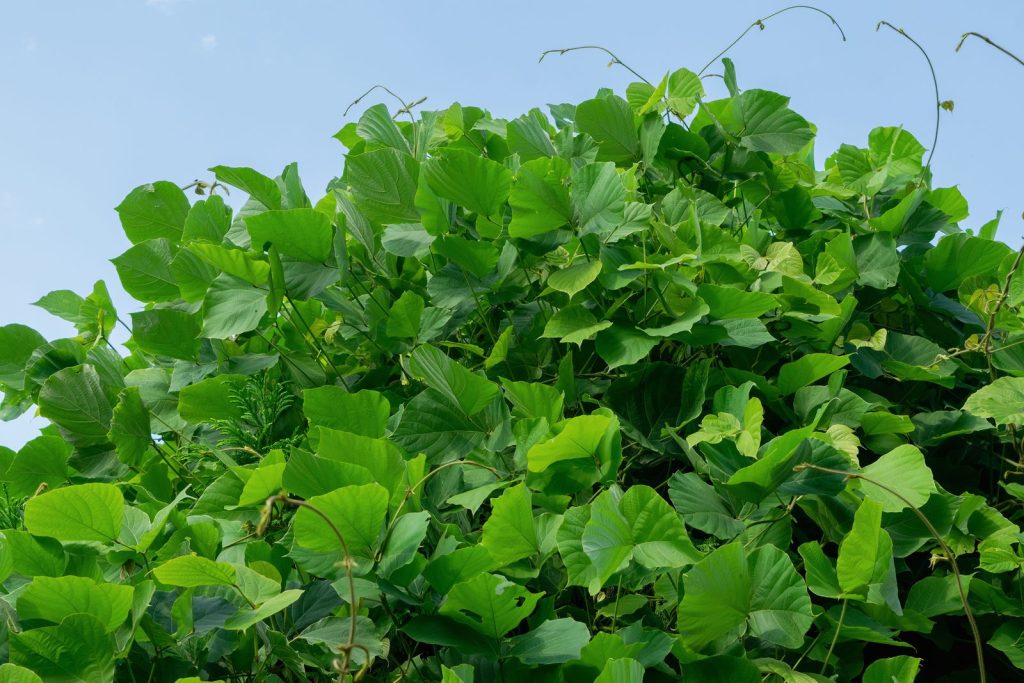
Kudzu (Pueraria montana var. lobata) is best known in the US as an invasive vine, but its root has a long history in Chinese medicine and is rich in isoflavones, mainly puerarin. Its main claim is alcohol: in small placebo-controlled trials, a kudzu extract led heavy drinkers to drink fewer beers, more slowly, and four weeks of treatment cut weekly drinks by 34% to 57%. But these trials are tiny, run by one team, and the only independent trial in alcohol-dependent patients found no effect. Evidence for menopause is weak. Because its isoflavones act as plant estrogens, kudzu is not for pregnancy, breastfeeding or hormone-sensitive cancers.
This article is for information and does not replace medical advice. Alcohol dependence needs proper care from a doctor or addiction specialist; kudzu is not a substitute.
What is kudzu root?
Kudzu is a climbing legume native to East Asia. In traditional Chinese medicine its root is called ge gen. It contains isoflavones, the same family of compounds found in soy (think tofu): puerarin (the main one), daidzin and daidzein. They resemble estrogen and can bind to its receptors, which is why they are called phytoestrogens.
Kudzu supplements come in two very different forms: root powder, simply dried and ground, and kudzu root extract, concentrated in isoflavones. Almost every trial used an extract. Do not confuse it with Pueraria mirifica, a different Thai plant with different compounds.
Kudzu for alcohol cravings: what the studies show
Most human data come from Scott Lukas’s team at McLean Hospital (Harvard). These are the controlled trials we read:
| Study | Participants and product | Result |
|---|---|---|
| Lukas, 2005 | Heavy drinkers, kudzu extract or placebo for 7 days, then a drinking session in a living-room style lab | Fewer beers, smaller sips, slower drinking; no effect on urge to drink |
| Penetar, 2012 | 10 volunteers, puerarin alone (1,200 mg a day) for 1 week | 2.4 beers on average vs 3.5 on placebo |
| Lukas, 2013 | 17 male heavy drinkers (about 28 drinks a week), extract with 250 mg isoflavones three times a day, 4 weeks | Weekly drinks down 34% to 57%, more alcohol-free days; no effect on craving |
| Penetar, 2015 | 20 men, a single 2 g dose of extract (520 mg isoflavones) 2.5 hours before drinking | From 3.0 to 1.9 beers, vs a rise from 2.7 to 3.4 on placebo |
| Shebek, 2000 | 38 alcohol-dependent patients in a treatment program, root extract 1.2 g twice a day | No difference from placebo on craving or sobriety |
The McLean results are consistent: kudzu does not reduce the desire to drink, but people drink more slowly and less. A related study (Penetar, 2011) showed kudzu does not make you feel more drunk or impair balance and reaction time, although blood alcohol rose slightly faster for 10 to 15 minutes after a large drink.
Important limits: very small trials (10 to 20 people), short (one dose to 4 weeks), mostly in a lab; participants who were not trying to quit; one research team that patented the extract it studied, as it discloses; and the only independent trial, in dependent patients, found no effect. Kudzu may help heavy, non-dependent drinkers drink less; it has not been shown to help people quit.
Kudzu root benefits for menopause: weak evidence
- Woo et al., 2003 (Menopause): 127 postmenopausal women aged 50 to 65 received hormone therapy, kudzu (equivalent to 100 mg isoflavones a day) or nothing for 3 months. Kudzu did not change cholesterol or hormones; the authors could not demonstrate a general health benefit, though attention scores improved.
- Bihlet et al., 2021: 50 postmenopausal women, five dose regimens of root extract for 4 weeks. Symptom scores fell in 4 of 5 groups and a bone breakdown marker (CTX-I) fell 18.4% with three doses a day. But there was no placebo group, everyone knew what they took, and the study was run by an industry company.
For hot flashes, sleep and bones, diet matters: see our menopause diet guide and our menopause supplement comparison.
Kudzu side effects and safety
Tolerance in trials
Kudzu was well tolerated: no side effects reported in 2005, and in the 4-week 2013 trial, no change in vital signs, blood chemistry, liver or kidney function. The 2021 menopause study reported no serious adverse events. These data cover only a few weeks.
Kudzu and the liver
In mice, a root extract given for 4 weeks raised liver enzymes and damaged liver tissue (Wang et al., 2015). In humans, one Korean case of hepatitis was published in a man taking mistletoe and kudzu, with mistletoe judged the probable cause (Kim et al., 2015). The 4-week human trial found no liver changes. Bottom line: no proven liver toxicity at studied doses, but ask your doctor if you have liver disease, and stop if you notice dark urine, unusual fatigue or yellowing skin. More in our guide to liver health and detox myths.
Plant estrogens: who should avoid kudzu
- pregnant or breastfeeding women;
- anyone with a personal or family history of breast cancer;
- people with uterine, ovarian or prostate cancer, endometriosis or fibroids;
- children and teenagers.
Drug interactions
In 18 volunteers, puerarin slowed the liver enzyme CYP2D6 and sped up CYP1A2 (Zheng et al., 2010). Both clear many drugs (some antidepressants, beta-blockers, antipsychotics, theophylline). If you take long-term medication, especially hormone therapy, cancer drugs or medication for alcohol use disorder, check with your doctor or pharmacist first.
How to take kudzu
- Doses in trials: concentrated extracts providing 520 mg (single dose) to 750 mg of isoflavones a day, or 1,200 mg of pure puerarin. Root powder is far less concentrated.
- Timing: regular doses through the day; in the single-dose trial, 2.5 hours before drinking.
- How fast does it work? In trials, effects on drinking appeared after one dose or one week.
- Duration: trials ran from one dose to 3 months; longer-term data are lacking.
Nutrition•pro: a pure kudzu root made in France
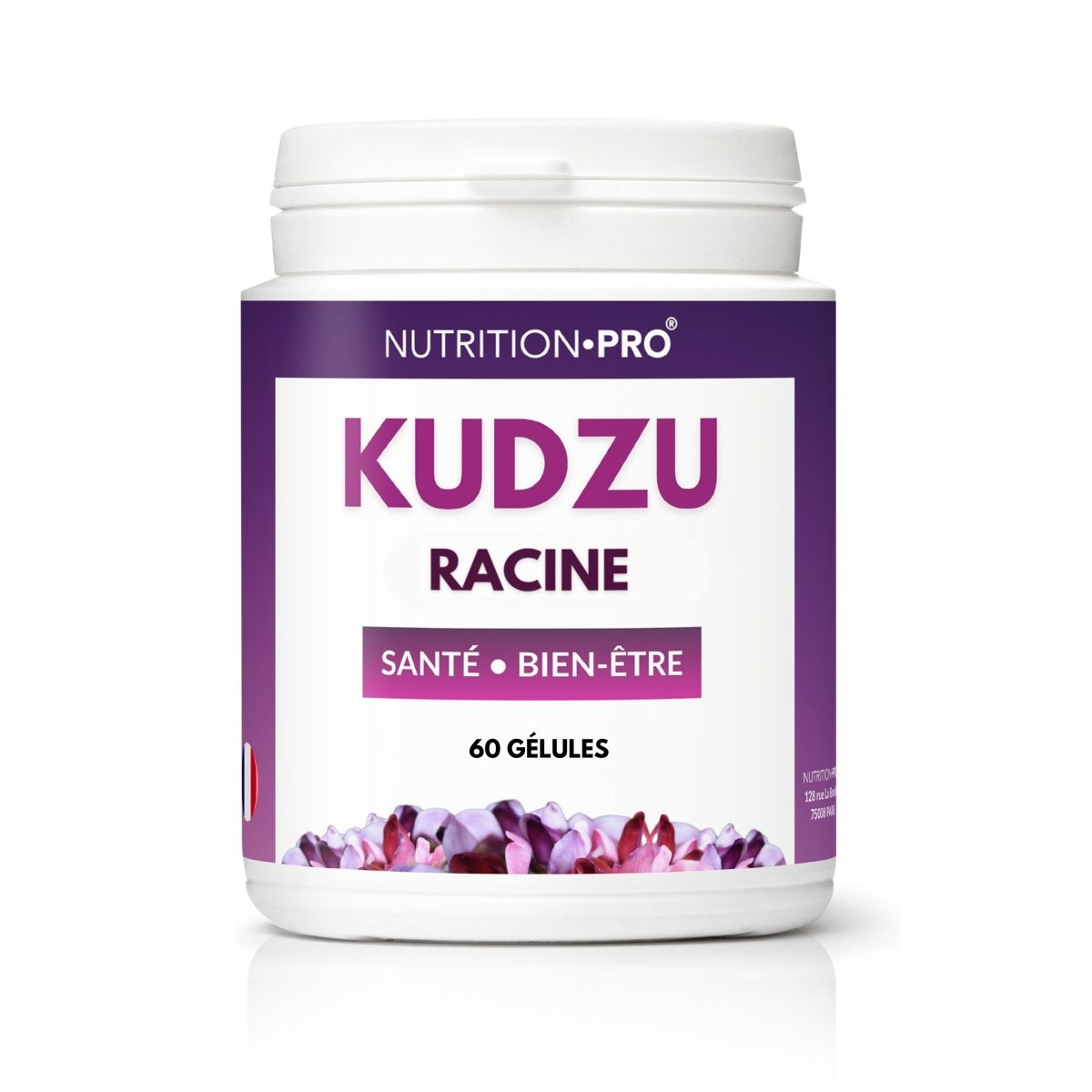
Nutrition•pro is a French brand based in Paris, which says it designs and makes its formulas in France. Its Kudzu keeps things simple:
- 100% kudzu root, no other herbs, in a plant-based (HPMC) capsule;
- 2 capsules a day with a large glass of water, for 750 mg of root; doses can be spread over the day;
- botanical identification, batch traceability and contaminant analysis, according to the brand;
- 60 capsules, a 30-day course;
- €29.99 per jar (price checked on 22/11/2026), about €1.00 a day.
How does the dose compare? This is root powder, while the alcohol trials used extracts delivering hundreds of milligrams of isoflavones a day. The label does not state an isoflavone content, so trial results do not transfer directly. It is close to the traditional use of the root, with a simple routine and a fair price. The brand itself says kudzu is a support, not a treatment for dependence. The same precautions apply.
Promo code: SEOCONSULTINGSL for 10% off your order, €26.99 per jar, about €0.90 a day (as of 22/11/2026).
Partner link: we earn a commission if you order through this link, at no extra cost to you.
Cutting back on alcohol can be stressful: see our guide to diet and stress, and our 5-HTP (griffonia) guide, a supplement sometimes paired with kudzu.
Frequently asked questions
What are the benefits of kudzu root?
The best-documented effect is less alcohol consumed by heavy drinkers, in small trials using concentrated extracts. Evidence for menopause is weak; other uses rest on tradition and lab work.
Does kudzu help with alcohol cravings?
Surprisingly, not cravings: trials found people drank less and more slowly, but their urge to drink did not change. In alcohol-dependent patients, the one available trial showed no effect.
What are the side effects of kudzu root?
Few in short trials. The main concerns are its plant estrogens (pregnancy, hormone-sensitive cancers), possible drug interactions and a liver toxicity signal in mice.
Does kudzu help with weight loss?
We found no solid trial showing it does. Drinking less alcohol does cut hidden calories: see how to lose weight healthily.
Sources
- Lukas S.E. et al. An extract of the Chinese herbal root kudzu reduces alcohol drinking by heavy drinkers in a naturalistic setting. Alcohol Clin Exp Res, 2005; 29(5): 756-62. PubMed 15897719
- Lukas S.E. et al. A standardized kudzu extract (NPI-031) reduces alcohol consumption in nontreatment-seeking male heavy drinkers. Psychopharmacology, 2013; 226(1): 65-73. PubMed 23070022
- Penetar D.M. et al. A single dose of kudzu extract reduces alcohol consumption in a binge drinking paradigm. Drug Alcohol Depend, 2015; 153: 194-200. PubMed 26048637
- Penetar D.M. et al. The isoflavone puerarin reduces alcohol intake in heavy drinkers: a pilot study. Drug Alcohol Depend, 2012; 126(1-2): 251-6. PubMed 22578529
- Penetar D.M. et al. Kudzu extract treatment does not increase the intoxicating effects of acute alcohol in human volunteers. Alcohol Clin Exp Res, 2011; 35(4): 726-34. PubMed 21244439
- Shebek J., Rindone J.P. A pilot study exploring the effect of kudzu root on the drinking habits of patients with chronic alcoholism. J Altern Complement Med, 2000; 6(1): 45-8. PubMed 10706235
- Woo J. et al. Comparison of Pueraria lobata with hormone replacement therapy in treating the adverse health consequences of menopause. Menopause, 2003; 10(4): 352-61. PubMed 12851519
- Bihlet A.R. et al. The Efficacy and Safety of Multiple Dose Regimens of Kudzu (Pueraria lobata) Root Extract on Bone and Cartilage Turnover and Menopausal Symptoms. Front Pharmacol, 2021; 12: 760629. PubMed 34744740
- Zheng J. et al. The effects of puerarin on CYP2D6 and CYP1A2 activities in vivo. Arch Pharm Res, 2010; 33(2): 243-6. PubMed 20195825
- Wang D. et al. Evaluation of kudzu root extract-induced hepatotoxicity. J Ethnopharmacol, 2015; 176: 321-6. PubMed 26545459
- Kim H.J. et al. Liver injury induced by herbal extracts containing mistletoe and kudzu. J Altern Complement Med, 2015; 21(3): 180-5. PubMed 25668233