Group · Meat
Lamb skewer
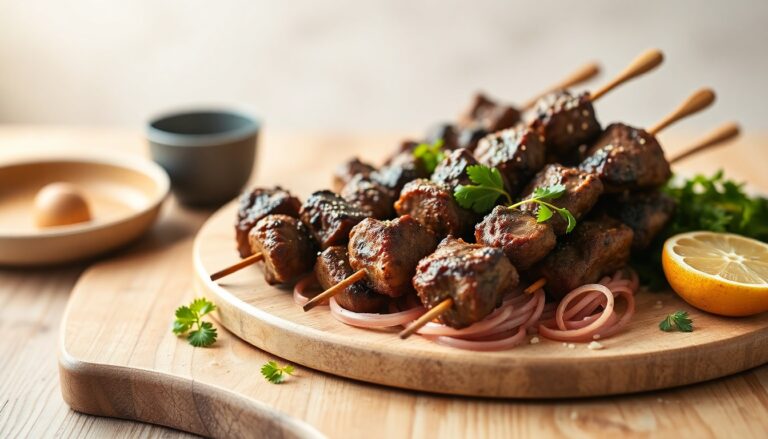
The lamb skewer is a great classic of barbecues and of Mediterranean and Middle Eastern cooking. Prepared from cubes of leg, shoulder or fillet, it is threaded onto skewers, often alternating with vegetables. Marinated and then grilled, it gives tender, fragrant meat. Nutritionally, it is a meat appreciated for its richness in protein: about 13.2 g per 100 g, with no carbohydrate or fibre, and only 7.93 g of fat depending on the cut chosen. At 137 kcal per 100 g, the lamb skewer remains an interesting option in a balanced diet, as long as you watch the cooking and any fatty accompaniments.
Macronutrient breakdown
Nutrition table per 100 g
| Calories | 137 kcal |
| Kilojoules | 571 kJ |
| Protein | 13,2 g |
| Carbohydrate | 2,6 g |
| Fat | 8 g |
| Fibre | 1,3 g |
Micronutrients per 100 g
All measured nutrients, ranked by share of the daily reference intake.
- Vitamin B120,93 µg37 %
- Vitamin B33,71 mg23 %
- Phosphorus109 mg16 %
- Vitamin C11,7 mg15 %
- Vitamin B60,18 mg13 %
- Potassium240 mg12 %
- Vitamin B20,15 mg11 %
- Iron1,34 mg10 %
See the other 11 nutrients
- Zinc0,87 mg9 %
- Vitamin B10,08 mg7 %
- Vitamin B50,43 mg7 %
- Copper0,06 mg6 %
- Magnesium19,5 mg5 %
- Vitamin B98,61 µg4 %
- Selenium1,37 µg2 %
- Manganese0,04 mg2 %
- Calcium15,8 mg2 %
- Iodine2,59 µg2 %
- Vitamin A11,2 µg1 %
Anses Ciqual 2025. Source: Anses, 2025, Ciqual food composition table
Tips
The lamb skewer is wonderful cooked on the grill, on a plancha or in the oven. To preserve its tenderness, choose a marinade based on olive oil, garlic, lemon, cumin, coriander and herbs, which flavours the meat and limits the formation of unwanted compounds when cooking over too high a heat. Controlled cooking, in the spirit of gentler cooking that preserves nutrients, keeps the flavour and tenderness better.
As for nutrition facts, the lamb skewer has an excellent protein profile: its 13.2 g of protein per 100 g make it an ally for maintaining muscle mass. It also provides well-absorbed haem iron, zinc and B vitamins (notably B12). The absence of carbohydrate and fibre means a zero glycaemic index, which makes it an interesting food for weight loss or a balanced diet.
A few practical tips:
- Allow a portion of 120 to 150 g of meat, served with grilled vegetables (pepper, courgette, onion) and a wholegrain cereal for a complete meal.
- Drain off the marinade before grilling to avoid flare-ups and excess fat.
- Keep the raw marinated meat for 24 hours at most in the fridge, and cooked skewers for 2 to 3 days.
- Limit fatty sauces such as melted butter or mayonnaise, which weigh the dish down.
For active people, the lamb skewer is a good-quality protein source, ideal as a recovery meal after a weights session, to support muscle rebuilding. Pair it with complex carbohydrates to replenish glycogen stores. If you are looking for an even leaner protein source, turn to chicken breast or turkey breast. To round out your eating around exercise, discover our guidelines on fitness nutrition.
When it comes to weight control, lamb remains a moderately fatty meat depending on the cut: the shoulder is more marbled than the leg or the fillet. Choose lean cuts, trim off the fat before cooking and be sensible about frequency. You can vary things with other meats from the meat family, such as leg of lamb. Eaten in moderation and well accompanied by vegetables, the lamb skewer easily finds its place on a balanced and tasty plate.