Group · Meat
Roast capon
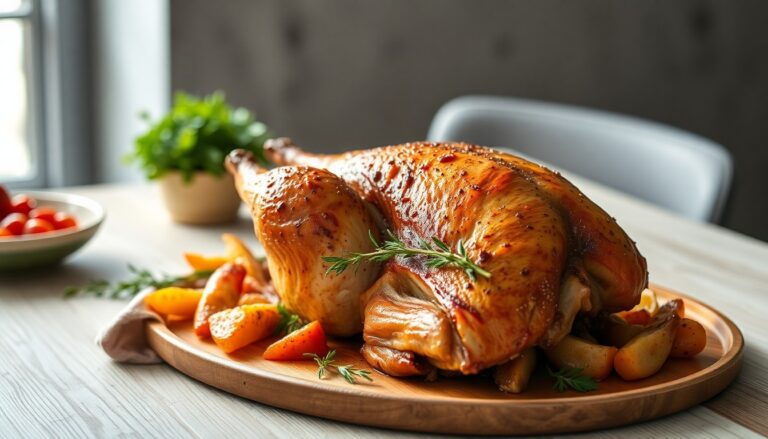
The roast capon is the festive bird par excellence, traditionally served at the table at the end of the year. Coming from a young, fattened cockerel, the capon offers tender, melting, marbled flesh that is richer and tastier than that of an ordinary chicken. Once roasted in the oven, it develops a golden, crispy skin loved by fans of good cooking. Nutritionally, roast capon provides around 221 kcal per 100 g, with a good protein (29 g) content, moderate fat (11.7 g) and no carbohydrate. It is a white meat rich in essential amino acids, which can fit into a balanced diet, as long as you watch the amount of skin and the cooking fats.
Macronutrient breakdown
Nutrition table per 100 g
| Calories | 221 kcal |
| Kilojoules | 923 kJ |
| Protein | 29 g |
| Fat | 11,7 g |
Micronutrients per 100 g
All measured nutrients, ranked by share of the daily reference intake.
- Vitamin B38,95 mg56 %
- Phosphorus246 mg35 %
- Vitamin B60,43 mg31 %
- Vitamin B51,1 mg18 %
- Zinc1,74 mg17 %
- Vitamin B120,33 µg13 %
- Potassium255 mg13 %
- Vitamin B20,17 mg12 %
See the other 10 nutrients
- DHA0,03 g12 %
- Iron1,49 mg11 %
- Copper0,07 mg7 %
- Magnesium24 mg6 %
- Vitamin B10,07 mg6 %
- EPA0,01 g4 %
- Vitamin B96 µg3 %
- Calcium14 mg2 %
- Total omega-30,04 g2 %
- Manganese0,02 mg1 %
Anses Ciqual 2025. Source: Anses, 2025, Ciqual food composition table
Tips
Roast capon is mostly enjoyed at festive meals, but its richness in protein also makes it a good way to vary your meat sources day to day. A reasonable portion of 120 to 150 g covers a significant share of daily protein needs, while keeping calories under control.
How should you eat roast capon?
- Choose the flesh rather than the skin, which holds most of the fat, to lighten your plate.
- Serve it with seasonal vegetables (chestnuts, mushrooms, green beans) or starchy foods such as homemade mash for a complete, balanced meal.
- For cooking, gentle roasting with regular basting keeps it moist; you can take inspiration from the principles of gentle cooking to limit drying out.
- Storage: leftovers keep for 2 to 3 days in the fridge, well wrapped, and are perfect for cold salads or stews.
Nutrition facts and benefits
With its 29 g of protein per 100 g and zero carbohydrate, roast capon is a meat with a zero glycaemic index, useful as part of a balanced diet. Its flesh provides complete protein, iron, zinc and B vitamins. Compared with leaner poultry such as turkey breast or chicken breast, capon is a little fattier because of the fattening process, but offers an incomparable flavour.
Tips for active people
Roast capon is an excellent source of protein to support muscle recovery after exercise. Combined with complex carbohydrates (brown rice, sweet potato), it helps rebuild muscle fibres and replenish reserves. For a quicker post-workout snack, you can add ideas for protein snacks suited to your goals of gaining or maintaining muscle mass.
Weight control
Its calorie density remains moderate, but beware of the preparation methods: fatty sauces, butter and crispy skin push up the energy total. If you are trying to lose weight, remove the skin, limit added fat and serve the capon with vegetables. To compare its values with other foods, consult the calorie table or explore the whole family of meats to vary your intake.