Group · Meat
Salami
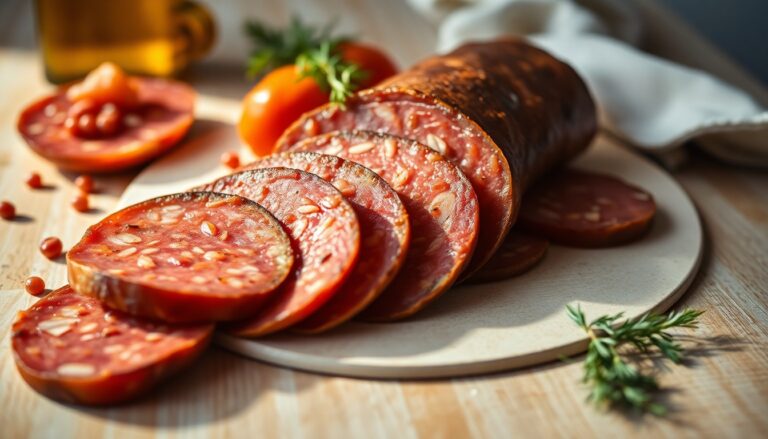
Salami is a dry-cured meat emblematic of Italian tradition, made from minced meat (pork, sometimes beef), fat, salt and spices, then matured by drying and fermentation. It comes in many varieties: Milano salami, Neapolitan salami, and versions with pepper, fennel or chilli. Its firm texture and intense taste make it a staple of nibbles boards, sandwiches and platters. In terms of nutrition facts, salami provides around 457 kcal per 100 g, with 17.7 g of protein, only 2.59 g of carbohydrate but 41.8 g of fat. It is therefore a rich, tasty food, to be included sparingly in a balanced diet.
Macronutrient breakdown
Nutrition table per 100 g
| Calories | 457 kcal |
| Kilojoules | 1890 kJ |
| Protein | 17,7 g |
| Carbohydrate | 2,6 g |
| Fat | 41,8 g |
Micronutrients per 100 g
All measured nutrients, ranked by share of the daily reference intake.
- Vitamin B121,58 µg63 %
- Omega-6 LA4,4 g44 %
- Vitamin B10,3 mg27 %
- Vitamin B33,52 mg22 %
- Phosphorus150 mg21 %
- Zinc1,9 mg19 %
- Omega-3 ALA0,35 g18 %
- Vitamin B60,24 mg17 %
See the other 15 nutrients
- Vitamin B51,02 mg17 %
- Potassium300 mg15 %
- Total omega-30,37 g15 %
- Manganese0,28 mg14 %
- Vitamin D0,68 µg14 %
- Iodine20 µg13 %
- Vitamin B20,17 mg12 %
- Vitamin E1,26 mg11 %
- Iron1 mg7 %
- Copper0,07 mg7 %
- Vitamin C3,61 mg5 %
- Vitamin B98,54 µg4 %
- Magnesium15 mg4 %
- Vitamin A10,5 µg1 %
- Calcium7,2 mg1 %
Anses Ciqual 2025. Source: Anses, 2025, Ciqual food composition table
Tips
Salami appeals with its protein content (around 17.7 g per 100 g) and its strong taste, but its high fat content (41.8 g) and salt call for sensible eating. With 457 calories per 100 g, it is a cured meat with a high calorie density: a few thin slices are enough to flavour a dish or put together a tasty nibbles board.
How to eat salami
- Stick to modest portions: 20 to 30 g (4 to 6 thin slices) to enjoy the taste without overdoing it.
- Pair it with high-fibre foods: raw vegetables, salad, wholemeal bread and crunchy vegetables to balance the meal.
- Put it on a board with other cured meats such as mortadella or chorizo, but vary it with lean meats too.
- Keep it in the fridge, wrapped, or in a cool, dry place if it is whole and unopened.
Varieties and uses in cooking
Salami comes in versions with fennel, black pepper, garlic, or hot and spicy versions (close to Calabrian salami). It is made by fermentation and drying, which concentrates the flavours and explains its salt content. It is used in slices on bruschetta, in pizzas, in quiches, in sandwiches, or diced in mixed salads. If you enjoy dry-cured meats, you can compare it with turkey salami, which is generally less fatty.
Tips for active people
Salami provides useful protein, but its saturated fat and salt make it unsuitable around exercise. For recovery or a protein snack, turn instead to lean sources such as turkey breast or explore our ideas for protein snacks. Salami remains an occasional treat, perfect on a convivial board after a week of training.
Watching your weight
Its high calorie density and fat content call for moderation if you are watching your figure. Weigh your portions, limit how often you eat it and keep it for treat days. To see where salami sits among other products, consult the food calorie table or discover the other cured meats in the Meat family to vary your choices while staying in control.