Group · Meat
Chorizo
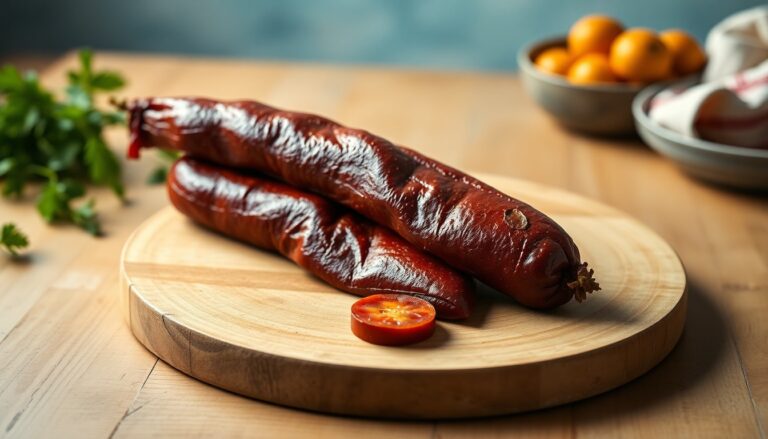
Chorizo is a cured sausage of Iberian origin, made from minced pork seasoned with paprika (pimentón), which gives it its characteristic red colour and spicy flavour. It comes in mild or hot versions, firm for slicing or softer for cooking. Full of flavour, it belongs to the meat and charcuterie family. Nutritionally, chorizo provides 425 kcal per 100 g, with a high fat content (36.1 g) and protein content (23.5 g), very little carbohydrate (1.24 g) and no fibre. It is a tasty, high-calorie food, to be included in moderation in a balanced and varied diet.
Macronutrient breakdown
Nutrition table per 100 g
| Calories | 425 kcal |
| Kilojoules | 1760 kJ |
| Protein | 23,5 g |
| Carbohydrate | 1,3 g |
| Fat | 36,1 g |
| Fibre | 1 g |
Micronutrients per 100 g
All measured nutrients, ranked by share of the daily reference intake.
- Omega-6 LA5,3 g53 %
- Omega-3 ALA0,29 g15 %
- Iodine7 µg5 %
Anses Ciqual 2025. Source: Anses, 2025, Ciqual food composition table
Tips
Chorizo can be enjoyed in many ways: in thin slices as a nibble with drinks, diced and browned in a frying pan, or added to stews, paellas, tortillas and sautéed vegetables. Its rich flavour lets you lift a dish with a small amount, which is an advantage when you are watching your calorie intake. As it is a fatty and often salty cured meat, it is best seen as a condiment or a treat rather than a main source of protein.
Portions and moderation. Given its calorie density (425 kcal per 100 g) and its 36.1 g of fat, it is best to limit the portion to 20 to 30 g and eat it once or twice a week. Chorizo is also high in salt, something to bear in mind if you are watching your weight or blood pressure. To compare its nutrition facts with other cured meats, you can consult our food calorie table.
Cooking and storage. Cooking chorizo releases a fragrant red oil that is ideal for flavouring rice, potatoes or lentils, while dry chorizo keeps for several weeks in a cool place, wrapped. Avoid long cooking over a high heat, which hardens and blackens the meat.
- Varieties: mild, hot, garlic, Iberian (bellota), grilling version.
- Key nutrients: protein, paprika (a source of antioxidants), zinc and iron from the pork, but high saturated fat.
- Smart pairings: vegetables, pulses or wholegrain starchy foods to balance the plate.
For active people. Chorizo provides useful protein (23.5 g per 100 g), but its high fat content makes it poorly suited to a snack around exercise, where leaner sources such as chicken breast or roast turkey are preferable. When bulking up, a small amount can round off an energy-dense meal. To optimise your protein intake, you can also take inspiration from our fitness nutrition tips.
If you like spicy cured meats, also explore salami or browse the whole meat family to vary your choices. Chorizo remains an indulgent pleasure: eaten in moderation and paired with fibre-rich foods, it has its place in a balanced diet.
Pregnant? Raw chorizo is not recommended; cooked right through in a hot dish, it is allowed. See our guide chorizo in pregnancy.