Group · Starchy foods
Seitan
Seitan is isolated wheat gluten: a dough of flour and water is kneaded and then rinsed until only the protein network remains, which is then cooked in stock. The technique comes from Chinese Buddhist monastic kitchens, where it has been used for over a thousand years to imitate the texture of meat.
On nutrition facts, it shows 134 kcal per 100 g for 20.6 g of protein, 6.74 g of carbohydrate and only 2.5 g of fat. It also provides 30 µg of selenium and 6.92 mg of vitamin B3 per 100 g, a notable share of the reference intakes. One point of caution: 1.13 g of salt per 100 g, coming from the cooking stock.
Macronutrient breakdown
Nutrition table per 100 g
| Calories | 134 kcal |
| Kilojoules | 566 kJ |
| Protein | 20,6 g |
| Carbohydrate | 6,8 g |
| Fat | 2,5 g |
| Fibre | 0,9 g |
Micronutrients per 100 g
All measured nutrients, ranked by share of the daily reference intake.
- Selenium30 µg55 %
- Vitamin B36,92 mg43 %
- Manganese0,61 mg31 %
- Copper0,23 mg23 %
- Zinc1,2 mg12 %
- Iron1,5 mg11 %
- Phosphorus62 mg9 %
- Vitamin B914,7 µg7 %
See the other 13 nutrients
- Magnesium18 mg5 %
- Vitamin E0,51 mg4 %
- Omega-6 LA0,42 g4 %
- Potassium75 mg4 %
- Vitamin B10,04 mg3 %
- Vitamin B50,16 mg3 %
- Calcium20 mg3 %
- Vitamin B20,03 mg2 %
- Total omega-30,04 g2 %
- Vitamin B60,02 mg2 %
- Vitamin B120,04 µg2 %
- Omega-3 ALA0,02 g1 %
- Vitamin A2,05 µg0 %
Anses Ciqual 2025. Source: Anses, 2025, Ciqual food composition table
Tips
The protein-to-calorie ratio is its selling point. 20.6 g of protein for 134 kcal: that is better than chicken breast for the same calories, and with no cholesterol. For a plant-based diet, it is one of the few products to reach this level without being a lab-made ultra-processed food.
But its amino acid profile is incomplete. Gluten is low in lysine. It should therefore not be the only source of protein in the day: combined with lentils, chickpeas or kidney beans, the whole becomes complete. It is the same rule as for all grains.
Salt is controlled during cooking. Most of the 1.13 g comes from the stock. Made at home in a lightly salted stock, seitan comes out clearly lower. With a shop-bought product, rinse it and do not add salt to the dish (see salt for reference points).
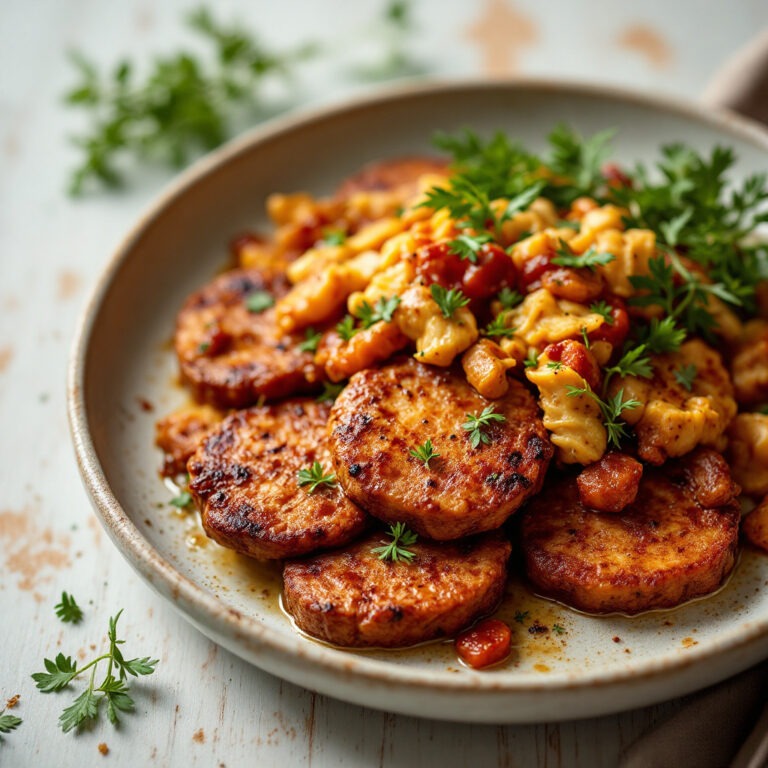
It absorbs whatever you give it. Plain, it is bland: it is a base. A marinade of soy sauce, ginger and paprika, then a sear in the pan, and the result is another thing entirely.
A clear contraindication: coeliac disease. Seitan is pure gluten. It is the only protein-rich plant product that is completely off limits with intolerance; tofu and pulses then take over.
Sources
Average nutrition values per 100 g, given for guidance (spices and condiments are eaten in small amounts; values vary by brand and preparation).