Group · Herbs & spices
Dried dill
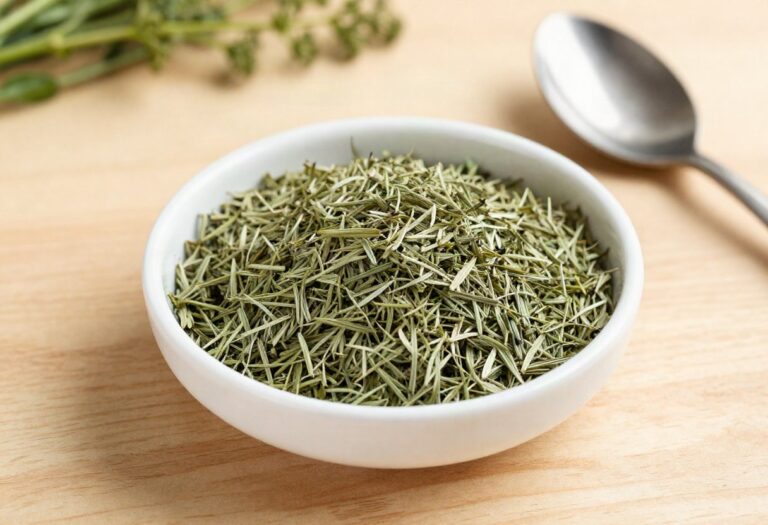
Dried dill is an aromatic herb made by dehydrating the fine, feathery leaves of dill (Anethum graveolens). Concentrated in aromas, it develops a fresh, aniseed flavour with a slight lemony note, much prized in Nordic, Eastern European and Mediterranean cooking. In its dried form it keeps for a long time and is used in small pinches, making it a practical seasoning all year round. Nutritionally, dried dill provides around 315 kcal per 100 g, but as it is used in very small amounts, its real calorie contribution is negligible on the plate. Rich in fibre and aromatic compounds, it lifts dishes without adding salt or fat, an asset for tasty, light cooking.
Macronutrient breakdown
Nutrition table per 100 g
| Calories | 315 kcal |
| Kilojoules | 1330 kJ |
| Protein | 20 g |
| Carbohydrate | 42,2 g |
| Fat | 4,4 g |
| Fibre | 13,6 g |
Micronutrients per 100 g
All measured nutrients, ranked by share of the daily reference intake.
- Iron48,8 mg349 %
- Calcium1780 mg223 %
- Manganese3,95 mg198 %
- Potassium3310 mg166 %
- Vitamin B61,71 mg122 %
- Magnesium451 mg120 %
- Phosphorus543 mg78 %
- Vitamin C50 mg63 %
See the other 5 nutrients
- Copper0,49 mg49 %
- Vitamin B10,42 mg38 %
- Zinc3,3 mg33 %
- Vitamin B20,28 mg20 %
- Vitamin B32,81 mg18 %
Anses Ciqual 2025. Source: Anses, 2025, Ciqual food composition table
Tips
Dried dill is used in pinches, generally half a teaspoon to a teaspoon for a dish for four people. At that dose, its calorie contribution is insignificant, despite the 253 kcal shown per 100 g. It is therefore a great ally for seasoning without weighing down your recipes, a real asset for slimming and when rebalancing your diet.
In terms of nutrition facts, dried dill concentrates nearly 20 g of protein, 42.2 g of carbohydrates and above all 13.6 g of fibre per 100 g, plus aromatic compounds and minerals. Again, as the amounts eaten are minimal, think of it as a flavour enhancer rather than a nutritional source.
How to eat dried dill. Here are a few ideas:
- Sprinkle it on white fish, salmon or raw vegetables for an aniseed touch.
- Stir it into a plain yoghurt sauce, ideal with cucumber and beetroot.
- Add it to omelettes, cold soups and marinades.
- Flavour your steamed potatoes or roasted vegetables with a gentle cooking method, such as gentle cooking that preserves nutrients and flavour.
To release its aromas, add dried dill at the end of cooking: prolonged heat dulls its delicate notes. You can rehydrate it for a few minutes in a little water or lemon juice. Store it in an airtight jar, away from light and damp, to preserve its aroma for several months.
Dill pairs particularly well with other fresh or dried herbs. You can combine it with parsley, chives or a little raw shallot to make fragrant green sauces. Also discover the whole family of herbs and spices to vary your seasonings without unnecessary calories.
For active people: dried dill does not provide significant energy, but it lets you flavour protein- and carbohydrate-rich meals, useful before or after exercise, without added salt. A parcel of fish baked with dill, served with potatoes, makes for instance a light, easily digested recovery dinner. Relying on herbs rather than fatty sauces helps you control the calorie density of your plates while keeping the pleasure of taste. A simple trick for making a balanced diet tasty day to day.