Group · Vegetables
Beetroot
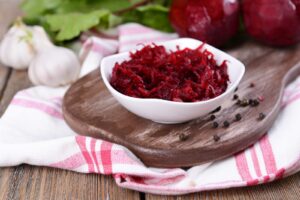
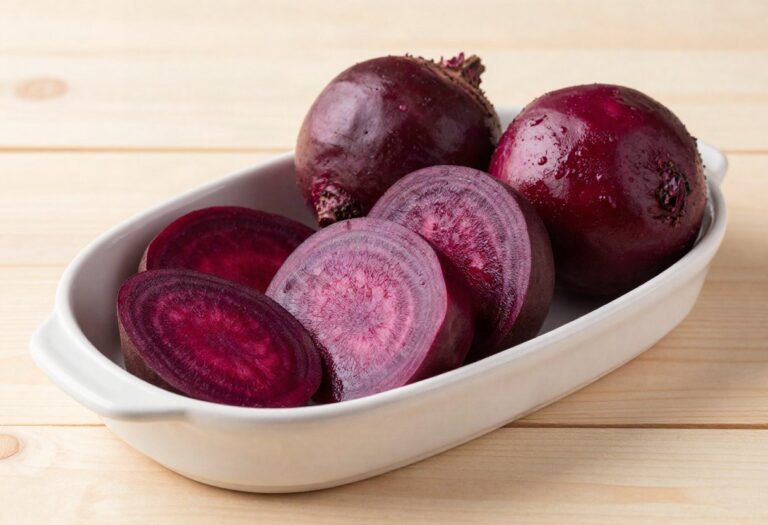
Beetroot is a root vegetable recognisable by its purple flesh and its mild, slightly sweet, earthy flavour. It comes in several forms: raw for grating, cooked by steaming or in the oven, vacuum-packed and ready to use, tinned or as juice. There are also yellow (golden) varieties and the famous chioggia beetroot with its pink and white rings. In terms of nutrition facts, it stays light with only 41.5 kcal per 100 g, while providing natural carbohydrates, fibre and various minerals. Its intense colour comes from pigments called betalains. Versatile and inexpensive, beetroot has its place in a balanced diet, as a starter, in a salad or as a colourful side.
Macronutrient breakdown
Nutrition table per 100 g
| Calories | 42 kcal |
| Kilojoules | 175 kJ |
| Protein | 1,5 g |
| Carbohydrate | 7,2 g |
| Fat | 0,4 g |
| Fibre | 2,5 g |
Micronutrients per 100 g
All measured nutrients, ranked by share of the daily reference intake.
- Potassium320 mg16 %
- Manganese0,31 mg16 %
- Copper0,07 mg7 %
- Magnesium17 mg5 %
- Calcium24 mg3 %
- Zinc0,29 mg3 %
- Phosphorus18 mg3 %
- Vitamin B50,14 mg2 %
- Vitamin B9dietary folate equivalents12,4 µg
See the other 5 nutrients
- Vitamin B60,03 mg2 %
- Iron0,29 mg2 %
- Total omega-30,03 g1 %
- Omega-6 LA0,07 g1 %
- Vitamin A0,21 µg0 %
Anses Ciqual 2025. Source: Anses, 2025, Ciqual food composition table
Tips
Beetroot lends itself to countless preparations. Raw and finely grated, it keeps its crunch and all its vitamins; cooked, it develops a comforting sweetness. To best preserve its nutrients, choose gentle cooking, steamed or baked in foil, rather than long boiling, which leaches compounds into the water.
A portion of 80 to 120 g is ideal as a starter or side. As for pairings, it goes with fresh goat’s cheese, walnuts, citrus fruit, cumin, dill or a splash of balsamic vinegar. In a salad, combine it with lamb’s lettuce or grated carrot for a colourful, fibre-rich mix. You can also turn it into pink hummus, a velvety soup or juice.
- Calories and weight loss: at 41.5 kcal per 100 g, beetroot remains low in calories. Do bear in mind its naturally present carbohydrates (about 7.13 g per 100 g) and a moderate glycaemic index when cooked: watch the quantities if you are tracking your weight, and avoid tinned versions that are too sweet or vinegary.
- Fibre: its fibre supports digestion and fullness, useful as part of a switch to a balanced diet.
- Key nutrients: it provides folate, potassium, manganese and the famous betalains responsible for its colour.
For active people, beetroot juice is often drunk before exercise for its natural nitrates. Ideally have it 1 to 2 hours before an endurance session, as part of your hydration strategy. Its carbohydrates help replenish stores, and you can pair it with a protein source after training. To go further on balancing your intake, discover our advice on nutrition for fitness.
As for storage, keep raw beetroot cool and dry; once cooked, it keeps for a few days in the fridge in an airtight container. Remember to wear gloves to peel it, as the pigments stain easily. To compare its benefits and calories with other foods, check the calorie table, and explore the full range of the vegetable family to vary your plate through the seasons.
Raw or cooked? Read our guide raw beetroot: is it dangerous?, which explains the 2014 opinion from Anses (the French food safety agency).