Group · Vegetables
Aubergine
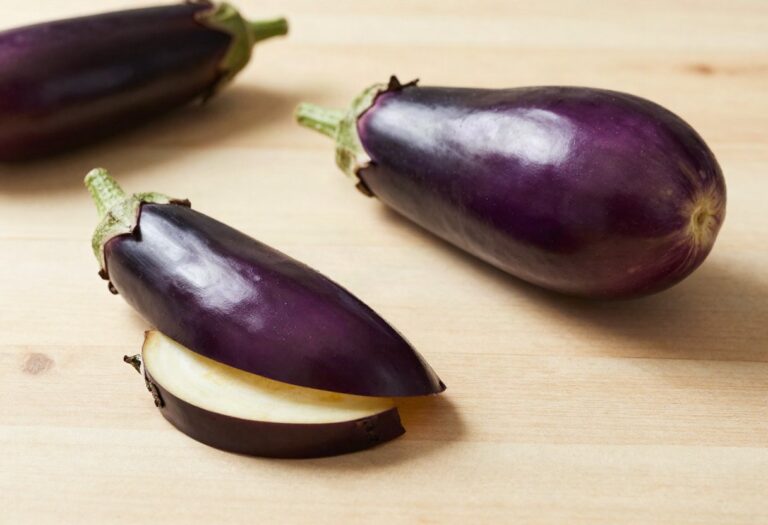
The aubergine is an emblematic fruit-vegetable of Mediterranean cooking, recognisable by its glossy purple skin and tender flesh. It comes in different forms: the classic oval aubergine, small round varieties, white or striped aubergines, and even elongated Asian versions. Low in calories at around 27.1 kcal per 100 g, it appeals for its fibre and its low fat content. Its melting texture after cooking makes it an ally of hearty dishes such as ratatouille, aubergine caviar or moussaka. Versatile and filling, it fits easily into a balanced diet and pleases both lovers of good cooking and people watching their figure.
Macronutrient breakdown
Nutrition table per 100 g
| Calories | 27 kcal |
| Kilojoules | 113 kJ |
| Protein | 0,9 g |
| Carbohydrate | 4,2 g |
| Fat | 0,3 g |
| Fibre | 2,5 g |
Micronutrients per 100 g
All measured nutrients, ranked by share of the daily reference intake.
- Vitamin B10,08 mg7 %
- Potassium123 mg6 %
- Vitamin B60,09 mg6 %
- Manganese0,12 mg6 %
- Copper0,06 mg6 %
- Magnesium15 mg4 %
- Vitamin K12,9 µg4 %
- Vitamin B30,6 mg4 %
- Vitamin B9dietary folate equivalents14 µg
See the other 12 nutrients
- Vitamin E0,41 mg3 %
- Calcium20,1 mg3 %
- Phosphorus15 mg2 %
- Iron0,25 mg2 %
- Vitamin C1,3 mg2 %
- Vitamin B20,02 mg1 %
- Vitamin B50,08 mg1 %
- Zinc0,1 mg1 %
- Omega-6 LA0,08 g1 %
- Iodine1 µg1 %
- Omega-3 ALA0,01 g0 %
- Vitamin A1,83 µg0 %
Anses Ciqual 2025. Source: Anses, 2025, Ciqual food composition table
Tips
To get the best from aubergine, choose one that is firm, smooth and heavy in the hand, with a bright green stalk. It keeps for a few days in the fridge salad drawer. There is no need to peel it every time: the skin holds some of the fibre and antioxidant pigments. A classic tip is to salt it and let it drain before cooking to reduce bitterness and limit the absorption of fat.
In terms of nutrition facts, aubergine is low in calories (27.1 kcal per 100 g), low in available carbohydrate and almost free of fat. Its 2.5 g of fibre per 100 g promote fullness and good digestion. Its glycaemic index stays moderate, as long as you watch how it is cooked. Be careful, though: aubergine behaves like a sponge for oil. Fried or too generously drizzled with olive oil, its calorie density can climb quickly.
- Light cooking: choose the oven, steaming or the grill rather than frying. Gentle cooking helps preserve flavours and nutrients.
- Smart pairings: combine it with tomato, courgette and pepper for a colourful, fibre-rich ratatouille.
- Servings: allow about 150 to 200 g per person as a side.
For active people, aubergine is not a source of protein or fast carbohydrate, but it is an excellent bulking vegetable. It adds fullness without increasing the calories, which is useful when cutting or maintaining weight. Pair it with a source of lean protein (fish, poultry, legumes) and a wholegrain starchy food for a complete, balanced recovery meal. To go further on balancing your plates, see our guide to a balanced diet.
In the kitchen, aubergine has a thousand uses: aubergine caviar, gratin, curry, stuffed aubergines, vegetarian lasagne or parmigiana. In season from summer to autumn, it is then at its best for flavour and price. To discover more ideas and compare nutritional content, explore the whole vegetable family and its benefits. Eaten regularly and cooked sensibly, aubergine remains a tasty weight-loss asset, as long as you go easy on the oil.