Group · Starchy foods
Pasta
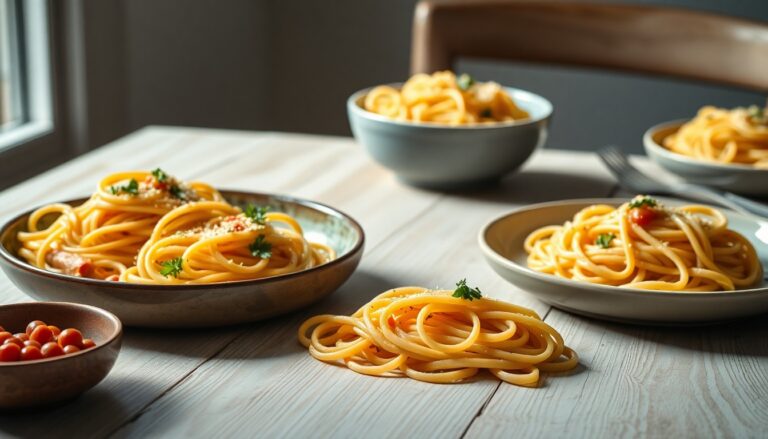
The humble pasta is one of the most popular starchy foods in the world, and for good reason: easy to cook, inexpensive and endlessly versatile. Made from durum wheat, it comes in a huge range of shapes (spaghetti, penne, fusilli, tagliatelle, macaroni) and varieties, from the classics to wholewheat or egg versions. Once cooked, it provides around 167 kcal per 100 g, with 31.4 g of carbohydrate, 6.69 g of protein and less than 1.1 g of fat. A top source of energy, it earns its place in a balanced diet, as long as you watch portions, cooking time and accompaniments. A comforting classic that can stay a slimming ally when managed sensibly.
Macronutrient breakdown
Nutrition table per 100 g
| Calories | 167 kcal |
| Kilojoules | 706 kJ |
| Protein | 6,7 g |
| Carbohydrate | 31,4 g |
| Fat | 1,1 g |
| Fibre | 2,2 g |
Micronutrients per 100 g
All measured nutrients, ranked by share of the daily reference intake.
- Manganese0,41 mg21 %
- Copper0,15 mg15 %
- Phosphorus72,5 mg10 %
- Selenium4,21 µg8 %
- Magnesium21,9 mg6 %
- Zinc0,51 mg5 %
- Iron0,68 mg5 %
- Omega-6 LA0,44 g4 %
See the other 10 nutrients
- Vitamin B10,04 mg4 %
- Potassium52,1 mg3 %
- Vitamin B95,2 µg3 %
- Calcium18 mg2 %
- Vitamin B50,1 mg2 %
- Omega-3 ALA0,03 g1 %
- Vitamin B60,02 mg1 %
- Vitamin B30,15 mg1 %
- Vitamin B120,01 µg1 %
- Vitamin A1,25 µg0 %
Anses Ciqual 2025. Source: Anses, 2025, Ciqual food composition table
Tips
To get the most from pasta, cooking is key. Aim for al dente: less cooked pasta keeps a more moderate glycaemic index and releases its energy more gradually. Allow about 60 to 80 g of dry pasta per person as a main dish, a sensible portion if you are watching your weight. Well-salted water, quick draining and a drizzle of olive oil to finish are enough to bring out its flavour.
In terms of nutrition facts, pasta mainly provides complex carbohydrates, ideal as fuel. It becomes more interesting when you choose higher-fibre versions, such as wholewheat spaghetti or wholewheat macaroni, which are more filling. Egg pasta offers a little extra protein. You can also vary things with other starchy foods from the same starchy foods family, such as bulgur, quinoa or brown rice.
For balanced combinations, pair your pasta with:
- vegetables (courgettes, tomatoes, spinach, broccoli) for volume and fibre;
- a source of protein (chicken, tuna, egg, lentils) for a complete meal;
- good-quality fats such as olive oil, rather than very calorific creamy sauces.
Be wary of sauces: it is often the accompaniment, not the pasta, that adds to the calorie bill. A ready-made carbonara or a cheese sauce quickly turns a light dish into a rich meal.
For active people, pasta is a benchmark. Before an endurance effort, a plate of pasta 2 to 3 hours before the session is an excellent glycogen reserve. After training, it supports recovery by replenishing energy stores, ideally combined with a source of protein to repair muscle fibres. It is a great classic of endurance athletes and a pillar of nutrition for fitness.
For storage, dry pasta keeps for months in a dry place; once cooked, it keeps for 2 to 3 days in the fridge, perfect for batch cooking and cold salads. If you are watching your weight, play with the portion and the accompaniment rather than banning this food. To compare energy intakes, see the food calorie table and adapt your plates to your goals.