Group · Herbs & spices
Freeze-dried chives
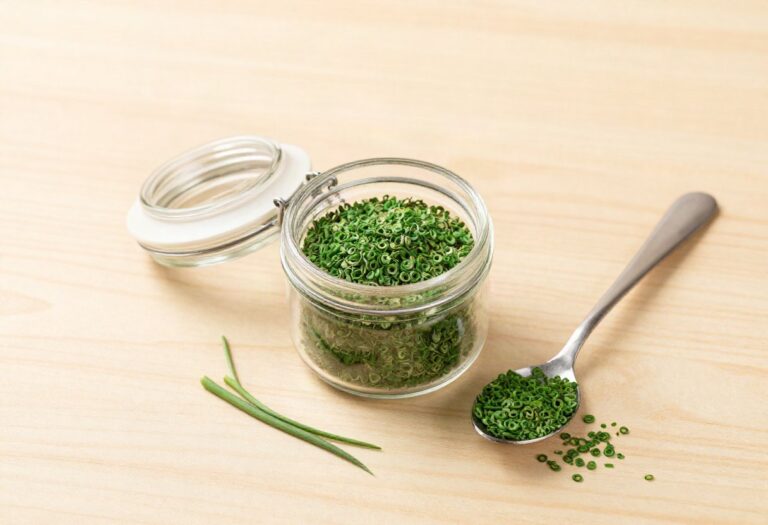
Freeze-dried chives are a fine aromatic herb made by cold-drying fresh chives, a process that concentrates the aromas while preserving some of the nutrients. A cousin of the onion and the shallot, it belongs to the large allium family and comes as small dehydrated strands, slightly green, with a mild and subtly sharp taste. Easy to store, it sits in the spice cupboard and rehydrates in seconds on contact with a liquid or a hot dish. In its concentrated form it provides 311 kcal per 100 g, but it is used in such small amounts that it remains a seasoning with almost no calorie impact, ideal for flavouring your recipes without weighing them down.
Macronutrient breakdown
Nutrition table per 100 g
| Calories | 311 kcal |
| Kilojoules | 1301 kJ |
| Protein | 21,2 g |
| Carbohydrate | 38,1 g |
| Fat | 3,5 g |
| Fibre | 26,2 g |
Micronutrients per 100 g
All measured nutrients, ranked by share of the daily reference intake.
- Magnesium640 mg171 %
- Potassium2960 mg148 %
- Iron20 mg143 %
- Vitamin B62 mg143 %
- Vitamin B21,5 mg107 %
- Calcium813 mg102 %
- Vitamin B10,9 mg82 %
- Phosphorus518 mg74 %
- Vitamin B9dietary folate equivalents108 µg
See the other 5 nutrients
- Copper0,69 mg69 %
- Manganese1,35 mg68 %
- Zinc5,12 mg51 %
- Vitamin B35,9 mg37 %
- Vitamin B52,11 mg35 %
Anses Ciqual 2025. Source: Anses, 2025, Ciqual food composition table
Tips
Freeze-dried chives are used in small pinches, just before serving or at the end of cooking, to preserve their delicate scent. A teaspoon is enough to lift an omelette, a vinaigrette, a fromage blanc, a yoghurt sauce, a steamed potato or a soup. To bring out all their aromas, let them rehydrate for a few minutes in a little water, lemon juice or the fat in your preparation. Keep them in an airtight jar, away from light and moisture, to prolong their aromatic freshness.
In terms of nutrition facts, this concentrated herb provides, per 100 g, 21.2 g of protein, 38.1 g of carbohydrate, only 3.5 g of fat and a remarkable fibre content (26.2 g). These figures refer to 100 g of dry product, an amount you never reach in everyday seasoning: your pinch therefore provides only a few calories. Chives remain appreciated for the sulphurous aromas typical of alliums and their green note, which recall those of freeze-dried shallot or garlic powder.
- Tasty pairings: eggs, fresh cheeses, fish, raw vegetables, cold sauces and lighter spreads.
- Herb combinations: it goes very well with fresh parsley, tarragon or dill to make a “fines herbes” style blend.
- Slimming asset: very low in calories in use, it lets you cut back on salt and fatty sauces while keeping the flavour.
For active people, freeze-dried chives are a clever kitchen ally: they season a plate rich in lean protein (eggs, chicken, white fish, fromage blanc) after exercise without unnecessary calories, which helps vary the flavours during a cutting phase or a rebalancing. Sprinkle them over a recovery omelette or into fromage blanc to make your meals more appetising without upsetting your intake. If you want to structure your plates, discover our advice on the balanced diet and good practice in fitness nutrition.
You will find other useful flavourings in the Herbs & Spices section. One point to note: choose a product with no added salt or flavour enhancer, and bear in mind that freeze-drying, though gentle, slightly reduces vitamin C compared with the fresh version. Used regularly and in small amounts, chives are an excellent way to season your everyday dishes healthily.