Group · Vegetables
Pumpkin
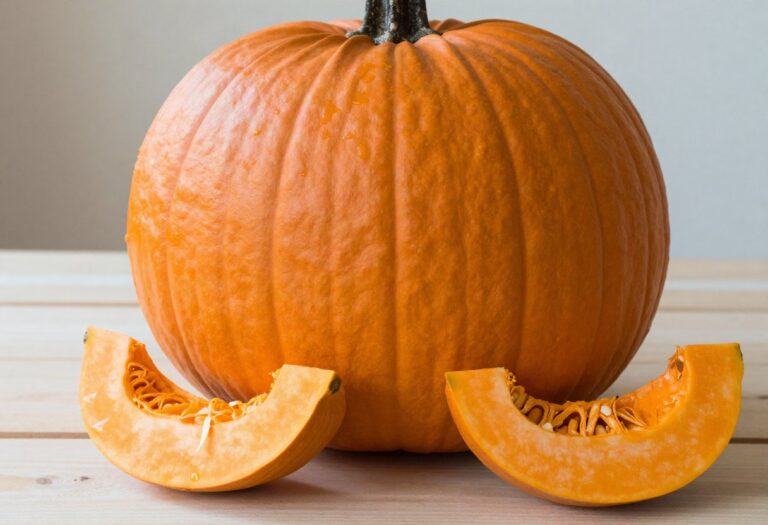
Pumpkin is an emblematic autumn squash, belonging to the large gourd family. With its orange skin and generous flesh, it turns up in many preparations: soups, mash, gratins, pies and even desserts. Nutritionally, it is a particularly light vegetable: just 29.7 kcal per 100 g, rich in water, fibre (0.5 g) and beta-carotene, the pigment responsible for its lovely colour. Low in fat (0.1 g) and moderate in carbohydrate (5.79 g), pumpkin fits naturally into a balanced, varied diet. Versatile and comforting, it appeals as much to food lovers as to people mindful of their calorie intake.
Macronutrient breakdown
Nutrition table per 100 g
| Calories | 30 kcal |
| Kilojoules | 126 kJ |
| Protein | 1 g |
| Carbohydrate | 5,8 g |
| Fat | 0,1 g |
| Fibre | 0,5 g |
Micronutrients per 100 g
All measured nutrients, ranked by share of the daily reference intake.
- Vitamin A258 µg32 %
- Potassium340 mg17 %
- Copper0,13 mg13 %
- Vitamin C9 mg11 %
- Vitamin E1,06 mg9 %
- Vitamin B20,11 mg8 %
- Manganese0,13 mg7 %
- Phosphorus44 mg6 %
- Vitamin B9dietary folate equivalents16 µg
See the other 9 nutrients
- Iron0,8 mg6 %
- Vitamin B50,3 mg5 %
- Vitamin B10,05 mg5 %
- Vitamin B60,06 mg4 %
- Vitamin B30,6 mg4 %
- Magnesium12 mg3 %
- Zinc0,32 mg3 %
- Calcium21 mg3 %
- Vitamin K11,1 µg1 %
Anses Ciqual 2025. Source: Anses, 2025, Ciqual food composition table
Tips
Pumpkin is best enjoyed from October to December, in full season. Its melting flesh suits many cooking methods: roasted in the oven in cubes, simmered into a velvety soup, puréed until smooth or added to savoury and sweet pies. To best preserve its nutrition facts, favour gentle cooking by steaming or stewing, which limits the loss of vitamins and minerals.
Nutritionally, pumpkin shines for its richness in beta-carotene (provitamin A), vitamin C, potassium and fibre. Its glycaemic index may seem high once cooked, but the real portion stays moderate and the amount of carbohydrate is low (around 5.79 g per 100 g). Its fibre promotes fullness and good transit, a valuable asset as part of a balanced diet.
On pairings, pumpkin goes perfectly with other vegetables of the same family such as squash or carrot, which are also rich in carotenoids. A touch of ginger, nutmeg or cumin lifts its slightly sweet taste. Remember to keep the seeds too: toasted, they provide protein and healthy fats as a salad topping.
- Recommended portion: 150 to 200 g as a side or in a soup.
- Storage: whole, several weeks in a cool, dry place; once cut, a few days in the fridge.
- Ideal moment: as a soup in the evening for a light, comforting meal.
For active people, pumpkin is an interesting source of carbohydrate with low energy density, useful for replenishing stores without overload. Combine it with a portion of protein (poultry, fish, pulses) or wholegrain cereals for a complete recovery meal. Its potassium content also helps make up for losses through sweating. As a snack, a warm pumpkin soup stays light before an evening workout.
For weight control, pumpkin is a great ally: low in calories, filling and versatile. Beware, though, of sweet preparations (pies, cakes), which multiply the energy intake. Discover other light vegetables in the vegetable family and compare its calories via the food calorie table to put together balanced plates all year round.