Group · Fish
Sturgeon
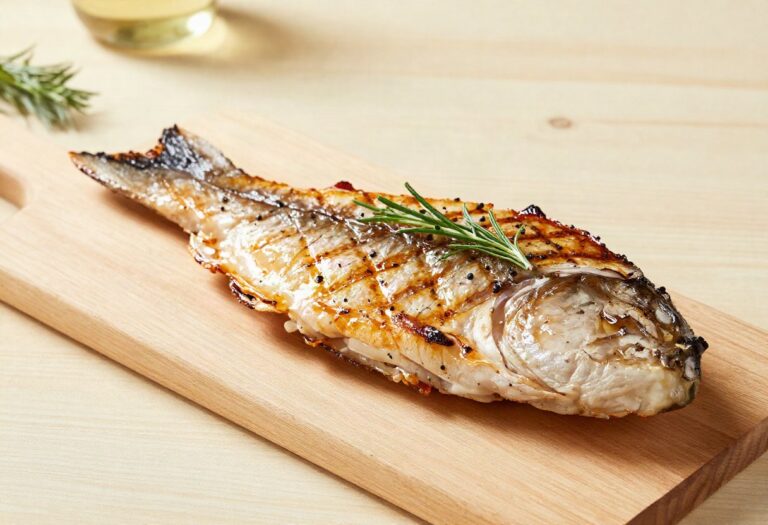
Sturgeon is a fish with a prestigious past, best known for its eggs turned into caviar, but its firm, tasty flesh also deserves a place at the table. It is a freshwater or migratory fish with a texture close to white meat, which suits many preparations. With around 127 kcal per 100 g, it offers a good amount of protein (17.7 g) and a moderate amount of fat (5.84 g), with no carbohydrate or fibre. Rich in amino acids and healthy fatty acids, sturgeon fits easily into a balanced diet. Enjoyed by food lovers and active people alike, it combines fine flavour with nutritional value for light, filling meals.
Macronutrient breakdown
Nutrition table per 100 g
| Calories | 127 kcal |
| Kilojoules | 531 kJ |
| Protein | 17,7 g |
| Carbohydrate | 0,9 g |
| Fat | 5,9 g |
Micronutrients per 100 g
All measured nutrients, ranked by share of the daily reference intake.
- Vitamin D10,3 µg206 %
- EPA0,28 g112 %
- Vitamin B121,74 µg70 %
- Vitamin B36,96 mg44 %
- DHA0,09 g37 %
- Phosphorus225 mg32 %
- Vitamin A210 µg26 %
- Vitamin B60,32 mg23 %
See the other 15 nutrients
- Total omega-30,42 g17 %
- Potassium307 mg15 %
- Vitamin B50,76 mg13 %
- Magnesium40,9 mg11 %
- Vitamin B915 µg8 %
- Vitamin B10,07 mg6 %
- Zinc0,63 mg6 %
- Vitamin B20,07 mg5 %
- Iron0,62 mg4 %
- Vitamin E0,5 mg4 %
- Copper0,04 mg4 %
- Omega-3 ALA0,05 g2 %
- Calcium15,6 mg2 %
- Manganese0,03 mg1 %
- Vitamin K10,1 µg0 %
Anses Ciqual 2025. Source: Anses, 2025, Ciqual food composition table
Tips
Sturgeon can be cooked in many ways. Its compact flesh stands up well to high-heat cooking: grilled, pan-fried, oven-roasted or even smoked. To preserve its nutritional qualities and tenderness, choose gentle cooking such as steaming or baking in parchment, lifted with fresh herbs, a drizzle of olive oil and lemon. A portion of 120 to 150 g is ideal for a main meal, served with green vegetables and a wholegrain cereal.
In terms of nutrition facts, sturgeon offers complete protein and a good level of omega-3, fats that are valuable for the heart. Like most fish, it also provides phosphorus, selenium and B vitamins. Its complete lack of carbohydrate makes it an ally of light meals and an asset for anyone watching their figure, as long as you take care over the accompaniments and the cooking method (avoid frying and overly fatty sauces).
- Storage: eat fresh sturgeon within 1 to 2 days, kept well chilled. The fillet freezes very well.
- Pairings: citrus fruit, dill, fennel, white wine, lemon butter, crunchy vegetables.
- Seasonality: mostly farmed today, it is available all year round.
For active people, sturgeon is an excellent source of lean protein that supports muscle recovery after exercise and helps maintain lean mass. Served with rice or sweet potatoes, it makes a balanced post-workout meal, combining carbohydrate to replenish stores and protein to repair muscle fibres. If you are looking for other protein-rich options, also explore salmon or tuna in brine, which are very practical. To top up your intake on training days, take a look at our ideas for protein snacks.
As part of a balanced diet or weight control, sturgeon ticks many boxes: it is filling, low in calories for its protein content and easy to work into varied menus. To diversify your seafood meals, discover the many species in the fish family and their benefits. Just remember to vary animal and plant sources for a complete and lasting nutritional intake.