Group · Seafood
Caviar
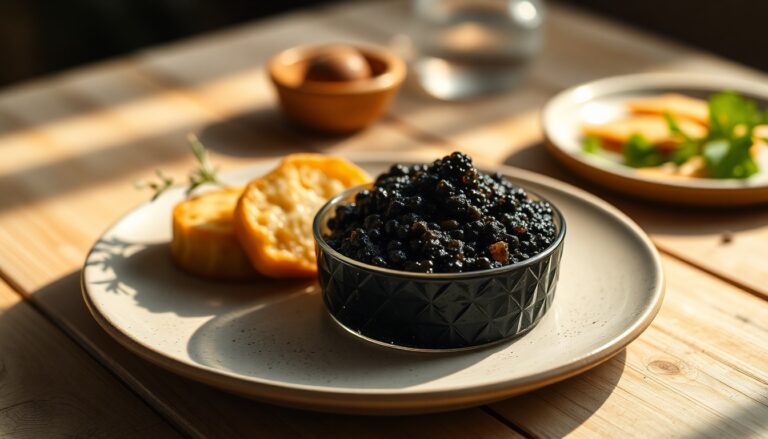
Caviar is the salted roe of sturgeon, the refined delicacy par excellence and a symbol of luxury gastronomy. It is distinguished by sturgeon species: beluga, ossetra, sevruga, each with a different grain size, colour and briny flavour. Not to be confused with the less noble fish roe, caviar is enjoyed in small quantities. Nutritionally, it provides around 254 kcal per 100 g, a good protein content (25 g) and fat (17.1 g), for only 4 g of carbohydrate. Rich in flavour and micronutrients, it fits into a balanced diet in small touches, especially on festive occasions.
Macronutrient breakdown
Nutrition table per 100 g
| Calories | 254 kcal |
| Kilojoules | 1060 kJ |
| Protein | 25 g |
| Carbohydrate | 4 g |
| Fat | 17,1 g |
Micronutrients per 100 g
All measured nutrients, ranked by share of the daily reference intake.
- DHA1,77 g708 %
- EPA1,36 g544 %
- Vitamin B125,45 µg218 %
- Total omega-33,13 g125 %
- Iodine117 µg78 %
- Vitamin B10,49 mg45 %
- Selenium8 µg15 %
- Vitamin B925 µg13 %
See the other 7 nutrients
- Zinc0,8 mg8 %
- Vitamin B60,08 mg6 %
- Vitamin B20,07 mg5 %
- Vitamin B50,28 mg5 %
- Copper0,04 mg4 %
- Manganese0,07 mg4 %
- Vitamin B30,08 mg1 %
Anses Ciqual 2025. Source: Anses, 2025, Ciqual food composition table
Tips
Caviar is above all savoured for its refinement. Traditionally presented on crushed ice, it is eaten with a mother-of-pearl or horn spoon, never metal, so as not to alter its briny taste. A reasonable portion is between 10 and 30 g per person: more than enough to enjoy its aromas without weighing on your calorie balance.
How to eat caviar? It goes wonderfully with warm blinis, steamed potatoes, a soft-boiled egg or a simple touch of thick crème fraîche. Avoid cooking it: heat bursts the grains and spoils the delicacy of the texture. Serve it well chilled, taken out of the fridge just before eating, and finish the tin quickly once opened (24 to 48 hours).
In terms of nutrition facts, caviar is dense: 254 kcal per 100 g, with an excellent supply of protein (25 g) and of fat rich in omega-3 fatty acids. It also provides minerals such as selenium, phosphorus and iron, as well as B vitamins and vitamin D. Its glycaemic index is very low thanks to its small amount of carbohydrate. Beware, however, of its high sodium content: salt acts as a preservative, so it should be eaten in moderation if you are watching your blood pressure. On this subject, the article on the DASH diet may interest you.
For active people, caviar offers good-quality protein and omega-3s useful for recovery, but its energy density and price make it an occasional food rather than a regular source. To cover your daily protein needs, turn to more affordable seafood such as prawns or scallops, rich in protein and lighter.
- Slimming: eaten in small amounts, caviar remains compatible with a controlled diet, as its richness in flavour is quickly satisfying.
- Storage: keep it in the coldest part of the fridge (0 to 4 °C) and never freeze fresh caviar.
- Pairing: a squeeze of lemon, fresh herbs or a wholemeal bread toast bring out its briny notes.
Curious to discover other treasures from the sea? Explore the seafood family or see the food calorie table to compare their intakes.