Group · Pulses
Soya beans
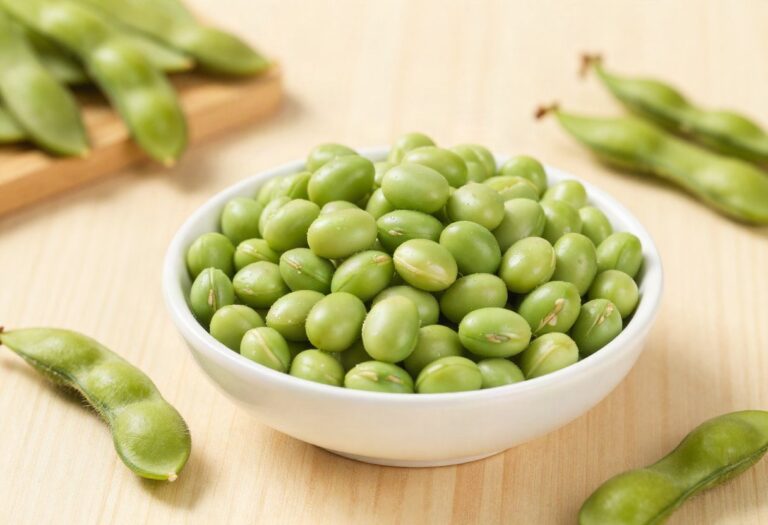
Soya beans, also called edamame when harvested young, are the seeds of the Glycine max plant, one of the most widely grown pulses in the world. They are available fresh, frozen, dried or tinned, and come in many derived products. Their nutritional interest is remarkable: per 100 g, they provide around 141 kcal, nearly 12.35 g of protein, 11.05 g of carbohydrate, 6.4 g of fat and 4.2 g of fibre. A source of complete plant protein, they naturally have their place in a balanced diet, whether you are vegetarian, sporty or simply careful about the quality of your meals. Their mild flavour and firm texture make them easy to include day to day.
Macronutrient breakdown
Nutrition table per 100 g
| Calories | 141 kcal |
| Kilojoules | 590 kJ |
| Protein | 12,4 g |
| Carbohydrate | 11,1 g |
| Fat | 6,4 g |
| Fibre | 4,2 g |
Micronutrients per 100 g
All measured nutrients, ranked by share of the daily reference intake.
- Vitamin B9111 µg56 %
- Potassium539 mg27 %
- Omega-6 LA2,66 g27 %
- Manganese0,5 mg25 %
- Vitamin B10,26 mg24 %
- Phosphorus158 mg23 %
- Vitamin C17 mg21 %
- Calcium145 mg18 %
See the other 11 nutrients
- Iron2,5 mg18 %
- Omega-3 ALA0,35 g18 %
- Magnesium60 mg16 %
- Copper0,12 mg12 %
- Vitamin B20,16 mg11 %
- Zinc0,91 mg9 %
- Vitamin B31,25 mg8 %
- Vitamin B60,06 mg4 %
- Selenium1,4 µg3 %
- Vitamin B50,13 mg2 %
- Vitamin A8 µg1 %
USDA FoodData Central (SR Legacy)
Tips
Soya beans suit a multitude of culinary uses. Fresh or frozen, cook them for a few minutes in boiling salted water, then serve them warm as a nibble or a side. Dried, they need soaking for several hours followed by longer cooking. Allow a portion of about 60 to 100 g cooked per meal. To best preserve the nutrition facts, favour gentle cooking by steaming rather than prolonged boiling.
In terms of nutrients, soya beans stand out for their richness in good-quality plant protein, fibre, which promotes fullness, and minerals such as iron, magnesium and potassium. Their moderate glycaemic index makes them a useful option for keeping energy steady through the day. To improve the absorption of plant-based iron, pair them with a source of vitamin C (pepper, citrus fruit, parsley).
- In a cold salad with wholegrain cereals and crunchy vegetables.
- Blended into an original hummus or a protein-rich spread.
- Stir-fried in a wok with spices, ginger and a drizzle of vegetable oil.
- Added to soups, stir-fries and pulse curries.
Soya beans fit perfectly into the pulses family. If you enjoy this plant-based variety, mix things up with lentils or chickpeas, equally versatile and nourishing. Tofu, made from soya, also extends these uses in varied plant-based cooking.
For active people, soya beans are an excellent source of plant protein to support muscle recovery after exercise. Combined with a carbohydrate source (rice, sweet potato), they help to replenish energy stores. A portion as a snack, paired with starchy foods, can complement a mass-building or muscle-maintenance programme. To go further on balancing your intake, see our pointers on fitness nutrition.
For weight control, bear in mind that soya beans are higher in fat than other pulses, even though this fat is mostly unsaturated. Their calorie density remains reasonable and their filling fibre makes them an ally for weight loss, as long as you keep quantities and seasonings under control. Avoid very salty or fried versions as nibbles. Wisely included in a balanced diet, they offer an excellent balance of fullness, protein and enjoyment day to day.