Group · Fruit
Passion fruit
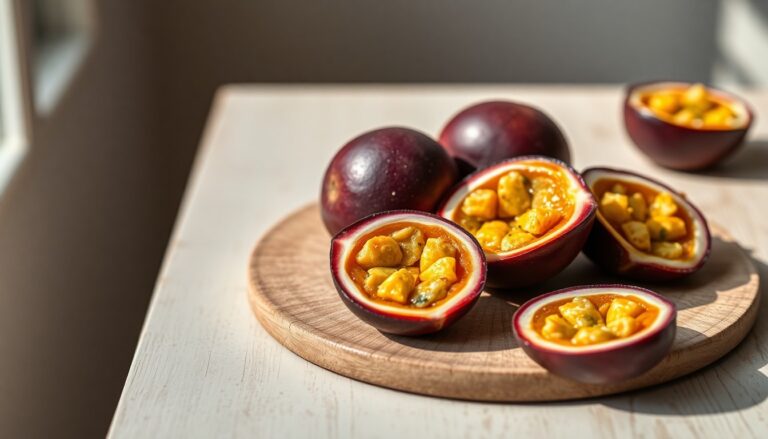
The passion fruit is the fruit of a tropical vine of the genus Passiflora. Beneath its wrinkled purple or yellow skin, depending on the variety, lies a jelly-like pulp dotted with small crunchy seeds, with an intense, tart fragrance. At 102 kcal per 100 g, it combines natural carbohydrate (10.9 g), a touch of protein (2.13 g) and above all an impressive amount of fibre (6.8 g). Low in fat, fragrant and thirst-quenching, it fits into a balanced diet as well as into weight-loss recipes. Its nutritional values make it an exotic fruit with character, to enjoy fresh or as juice to lift desserts, drinks and savoury dishes.
Macronutrient breakdown
Nutrition table per 100 g
| Calories | 102 kcal |
| Kilojoules | 426 kJ |
| Protein | 2,2 g |
| Carbohydrate | 10,9 g |
| Fat | 3 g |
| Fibre | 6,8 g |
Micronutrients per 100 g
All measured nutrients, ranked by share of the daily reference intake.
- Vitamin C25,6 mg32 %
- Omega-6 LA1,65 g17 %
- Copper0,15 mg15 %
- Vitamin B60,17 mg12 %
- Potassium240 mg12 %
- Vitamin A84,2 µg11 %
- Manganese0,19 mg10 %
- Vitamin B50,56 mg9 %
- Vitamin B9dietary folate equivalents101 µg
See the other 10 nutrients
- Vitamin B31,37 mg9 %
- Omega-3 ALA0,17 g9 %
- Zinc0,76 mg8 %
- Total omega-30,19 g8 %
- Magnesium26 mg7 %
- Phosphorus46 mg7 %
- Vitamin E0,5 mg4 %
- Iron0,56 mg4 %
- Vitamin B20,05 mg4 %
- Calcium8,1 mg1 %
Anses Ciqual 2025. Source: Anses, 2025, Ciqual food composition table
Tips
To enjoy its benefits, simply cut the fruit in half and eat the pulp with a spoon. A sensible portion is one or two fruits, equivalent to around 50 to 100 g of pulp. Choose fruits with well-wrinkled skin: it is a sign of optimal ripeness and maximum flavour. You can keep it for a few days at room temperature, then in the fridge once ripe.
- At breakfast: spoon it over a plain yoghurt or a fromage blanc, or add it to a muesli.
- As a lighter dessert: its tart flavour lets you cut the added sugar in a homemade fruit salad.
- In savoury dishes: its juice brightens a vinaigrette or a marinade for fish or poultry.
- As a drink: strain the pulp for a refreshing juice or smoothie.
Nutritionally, passion fruit stands out for its high fibre content (more than 6.8 g per 100 g), which contributes to fullness and digestive comfort. It also provides vitamin C, provitamin A and potassium. Its glycaemic index is moderate for a fruit, but its carbohydrates and energy density mean it is worth watching portions if you are monitoring your weight. To compare its calories with other exotic fruits, you can explore our food calorie table.
For variety, pair it with mango or pineapple for a balanced tropical cocktail, where the tartness of the passion fruit tempers the sweetness. You will find plenty of other ideas among the foods in the Fruit family.
For active people: passion fruit provides easily available carbohydrates and potassium, useful after exercise to refuel. As a recovery snack, mix its pulp into a high-protein fromage blanc or add it to a post-workout smoothie. If you are looking to structure your diet around physical activity, our guide to nutrition for fitness gives practical pointers.
In short, passion fruit is a tasty, low-fat ally in a varied diet. Eaten fresh, with no added sugar, it brings fragrance, fibre and freshness while staying compatible with a balanced diet. As with any sweet fruit, aim for moderation and variety rather than excess.