Group · Fats & oils
Flaxseed oil (linseed oil)
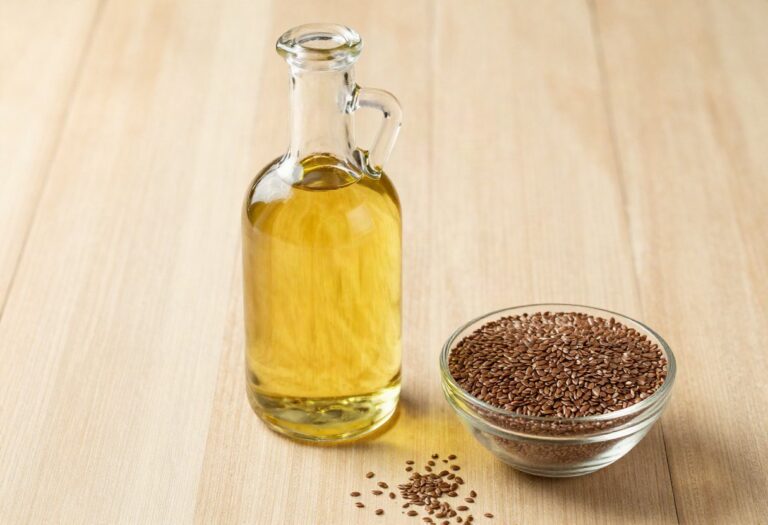
Flaxseed oil, also called linseed oil, is a vegetable oil extracted from flaxseeds by first cold pressing. Known for its golden colour and slightly nutty taste, it stands out for its exceptional richness in plant-based omega-3 (alpha-linolenic acid). Like all fats, it is very concentrated in energy: 100% fat and 900 kcal per 100 g, with no protein or carbohydrate. It is eaten exclusively raw, because it is sensitive to heat and oxidation. In a balanced diet, it adds an aromatic touch to raw vegetables and sensibly tops up your intake of essential fatty acids, as long as you stick to small daily amounts.
Macronutrient breakdown
Nutrition table per 100 g
| Calories | 900 kcal |
| Kilojoules | 3700 kJ |
| Carbohydrate | 0,1 g |
| Fat | 100 g |
Micronutrients per 100 g
All measured nutrients, ranked by share of the daily reference intake.
- Omega-3 ALA53,4 g2670 %
- Omega-6 LA14,2 g142 %
- Vitamin K19,3 µg12 %
- Vitamin E0,47 mg4 %
- Zinc0,07 mg1 %
- Phosphorus1 mg0 %
- Calcium1 mg0 %
Anses Ciqual 2025. Source: Anses, 2025, Ciqual food composition table
Tips
Flaxseed oil is always enjoyed cold: it does not tolerate cooking, which degrades its omega-3 and spoils its taste. Use it to dress a salad, drizzle over warm steamed vegetables, or liven up a fromage blanc or a smooth soup just before serving. One to two teaspoons a day are enough to enjoy its benefits without weighing down your calorie balance.
Storage: it is a delicate oil. Keep it in the fridge, in a tightly closed opaque bottle, and use it quickly after opening (a few weeks). A rancid smell means it has oxidised: throw it away. This sensitivity explains why it often comes in small bottles.
Nutrition facts and benefits: with 100 g of fat and 900 kcal per 100 g, flaxseed oil has a high calorie density, like all oils. Its distinctive feature is its remarkable content of alpha-linolenic acid, an essential omega-3 that the body cannot make. It therefore helps balance the omega-3/omega-6 ratio, which is often out of balance in modern diets. To vary your fatty acid profiles, you can alternate it with a rapeseed oil or a walnut oil, also rich in omega-3, and keep olive oil for hot preparations.
Tip for active people: the fatty acids in flaxseed oil contribute to the healthy fat balance of a diet geared to performance and recovery. A few drops on a plate of vegetables or a bowl of cereals round off a post-workout meal that already contains carbohydrates and protein. Be careful, though: it is not a quick source of energy, but a quality addition to include in small doses as part of an overall fitness nutrition approach.
Weight control: do not let its healthy image tempt you to overuse it. One tablespoon already provides about 90 kcal. If you are trying to lose weight or rebalance your diet, measure it precisely with a spoon rather than a drizzle, and count it in your total fat for the day.
- Use only raw, never for cooking.
- 1 to 2 teaspoons a day are enough.
- Store in a cool place, away from light.
To compare its calories with other fats, check the food calorie table or explore the whole fats and oils family to choose the oil suited to each use.