Group · Nuts & seeds
Flaxseeds
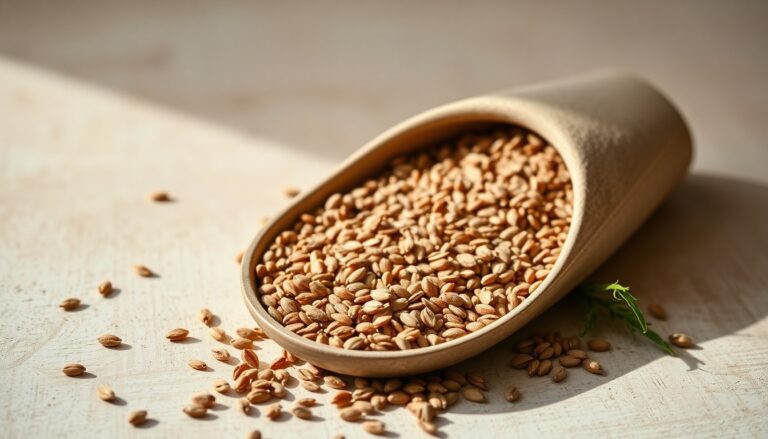
Small but remarkably interesting, flaxseeds are oil-rich seeds from the flax plant. They come in two main colours, brown and golden flax, and in several forms: whole seeds, ground seeds or oil. Much valued in a balanced diet, they provide fibre, plant protein and healthy fats, notably plant-based omega-3 (alpha-linolenic acid). At 528 kcal per 100 g, they are energy-dense, but one spoonful is enough to enjoy their benefits. Versatile, they slip in everywhere: yoghurts, porridges, breads and salads. A small nutrition habit that is easy to adopt every day.
Macronutrient breakdown
Nutrition table per 100 g
| Calories | 528 kcal |
| Kilojoules | 2180 kJ |
| Protein | 22,4 g |
| Carbohydrate | 6,5 g |
| Fat | 40,3 g |
| Fibre | 24,4 g |
Micronutrients per 100 g
All measured nutrients, ranked by share of the daily reference intake.
- Omega-3 ALA19,6 g980 %
- Total omega-319,61 g784 %
- Copper1,5 mg150 %
- Manganese2,4 mg120 %
- Magnesium336 mg90 %
- Phosphorus589 mg84 %
- Omega-6 LA6,49 g65 %
- Zinc6,1 mg61 %
- Vitamin B9dietary folate equivalents23,9 µg
See the other 12 nutrients
- Vitamin E7,2 mg60 %
- Iron6 mg43 %
- Potassium840 mg42 %
- Calcium223 mg28 %
- Vitamin B60,31 mg22 %
- Vitamin B10,19 mg17 %
- Selenium6,7 µg12 %
- Vitamin K18,1 µg11 %
- Vitamin B50,54 mg9 %
- Vitamin B30,83 mg5 %
- Vitamin B20,06 mg4 %
- Vitamin A1,25 µg0 %
Anses Ciqual 2025. Source: Anses, 2025, Ciqual food composition table
Tips
To get the most from the nutrition facts of flaxseeds, the golden rule is to eat them ground. Whole, they often pass through the digestive tract without being absorbed: their husk is very tough. Grind them fresh (in a coffee grinder or blender) or buy them ready-ground, in which case keep them in the fridge in an airtight container, because the omega-3 oxidises quickly with heat and light.
As for portion, one to two tablespoons a day (about 10 to 20 g) is more than enough. At this amount, you get a good intake of fibre (27.3 g per 100 g), known to support digestive comfort and fullness, an asset when slimming. Beware of the energy density, though: there is no need to overdo it.
- At breakfast: in porridge, yoghurt or a smoothie.
- In cooking: worked into bread dough, pancakes or homemade bars.
- As a “plant-based egg“: 1 spoonful of ground flax + 3 of water, perfect for vegan baking.
- In salad: sprinkled on for a crunchy touch and a filling effect.
Flaxseeds also provide magnesium, phosphorus, manganese and lignans. Their glycaemic index is low, and their protein (18.3 g per 100 g) complements a plant-based diet well. You can combine them with other seeds in the family such as chia seeds or pumpkin seeds to vary your intake. Discover the whole Nuts & Seeds category to put together your own mixes.
For active people: thanks to their combination of carbohydrate, fibre and healthy fats, ground flaxseeds fit well into a recovery snack, for example mixed into a protein porridge or a yoghurt. You can take inspiration from protein snack ideas to make the most of them around exercise. Their fibre content and energy density make them a supplement to measure out, especially before an intense session, when light digestion is preferable.
When watching your weight, keep in mind that these seeds remain high in calories: it is better to measure them than to pour them by eye. Remember to drink plenty too, because fibre needs water to do its job. To compare their content with other foods, see the food calorie table.
