Group · Fats & oils
Hazelnut oil
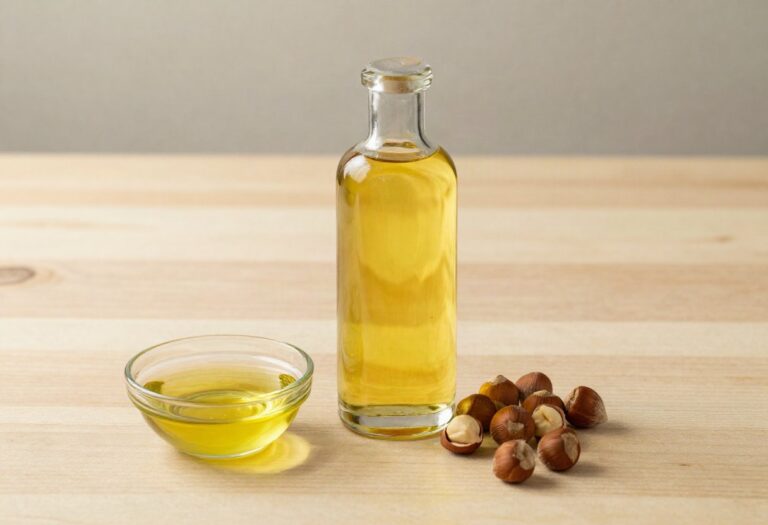
Hazelnut oil is an indulgent vegetable oil, obtained by pressing roasted or raw hazelnuts. Its amber colour and intense scent of nuts make it a much-loved dressing oil in fine cooking. Like all fats and oils, it is 100% fat, with 900 kcal per 100 g and no protein or carbohydrate. Rich in monounsaturated fatty acids (oleic acid) and vitamin E, it adds character to many dishes. It is often found in virgin, cold-pressed form to preserve its delicate aromas. Used in small amounts, it has its place in a balanced, varied diet, where it enhances salads, vegetables and sweet preparations.
Macronutrient breakdown
Nutrition table per 100 g
| Calories | 900 kcal |
| Kilojoules | 3700 kJ |
| Fat | 100 g |
Micronutrients per 100 g
All measured nutrients, ranked by share of the daily reference intake.
- Vitamin E28,6 mg238 %
- Omega-6 LA11,7 g117 %
- Omega-3 ALA0,36 g18 %
Anses Ciqual 2025. Source: Anses, 2025, Ciqual food composition table
Tips
Hazelnut oil is enjoyed above all cold, as a dressing. Its nutty flavour does not like heat: avoid high-temperature cooking, which destroys its aromas and affects its qualities. Keep it for vinaigrettes, a drizzle over steamed vegetables, fish or carpaccios, or even as a finishing touch on a dessert or ice cream.
- Sensible portion: one tablespoon (about 10 g) provides nearly 90 kcal. Measure your quantities, because the calories add up fast.
- Tasty pairings: it goes wonderfully with a lamb’s lettuce salad, chicory, goat’s cheese, beetroot or fruit. Blended with a more neutral oil such as sunflower oil, it adds flavour without dominating.
- Storage: keep it away from light and heat, ideally somewhere cool once opened, because oils rich in unsaturated fatty acids go rancid fairly quickly.
In terms of nutrition facts, hazelnut oil relies on oleic acid (a monounsaturated fatty acid, as in olive oil) and vitamin E, a natural antioxidant. It contains no carbohydrate or fibre, and what it provides is purely fat. It is more an oil for pleasure and finishing than an everyday oil, to alternate with other sources of good fats such as rapeseed oil to vary your fatty acid profiles.
For active people: good-quality fats are part of a high-performance diet and contribute to hormonal and energy balance. A drizzle of hazelnut oil on your post-workout dish of starchy foods adds useful calories and palatability, which is helpful during a bulking phase. During a cutting phase or when watching your weight, keep an eye on quantities: the calorie density remains high. To structure your intake, draw on the principles of good fitness nutrition.
For weight loss and weight management, hazelnut oil is neither to be demonised nor eaten without counting. Like any fat, it is very high in calories: moderation is the key. You can explore the other oils and fats to diversify your dressings and enjoy all their benefits without overdoing it.